The scene-setting details in each story are illustrative, based on how each operation has been publicly described. The impact figures come from the companies or their technology partners.
Prologue: 2:47 a.m.
It is 2:47 in the morning, and the plant sounds the way it always does.
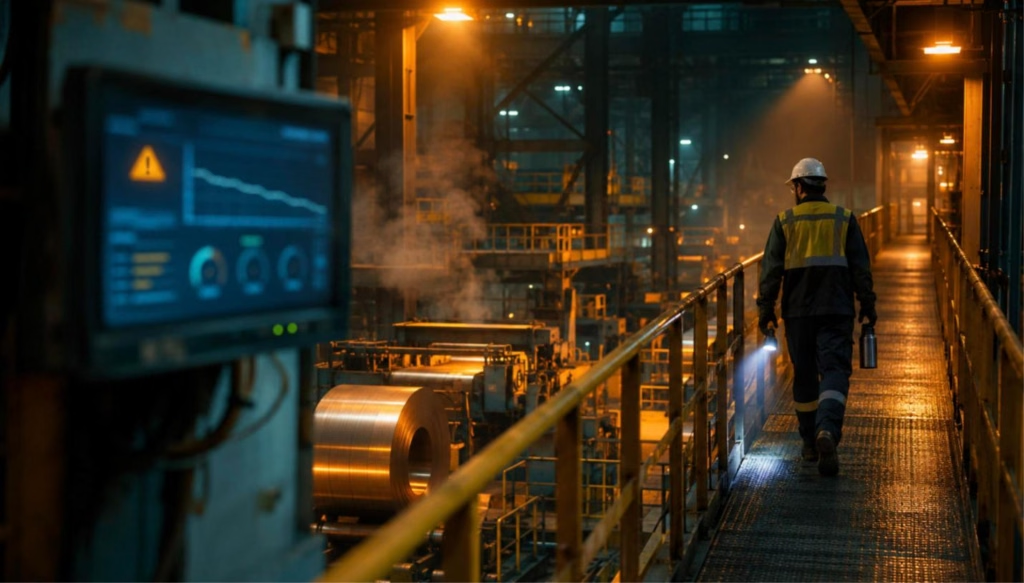
A low, steady thrum rolls through the floor. Steel rollers turn. A forklift beeps somewhere in the dark at the far end of the hall. Under the sodium lights, a technician on the night shift walks his round with a flask of tea in one hand and a torch in the other. He has done this walk a thousand times. Every gauge he passes reads green.
Nothing is wrong. Not yet.
But forty metres away, inside a hydraulic unit he will not reach for another hour, a seal has begun to tire. The pressure it holds has slipped. Not enough for an alarm. Not enough for a human ear to catch above the roar. Just a fraction of a bar, then a little more, then a little more again, drifting downward like a tide going out.
No one sees it.
Something does.
On a server that never sleeps, a model has been watching that pressure line for months. It has learned what this machine looks like on a good day, a hot day, a Monday after a shutdown. And tonight, the shape is wrong. The curve is bending in a way it has seen before, in the weeks leading up to a failure. A notification lands quietly on a maintenance dashboard. A work order is drafted. A part is checked against stock.
By the time the day shift arrives, the fix is already scheduled for the next planned maintenance window. The line never stops. The steel keeps rolling. Nobody outside that maintenance team will ever know how close it came.
That is the most important moment in a modern factory. And almost nobody sees it.
We are used to imagining AI as something loud: humanoid robots, talking assistants, machines that replace people. But in the places where the world actually gets made, moved and sold, the real story is quieter. It is a pressure curve caught early. A truck that does not drive an unnecessary mile. A camera that notices a weed, a dent, a misprinted label, a split second before a human could.
As an AI consultant at Sigosoft, I spend my days inside these problems: wasted fuel, spoiled stock, unplanned downtime, inspections that cannot keep up with the line. When I read the stories that follow, I do not just see impressive numbers. I see familiar headaches, and the moment a team decided to look at them differently.
Here are ten of those moments. Some take place on dusty farm roads, some on factory floors, some in warehouses the size of small towns. Together, they show what AI looks like when it stops being a buzzword and starts being part of the work.
The 10 stories at a glance
| # | Company | Type of AI | Headline result |
|---|---|---|---|
| 1 | UPS | Route optimisation (ORION) | About 100 million fewer miles and 10 million gallons of fuel a year |
| 2 | John Deere | Computer vision (See & Spray) | Nearly 50% less non-residual herbicide in 2025 |
| 3 | BlueScope | Predictive maintenance | 1,950 hours of unplanned downtime avoided |
| 4 | Walmart | Freight optimisation | More than $55 million in realised transport savings |
| 5 | Amazon | Warehouse robotics and demand forecasting | Inventory stored up to 75% faster; 10%+ better national forecasts |
| 6 | BMW Group | Conveyor fault prediction | About 500 minutes of assembly disruption avoided a year |
| 7 | Coca-Cola HBC | Image recognition and predictive maintenance | Parts found in about a minute; predictive maintenance on 55 lines |
| 8 | P&G with Siemens | AI visual inspection | 10–20% less scrap |
| 9 | Walmart | Generative AI for catalogue data | 850 million+ pieces of catalogue data created or improved |
| 10 | P&G Guangzhou | AI, digital twins and automation | 30% less inventory, 99.9% on-time delivery |
1. The road that got shorter
UPS, United States: on-road route optimisation
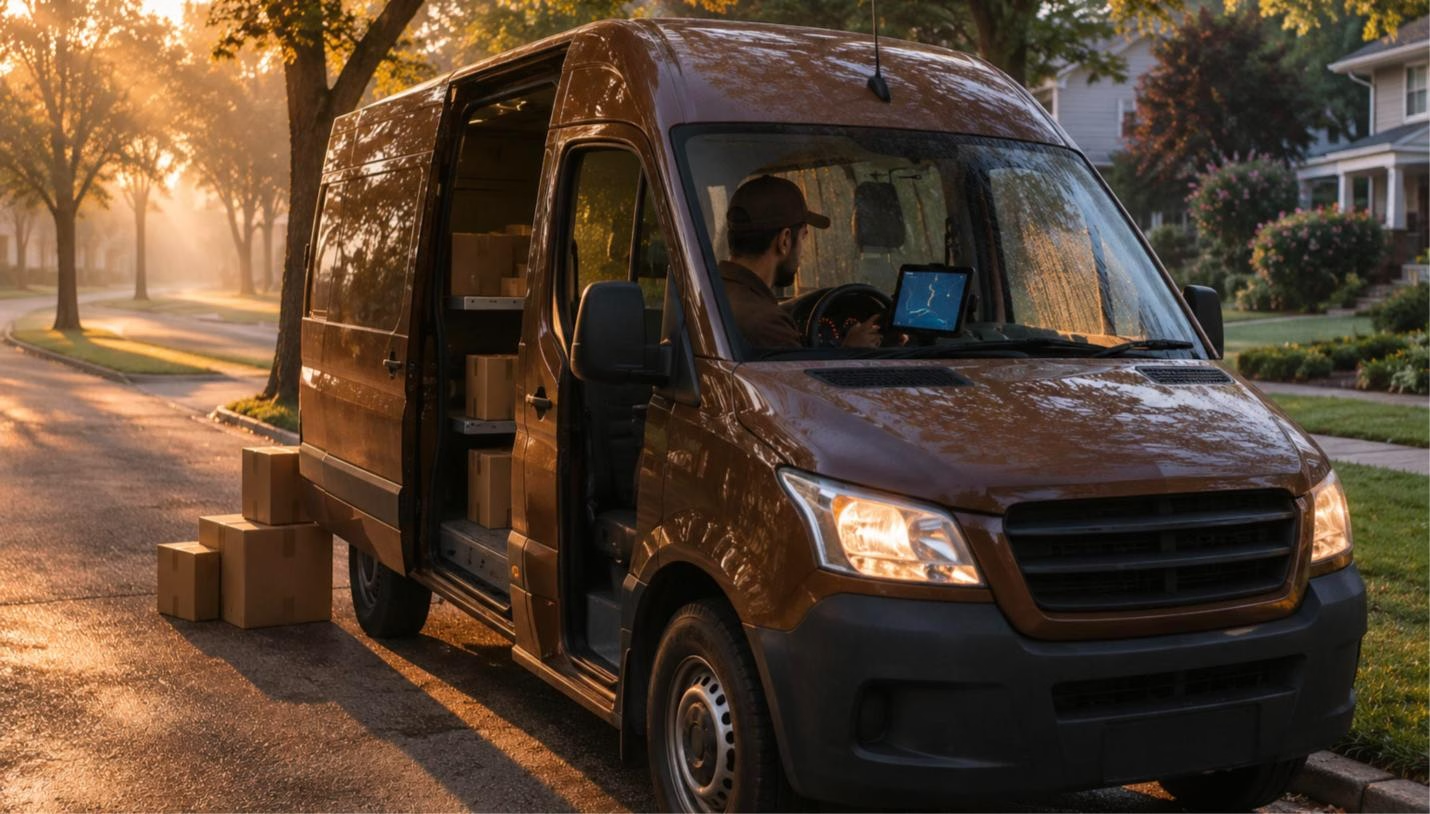
It is 7:58 a.m. in a suburb outside Atlanta, and a brown truck idles at the end of a driveway.
The driver has a full load and a long day ahead: well over a hundred stops, each one a small puzzle. Which street first? Which side of the road? Does the business on Elm close at noon? Is there an air package that has to arrive by 10:30? For years, the answer lived in his head, in muscle memory built from driving the same route the same way for a decade.
Now, a small screen on the dashboard has an opinion.
For a single route with 120 stops, the number of possible sequences dwarfs the number of nanoseconds the Earth has existed. No human can weigh them all. So UPS built a system that could. They called it ORION, short for On-Road Integrated Optimization and Navigation, named after the hunter of Greek mythology.
The story did not start with AI hype. It started in 2003, when UPS began using package-flow data to plan routes more carefully. That earlier work alone trimmed about 85 million miles a year. Then the company’s operations research team, led by Jack Levis, went further. They spent the better part of a decade developing and piloting the algorithm. When it finally went live in 2013, it was roughly 1,000 pages of code and could evaluate around 200,000 route options in seconds.
There was one famous quirk. ORION was told to keep left turns to a minimum. Turning left across oncoming traffic means waiting, idling and taking on more risk. So the routes it produced often looked strange on a map, looping right, right and right again. Drivers raised eyebrows. Then they saw the clock.
The hardest part was never the math. Levis has said the rollout took roughly twice the effort of building the system, because tens of thousands of experienced drivers had to trust it. UPS kept the final call with the driver, who could still change the order when a customer needed something different. Over time, the routes won people over. One driver said he went from about 110 stops a day to between 115 and 118 in the same time.
The stakes were clear from the start: cut just one mile per driver per day, and UPS could save up to $50 million a year. ORION did far better than one mile. UPS reports that the system saves about 100 million miles of driving and 10 million gallons of fuel a year. In 2016, the project won the Franz Edelman Award, one of the highest honours in operations research.
The takeaway: AI did not drive a single package. People did. What changed was the quality of the plan they started the day with.
Sources: UPS investor-day transcript · Fortune · Computerworld · INFORMS / Edelman Award · Esri WhereNext interview
Related from Sigosoft: Fleet & Logistics Management · On-demand Delivery Apps · Airotrack fleet tracking case study · Custom GPS tracking software development
2. A tractor with a sharper eye
John Deere, United States: See & Spray

Dawn breaks over a cotton field in the American South. From the cab of a towering sprayer, the rows look identical, mile after green mile.
They are not.
Scattered between the crop are the intruders: pigweed, waterhemp, grasses that have learned to survive. For generations, the only practical answer was to treat everything. Fill the tank, open the nozzles and blanket the whole field with herbicide, weeds or no weeds.
Jorge Heraud thought that was backwards. As the founder of Blue River Technology, he liked to put it in medical terms: when one person is sick, you do not give antibiotics to everyone in the building. Why should a field be any different? His Silicon Valley start-up, founded in 2012, began by building custom cameras and computer vision for lettuce growers. In 2017, John Deere bought it for about $305 million.
What came out of that partnership looks like something from science fiction. On the See & Spray Ultimate system, 36 cameras hang from a 120-foot carbon-fibre boom, spaced roughly a metre apart. As the machine moves, each camera scans the ground ahead. Onboard processors running deep-learning models decide, plant by plant, whether they are looking at crop or weed. When the answer is weed, a single nozzle fires.
From the moment a camera sees a weed to the moment it is sprayed takes about 200 milliseconds, roughly the blink of an eye. And it happens across the full width of the boom, thousands of times a minute.
For the farmer in the cab, the change is quiet but profound. The tank lasts longer. The field gets what it needs, and only where it needs it. Deere says customers using See & Spray cut non-residual herbicide use by nearly 50% on average in 2025, across more than five million acres.
The takeaway: the machine is not smarter than the farmer. It simply looks at every plant, every time, at a speed no person could match, and lets the farmer act on what it sees.
Sources: John Deere 2025 results · John Deere press release · John Deere on Blue River · The Western Producer · Farmers Weekly
3. When steel production gets a warning
BlueScope, Australia: predictive maintenance with Siemens Senseye
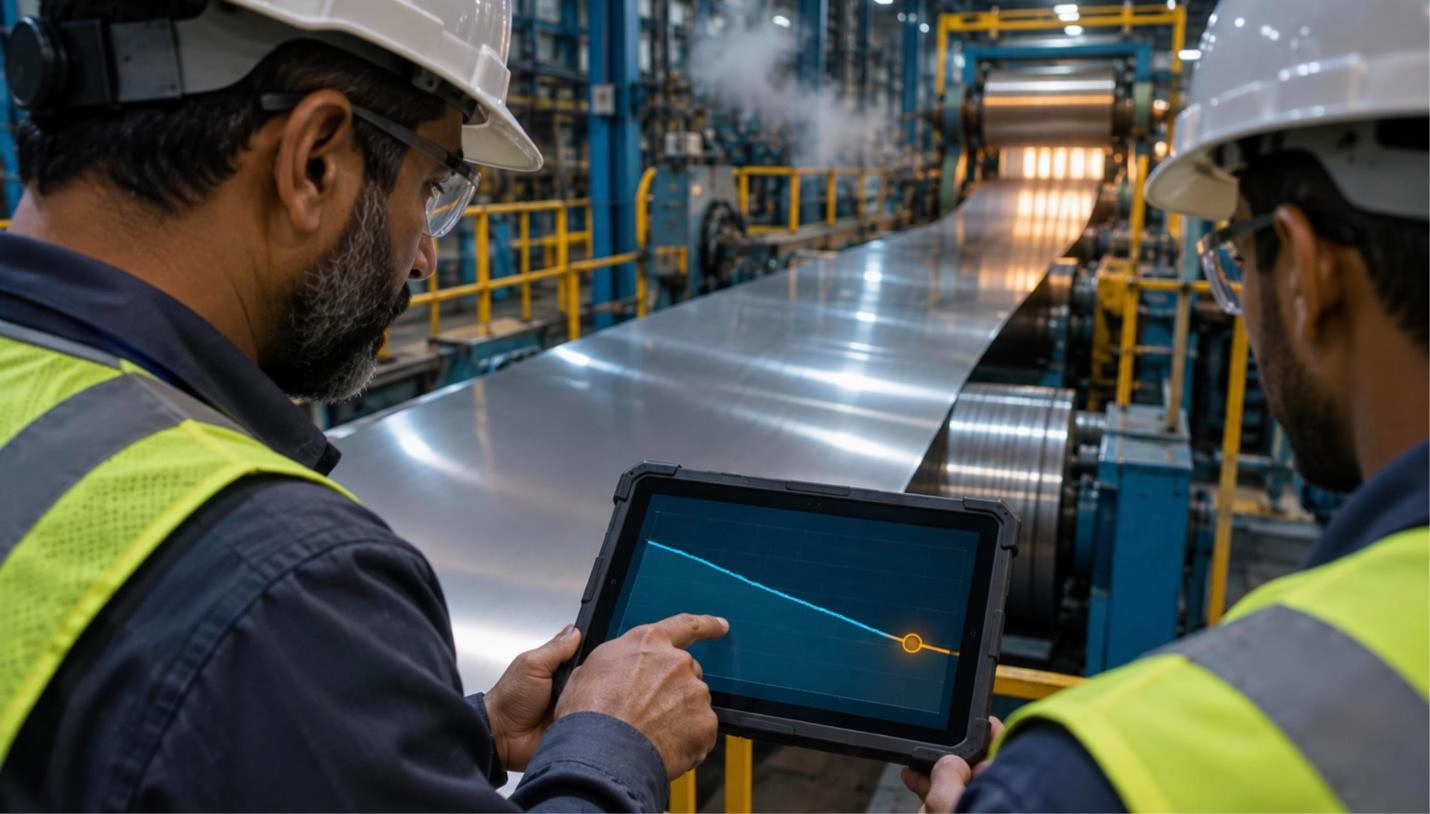
Port Kembla, New South Wales. The Pacific wind carries salt across the Springhill Works, where BlueScope coats ribbons of steel that will become roofs, sheds and car parts across the world.
A metal coating line is an unforgiving thing. The steel strip runs continuously through baths and furnaces. If it stops unexpectedly, the strip may have to be painstakingly threaded back through the line by hand. Product is wasted. Energy is wasted. Hours disappear.
For years, maintenance here worked the way it does in most plants: inspect on a schedule, fix what breaks, and hope the two line up. In 2022, BlueScope decided to try something different. It began a 12-month pilot of Siemens’ Senseye Predictive Maintenance on its metal coating lines. The AI learns what normal looks like for each machine, then watches for the subtle drift that precedes a failure.
The pilot was meant to run a year. It proved itself in seven months.
One moment captures why. A sensor on the line picked up a gradual pressure drop: a slow leak, the kind that grows until something gives. Senseye flagged it as a predictive warning and alerted the team. Instead of an emergency shutdown, engineers fixed it during a maintenance window that was already planned. That one catch alone avoided at least 24 hours of unplanned downtime, and the miserable job of rethreading the strip.
If that scene sounds familiar, it should. It is the night-shift story this article opened with.
After Port Kembla, BlueScope rolled the system out to sites around the world. Siemens reports that it has since helped avoid 1,950 hours of unplanned downtime, about 1,200 in Australia and 750 elsewhere, plus 53 complete process interruptions. Colin Robertson, BlueScope’s digital transformation and asset manager, puts the goal simply: in the best case, the line never has to stop at all.
The takeaway: AI did not pick up a spanner. It gave the people holding the spanners time, and time is everything in maintenance.
Sources: Siemens case study
Related from Sigosoft: Data Engineering & Analytics · Decision Intelligence Dashboards · AI for Your Existing ERP · Why AI agents stall between pilot and production
4. A better plan for moving freight
Walmart, United States: first-mile freight optimisation
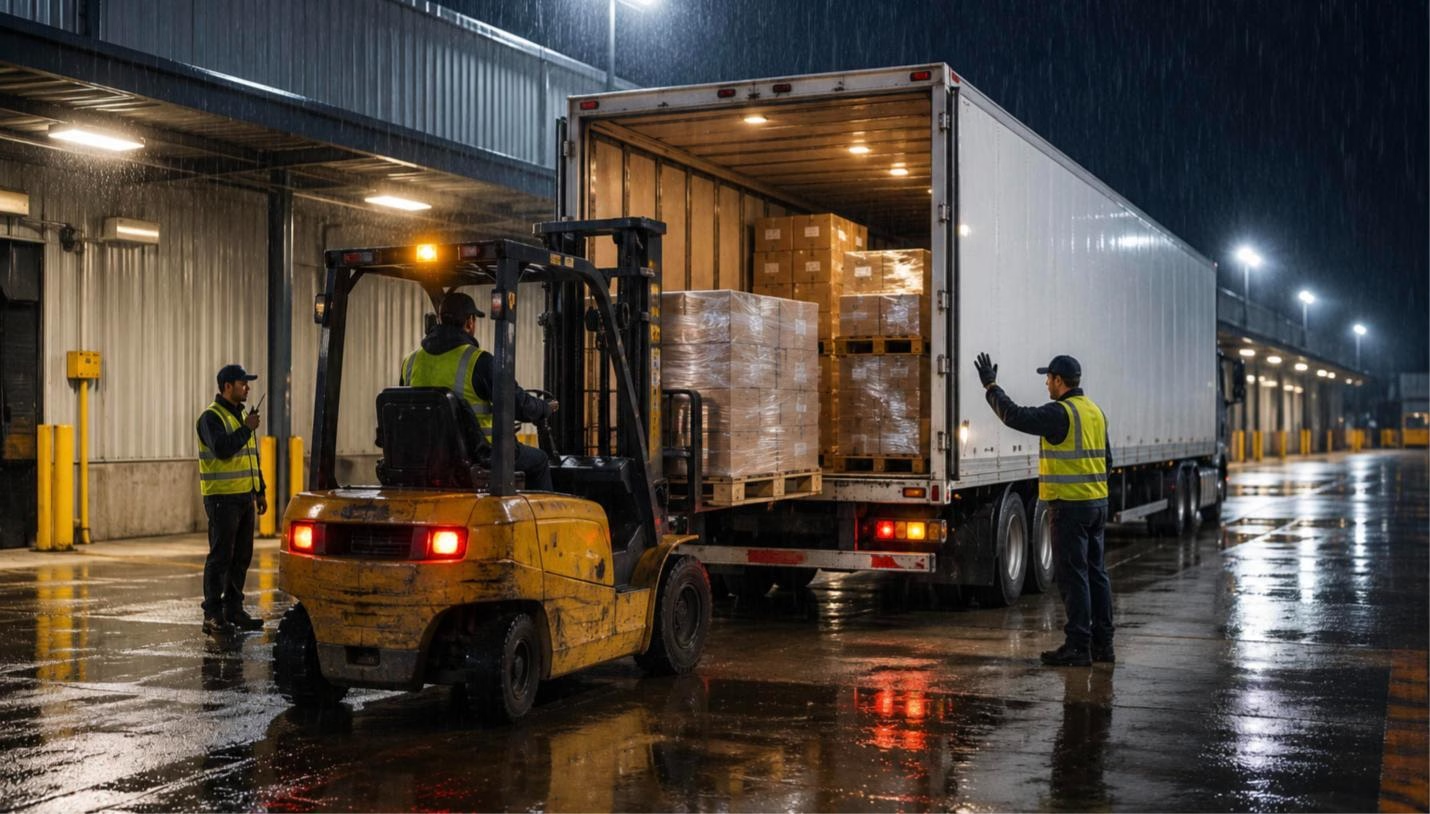
It is just after midnight at a supplier’s loading dock in the Midwest. A pallet of laundry detergent sits under the floodlights, shrink-wrapped and ready. Somewhere a few hundred miles away, a different supplier has half a truckload of paper towels heading to the very same Walmart distribution centre.
Neither of them knows about the other. For a long time, neither did the planning system.
This is the first mile: the stretch where products leave suppliers and travel into Walmart’s network. It is a less glamorous part of retail than the shelf or the doorstep. But it is enormous. Walmart coordinates tens of thousands of inbound US shipments every single day. For each one, planners have to decide what travels together, on which route, at what time and with which carrier, while respecting the capacity of every warehouse and the schedule of every delivery.
Plan each shipment on its own and the network quietly leaks money: half-empty trucks, missed combinations, loads that cannot find a route. Try to consider every option at once and you hit a wall. The possible combinations of shipments, routes and carriers run into the billions.
So Walmart’s Applied AI and engineering teams broke the puzzle apart. Their system splits the country into regions that a computer can reason about. Those regions deliberately overlap, so two suppliers sitting near a boundary can still end up sharing a truck. It generates promising load combinations without testing every possibility, weighs them across the whole network, then refines carrier choices to keep service commitments.
Those two suppliers at midnight? Now they can share a trailer.
Since the system was first deployed in 2022, Walmart says it has generated more than $55 million in realised transportation savings. It has also reduced the number of shipments that could not be routed and the amount of manual firefighting. Just as importantly, planners can now see why a shipment was grouped, held or assigned to a particular carrier.
The takeaway: the value was not in any single decision. It was in letting thousands of decisions talk to each other.
Sources: Walmart Global Tech · Walmart corporate news
5. Inside a warehouse, every second adds up
Amazon, United States: the Sequoia system and AI demand forecasting
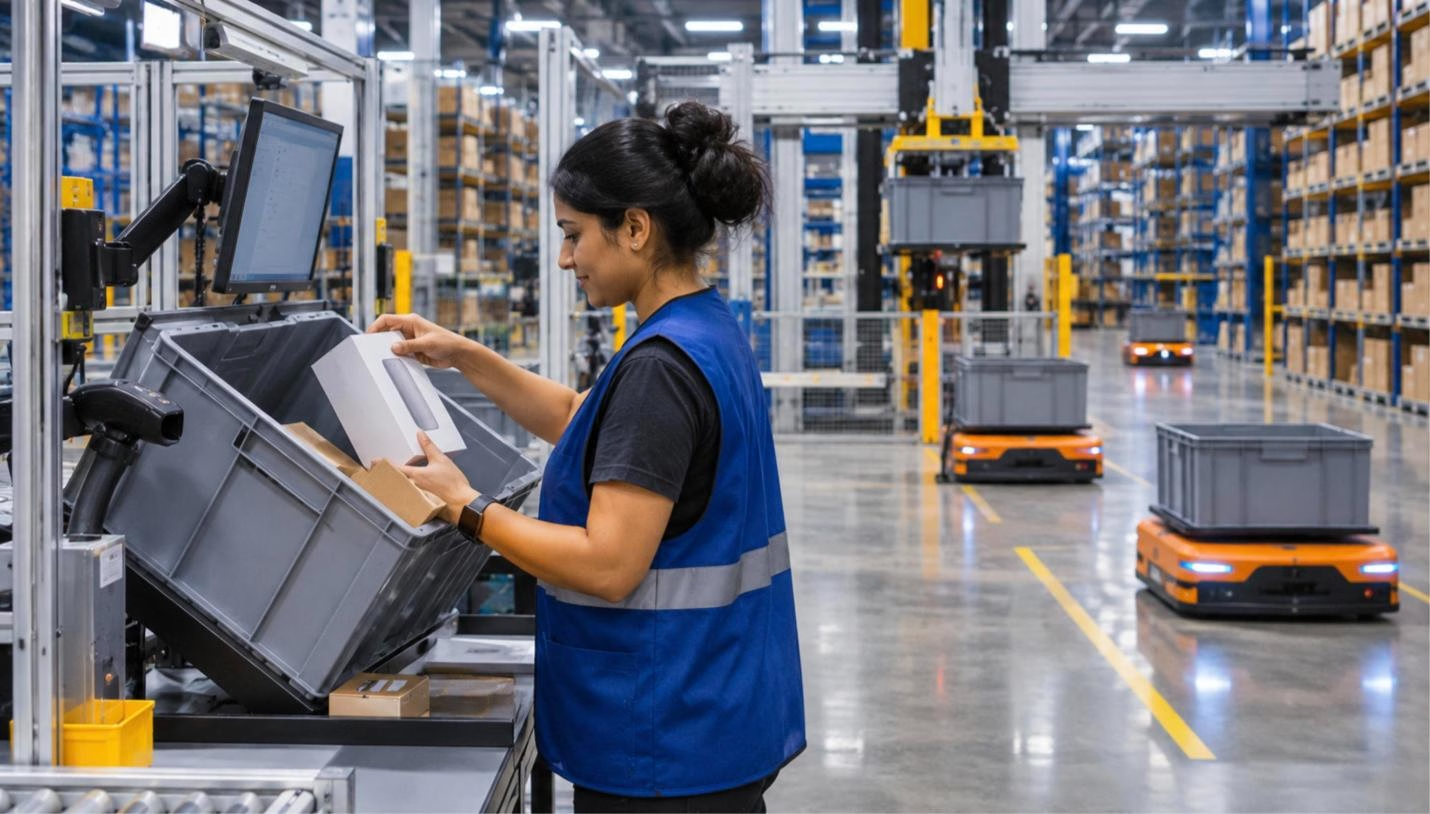
October 2023. Houston, Texas. The holiday rush is weeks away, and inside one of Amazon’s fulfilment centres, something new is moving.
Amazon’s answer was Sequoia, a system developed largely in secret before it was unveiled. It stitches together several kinds of machines into a single choreography. Mobile robots carry containerised inventory across the floor. A gantry, a tall frame that works like a giant automated shelf, restocks totes or sends them on. Robotic arms with computer vision sort what arrives. And at the end of the line sits a person.
That last part matters. Sequoia was designed to bring totes to employees at a comfortable height, roughly between mid-thigh and mid-chest, tilted so items are easy to reach. Amazon calls this the worker’s “power zone”. The idea is fewer awkward stretches and less stooping, shift after shift.
And the speed? Amazon says Sequoia lets it identify and store incoming inventory up to 75% faster, which means products appear for sale sooner. When orders come in, it can cut the time it takes to process them through the building by up to 25%. That helps more items qualify for same-day or next-day delivery.
Getting stock out of the building faster is only half the job. The other half is having the right stock in the right building before anyone orders it.
In the weeks before Black Friday, an Amazon fulfilment centre looks almost calm. Too calm. Trucks are arriving with pallets of air fryers, headphones and winter coats that nobody has ordered yet. Amazon is betting that they will be, and betting on exactly where. Stock too little and customers see “currently unavailable” at the worst possible moment. Stock too much, or in the wrong building, and money and space sit idle into January.
That bet is the work of forecasting. When Amazon first applied deep learning to its supply chain planning a decade ago, forecast accuracy improved dramatically within two years. In 2025, it went further with a new foundational forecasting model that blends sales history with far more signals, such as weather, holidays and local tastes, across hundreds of millions of products. Amazon says it improved long-range national forecasts for big deal events by more than 10%, and regional forecasts for millions of popular items by about 20%.
Somewhere, right now, a package is already sitting in a warehouse a few miles from the person who is about to order it. They just do not know it yet.
The takeaway: the big gains did not come from one clever robot or one clever model. They came from coordinating many moving parts, putting the human exactly where they are most effective, and giving planners a far stronger starting point.
Sources: Amazon (fulfilment centre overview) · About Amazon · GeekWire · About Amazon: AI innovations · About Amazon: holiday AI · Supply Chain Dive
Related from Sigosoft: Supply Chain Apps · Business Process Automation · AI Agents & Workflow Automation · Traditional ERP vs custom AI-powered ERP
6. A car factory that can spot trouble early
BMW Group, Regensburg, Germany: AI-supported conveyor maintenance
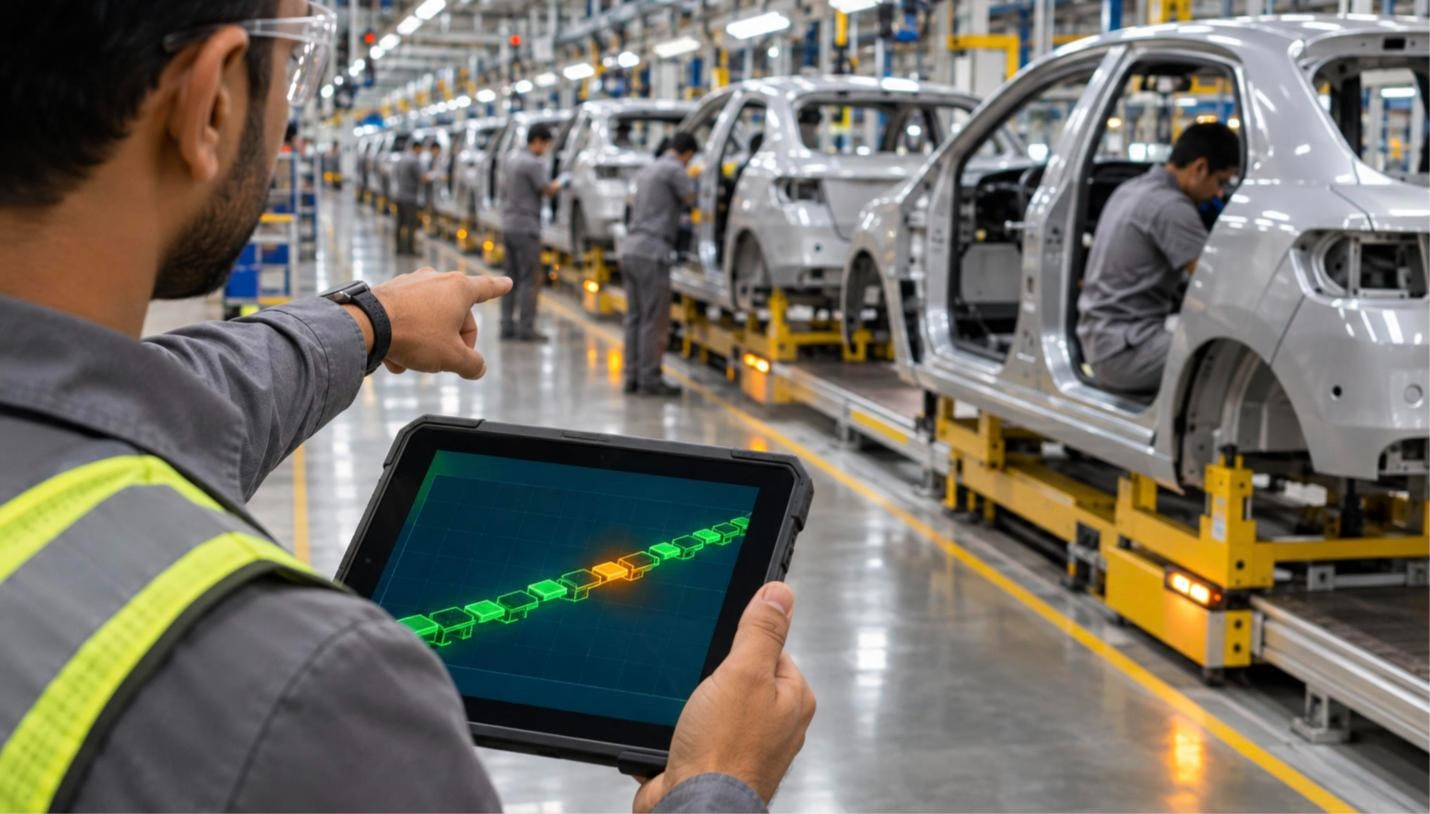
On the banks of the Danube in Bavaria, BMW’s Regensburg plant builds cars on a moving river of its own.
In final assembly, each vehicle body rides on a skid or mobile load carrier. These carriers travel through the halls in a long chain, one car after another, as workers fit doors, seats, wiring and wheels. The system is beautifully efficient, right up until one carrier fails. Then the chain stops. Everyone behind it waits.
The plant’s innovation team asked a simple question: what if the conveyors could warn them first?
The clever part was what they did not do. They did not cover the line in new sensors. The carriers were already sending data to their control systems. So the team built a learning system that reads what is already there, which keeps the extra cost down to storage and computing power.
Now an algorithm watches that stream around the clock. It looks for tiny irregularities: a carrier drawing a little more power than usual, a movement that is slightly off, a barcode that is becoming hard to read. Any of these could be the first hint of a fault. When it spots one, a warning goes to the maintenance control centre, which assigns it to the technician on duty. A colour-coded heatmap shows exactly where on the line the trouble is brewing. Sometimes it points to something as specific as a worn impeller on a conveyor trolley.
“The surveillance monitors at our control centre run 24/7,” says project manager Oliver Mrasek.
The result: BMW says the system prevents around 500 minutes of assembly disruption every year at Regensburg alone. The company has registered patents for the in-house development and standardised it so other plants can adopt it.
The takeaway: the AI did not replace the technicians. It gave them a radar, so they could walk straight to the problem instead of searching for it.
Sources: BMW Group PressClub · BMW Group press attachment
7. From a photo of a part to a warning before it fails
Coca-Cola HBC: image recognition for spare parts and predictive maintenance at scale
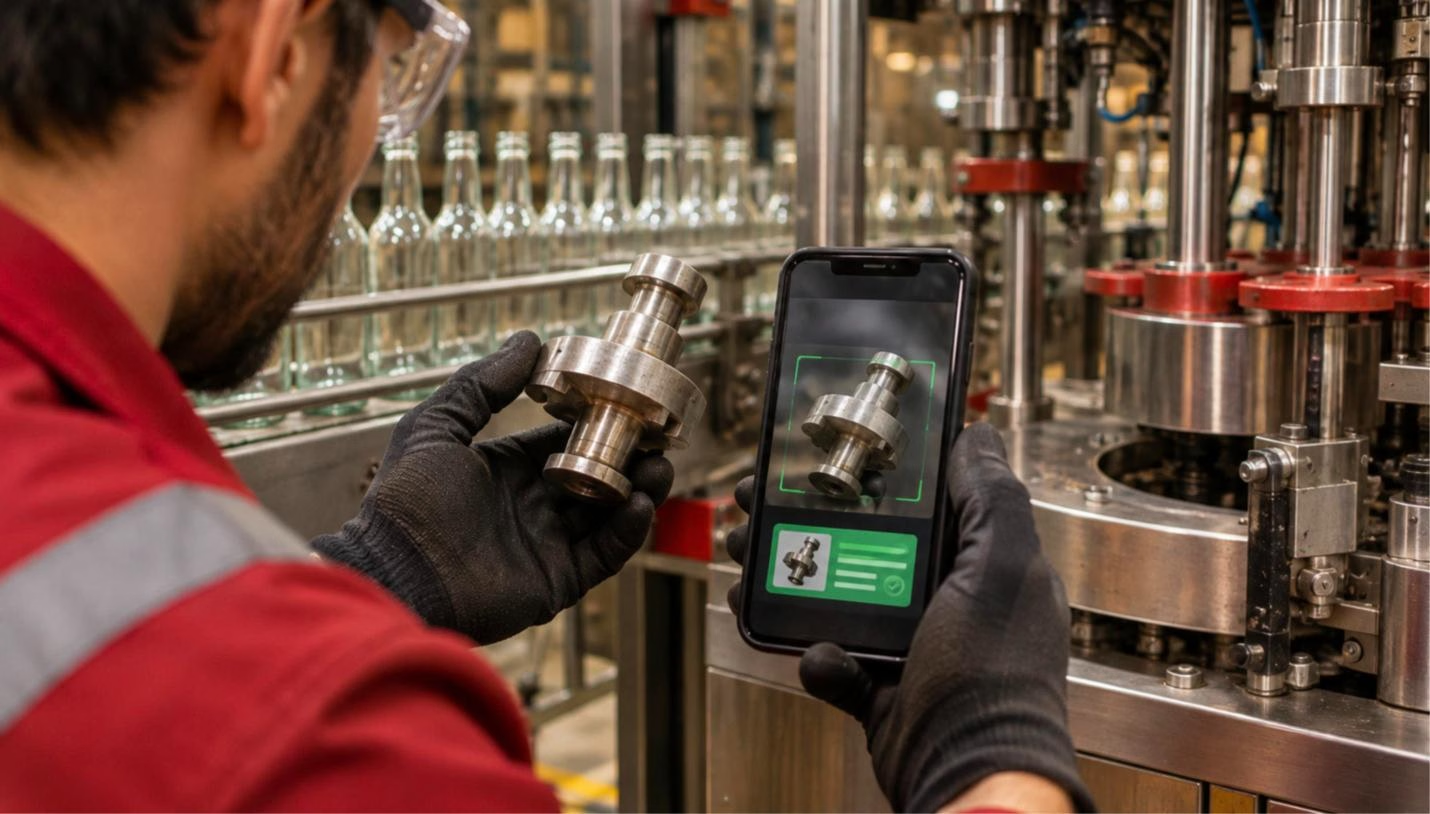
It is July, the height of bottling season. In a plant somewhere in Central Europe, a filling line that should be pushing out tens of thousands of bottles an hour has gone quiet.
A technician kneels beside the machine, holding a small, oddly shaped metal component. It is worn. It needs replacing. But what is it, exactly?
That question used to cost real time. Coca-Cola HBC runs a sprawling network of bottling plants across more than 20 countries, and those plants rely on roughly 220,000 different spare parts. Identifying the right one, finding its SAP code and working out which storeroom has it in stock could take 15 to 20 minutes or more. That meant digging through ERP screens, flipping through catalogues and phoning other sites, while the line sat idle in peak season.
So the company asked a deceptively simple question: what if you could just take a photo?
Working with SoftwareOne (formerly Crayon) on Microsoft Azure, the team built an image recognition app. The hardest part was not the model. It was the data. Every part had to be photographed at least five times, from different angles, to capture its shape and size. One large plant alone stocks around 4,000 parts. Some plants set up their own small photo studios to get it done. Early on, there were genuine doubts about whether busy technicians would commit to such a long, painstaking job.
They did. And the pilot paid off. Tested on 200 parts, the app reached 97% accuracy for the top match. When the first guess was wrong, the right part was usually second or third, and always in the top five.
Now the technician by the silent filler simply snaps a picture. Within moments, the app returns the SAP number and shows which plant and storage location holds the part. A search that once took 20 minutes can shrink to about a minute. After the pilot, the app rolled out to eight plants, then dozens more, with 48 plants onboarded by late 2024.
There was a bonus nobody planned for. Because every part was being photographed and checked, the project doubled as a data audit, catching coding inconsistencies in the parts records along the way.
The parts app solved one problem: finding the right component fast. The bigger prize was needing it less often, and on the plant’s schedule rather than the machine’s.
That is where many AI projects stall. The pilot works, the dashboard looks great, and then someone asks: can we do this on every line, in every plant, in every country? For Coca-Cola HBC, that question is enormous. The company runs 62 plants and more than 300 production lines, from Ireland to Nigeria, each with its own age, quirks and local team.
And yet it has kept pushing. Its 2025 annual report says predictive maintenance had been deployed across 55 production lines, with more added during the year. The system watches fillers, cappers and conveyors for early signs of trouble, so teams can intervene before a breakdown halts production. Around it, the company is also using digital twins to test production changes virtually and vision-picking smart glasses in its warehouses.
This is the unglamorous truth about industrial AI. A clever model is the easy part. The hard part is making it work on line 37 on a Tuesday night, with the technicians who actually run it, and then doing it again on line 38.
The takeaway: the technician’s expertise is still what fixes the machine. AI removed the scavenger hunt for parts, then started warning the team before parts failed, and scale is what turned both into real value.
Sources: SoftwareOne case study · Coca-Cola HBC annual report · CEO letter 2025
Related from Sigosoft: AI for Your Existing ERP · AI Document Processing · ERPNext Mobile Apps
8. Catching defects while products are still on the line
Procter & Gamble with Siemens: AI visual inspection
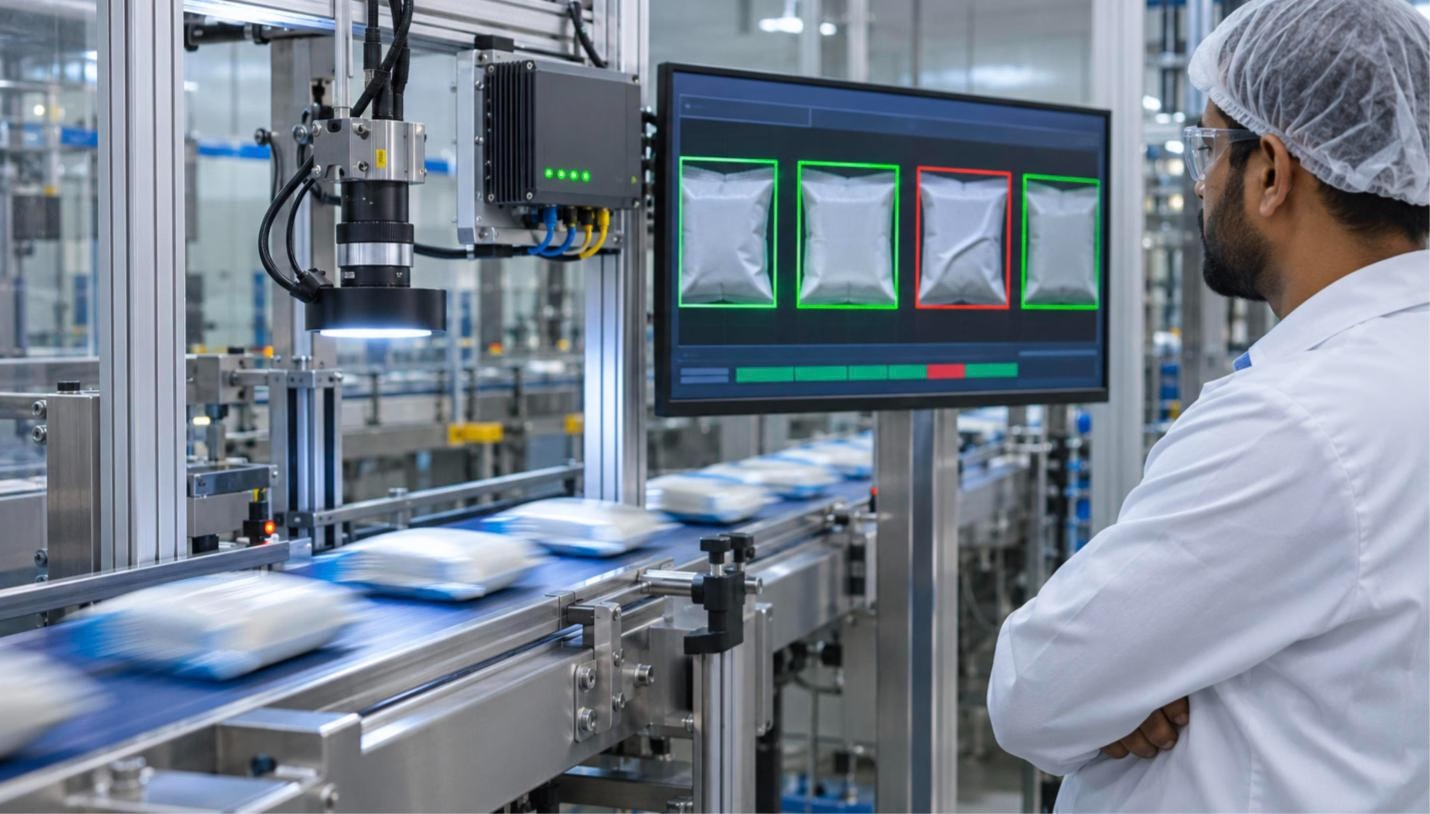
Stand beside a P&G production line and your eyes cannot keep up.
Products flash past in a blur, many of them made from soft, textured materials that stretch, shift and wrinkle as they move. Packaging is printed with bold graphics. Components overlap. Somewhere in that blur, every so often, something is slightly wrong: a misaligned layer, a faint low-contrast flaw, a fold where there should not be one.
For decades, factories handled this with rules-based machine vision: cameras programmed with fixed rules about what “good” looks like. That works when nothing changes. At P&G, materials, designs and lighting change constantly, and each change meant painstaking retuning.
So P&G turned to deep learning. Years before partnering with Siemens, its engineers built their own AI inspection models and proved them in more than 150 production environments. Instead of following fixed rules, the AI analyses live images pixel by pixel, learning to tell normal variation from a genuine defect.
The next challenge was scale. Together with Siemens, P&G turned its models into a standard system called the Visual Inspection Cockpit (VIC). It runs on Siemens’ Industrial Edge platform and industrial PCs powered by Nvidia GPUs, right beside the line. That means decisions happen in real time, fast enough to reject a single faulty product without slowing the line.
The results speak in the language every plant manager understands. Depending on the product, the system has cut scrap by 10–20%. New installations can be commissioned five to ten times faster than traditional custom vision systems. That speed is what allows P&G to copy one proven setup from plant to plant instead of engineering each one from scratch.
The takeaway: human inspectors are still essential. AI gives them a tireless second pair of eyes that can watch every product, at full speed, all shift long.
Sources: Siemens announcement · Siemens insight article · Manufacturing.net
9. A product catalogue rewritten at scale
Walmart: generative AI for catalogue data
This factory has no conveyor belts. No forklifts. No hard hats.
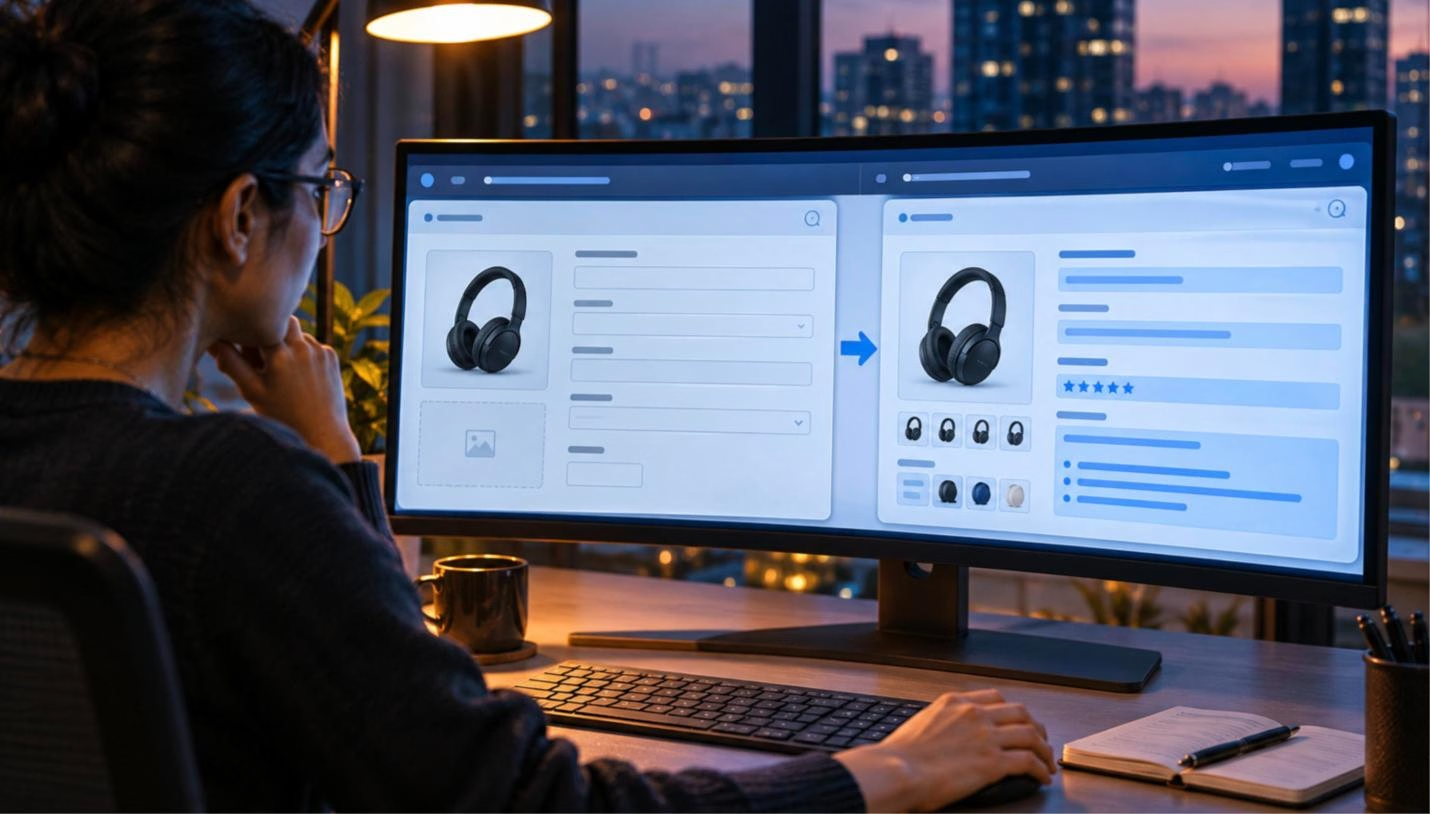
Its raw material is information: hundreds of millions of product listings, each one a small bundle of facts. A title. A size. A colour. A material. Whether the shampoo is sulphate-free, whether the jacket is waterproof, whether the TV mount fits a 65-inch screen. Multiply that by everything Walmart sells, online and in stores, and you have one of the largest and messiest datasets in retail.
And messy data has a cost. A customer searches for “blue rain jacket, women’s medium” and the perfect jacket never appears, because its listing says “navy” and leaves the size blank. An associate hunts for an item in the back room because the record does not say what the package looks like. Doug McMillon, Walmart’s CEO at the time, put it plainly on an earnings call: the quality of catalogue data affects nearly everything the company does, from search to storage to delivery.
Cleaning that data by hand was a never-ending job. So Walmart put multiple large language models to work, some from outside partners and some it built itself. The models read product information, filled in missing attributes, standardised descriptions and corrected errors.
In August 2024, Walmart told investors the scale of what had happened: generative AI had created or improved more than 850 million pieces of catalogue data. Without it, McMillon said, the same work in the same time would have needed nearly 100 times the current headcount.
The takeaway: AI is not only for machines with moving parts. Sometimes the most valuable production line in a business is the one that makes information.
Sources: Walmart earnings transcript · Retail Dive · Modern Retail
Related from Sigosoft: Generative AI & RAG · E-commerce Development · AI Document Processing
10. A supply chain prepared for the surge
Procter & Gamble, Guangzhou, China: a World Economic Forum Lighthouse
It is a few minutes before midnight on 11 November in China. Hundreds of millions of shoppers sit with their phones, carts full, thumbs hovering. Singles’ Day is about to begin, the largest shopping event on Earth.
When the clock strikes twelve, the orders do not trickle in. They flood.
For P&G, few places feel that wave like Guangzhou. This is where the company first invested in China, back in 1988. China later became P&G’s largest e-commerce market. And when online demand at the Guangzhou operation jumped by around 45%, the old way of running a supply chain started to creak. Plan too cautiously and the shelves run empty mid-sale. Overstock to be safe and warehouses fill with cash sitting still.
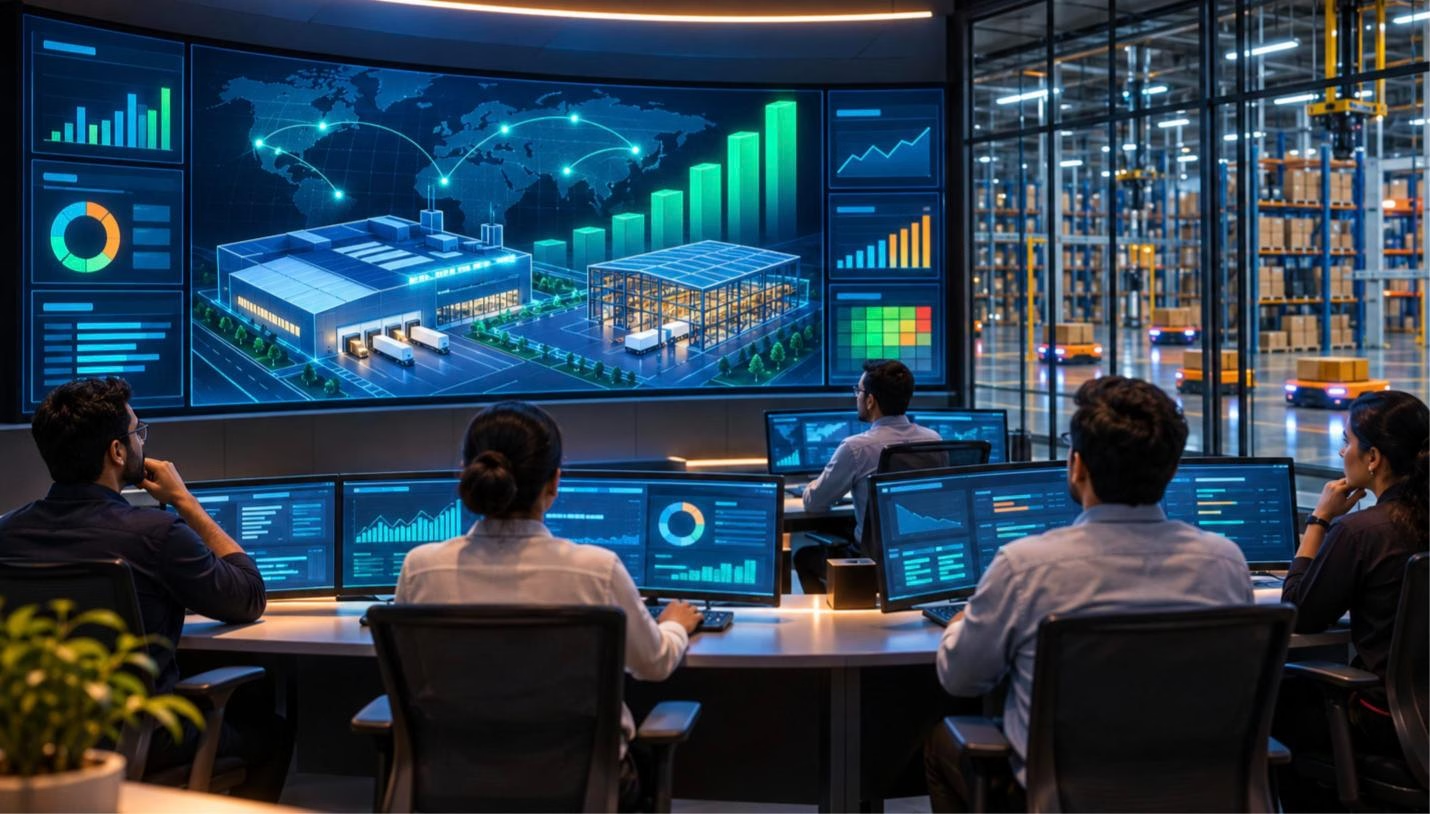
P&G’s answer was to make the whole chain think together. Using AI, flexible automation and digital twins, it linked systems that had traditionally worked apart, from production to warehousing to delivery. A digital twin is a living virtual copy of the operation. Planners can test a decision inside it before risking it in the real world. What happens if we shift production of this detergent to Tuesday? What if this distribution centre gets 30% more orders tomorrow? The model answers first. The trucks move second.
Over three years, the results were striking. The World Economic Forum reports a 30% reduction in inventory, 15% lower logistics costs and 99.9% on-time delivery. The site is now part of the WEF’s Global Lighthouse Network, a small group of factories recognised as leaders in applying advanced manufacturing technology.
The takeaway: the hero here is coordination. AI helped planners see the whole chain at once and rehearse decisions before making them.
Sources: World Economic Forum case study · China Daily · Supply Chain Digital
Related from Sigosoft: Supply Chain Apps · Decision Intelligence Dashboards · Distribution Management
Epilogue: the real transformation is in the work
Go back to the night shift. 2:47 a.m. The technician with his tea and his torch.
He never saw the pressure drift. He did not need to. By morning, the fix was scheduled, the part was ready and the line kept running. His job did not disappear. It got better. He spent his next shift fixing something that was about to break, instead of scrambling to fix something that already had.
That is the thread running through all ten stories. They span farms and factories, warehouses and supply chains, delivery trucks and product catalogues. They use very different kinds of AI: route optimisation, computer vision, predictive maintenance, generative models, demand forecasting. But none of them started with the technology. Each started with a decision someone wanted to make better.
- A driver needed a better route.
- A farmer needed to know which plant was a weed.
- A maintenance team needed a warning before a breakdown, not after.
- A planner needed to see the whole network at once.
- A technician needed the right part, now.
- An inspector needed a second pair of eyes that never blinks.
And in almost every case, the hardest part was not building the model. It was earning the trust of the people who would use it, getting the data right, and then scaling it from one line, one route or one plant to many.
At Sigosoft, that is how we approach AI. We start with the operational challenge, not the algorithm. Where is time being lost? Where is money leaking? Which decisions are being made with too little information, too late? Only then do we ask whether computer vision, predictive analytics, intelligent automation or a custom AI application is the right tool. The technology should fit the work, and give the people doing that work better tools and better information.
Explore Sigosoft AI services: AI Agents & Workflow Automation · Generative AI & RAG · Data Engineering & Analytics · Decision Intelligence Dashboards · Private AI & On-premise LLMs · AI for Your Existing ERP · Case studies
Further reading on the Sigosoft blog: How to choose an AI development company: a 12-point scorecard · Why AI agents stall between pilot and production · Traditional ERP vs custom AI-powered ERP · All articles
The transformation rarely arrives with fanfare. It begins quietly: a warning on a dashboard, a slightly better forecast, a camera that notices what the eye missed. But at the scale of a factory, a fleet or a supply chain, those small moments add up.
And one day you look up and realise you are running a very different business.
The factory is still running. Now it can see what is coming.
The impact figures in this article are reported by the companies or their research and technology partners. Results vary by implementation and operating conditions. Scene-setting details in each chapter are illustrative, based on the publicly described operations.
Thanks for the feedback!

Praveen Soman CEO, Sigosoft
Technology entrepreneur and digital product strategist with a passion for building scalable software products and solving real-world business challenges. Enjoys exploring AI, emerging technologies, startups, and the ideas shaping the future of technology.
Connect on LinkedIn →Start the discussion
Questions or experiences to share? Our team reads and replies.