
For many startups and businesses in Africa, launching a food delivery app is no longer just a technology decision it’s a strategic move to capture a fast-growing digital market.
Africa’s food delivery ecosystem is expanding rapidly, driven by smartphone adoption, urban lifestyles, and the rise of mobile payment systems. But building a successful platform here is not as simple as replicating global apps. The real challenge lies in adapting to local realities such as logistics inefficiencies, fragmented payment systems, and varying user expectations.
Most food delivery apps fail not because of poor technology, but because they don’t align with the market they serve.
If you’re planning to build a food delivery app in Africa, this guide will help you understand not just the “how,” but also the “why” behind every decision.
In this guide, you’ll learn:
- How to build a food delivery app
- Key features required for scalability
- Development process and timelines
- Cost considerations across African markets
- Challenges and how to overcome them
Why Food Delivery Apps Are Booming in Africa

The demand for food delivery services across Africa is increasing rapidly, and this growth is backed by strong market fundamentals.
1. Rapid Smartphone Adoption
Affordable smartphones are making digital services accessible to a wider audience.
2. Urbanization and Changing Lifestyles
In cities like Lagos, Nairobi, and Cape Town, people are increasingly relying on convenience-driven services such as food delivery.
3. Expansion of Mobile Payment Ecosystems
Mobile money platforms such as M-Pesa and Flutterwave have simplified how users pay, making digital transactions more seamless.
4. Rise of Cloud Kitchens
Many businesses are now operating without dine-in spaces, focusing entirely on delivery-based models.
For businesses, this is more than a trend it’s an opportunity to build scalable, revenue-generating platforms in emerging markets.
Business Models for Food Delivery Apps

Choosing the right business model is one of the most important decisions you will make, as it directly affects your scalability and revenue potential.
1. Single Restaurant Model
- Direct relationship with customers
- Full control over branding and operations
- Suitable for established businesses
2. Aggregator Model
- Multiple restaurants on one platform
- Commission-based revenue
- High scalability and user reach
3. Cloud Kitchen Model
- Delivery-focused operations
- Lower operational costs
- Optimized for scalability
If your goal is long-term growth, the multi-vendor aggregator model is often the most practical and scalable approach.
Key Features Required for a Scalable Food Delivery Platform

A successful platform must deliver a seamless experience for all stakeholders customers, restaurants, and delivery partners.
Customer Application
- Simple onboarding and login
- Smart search and filtering
- Real-time order tracking
- Secure payment options
- Ratings and feedback system
Restaurant Dashboard
- Menu and pricing management
- Order processing system
- Inventory tracking
- Performance analytics
Delivery Partner Application
- Route optimization
- Order assignment and alerts
- Earnings tracking
- Navigation integration
Admin Control Panel
- User and vendor management
- Commission and revenue control
- Reports and analytics
- Payment monitoring
In African markets, additional features are not optional they are essential:
- Low-bandwidth optimization
- Mobile money integration
- Multi-language accessibility
In many cases, payment flexibility and delivery reliability matter more to users than advanced design features.
Cost to Build a Food Delivery App in Africa
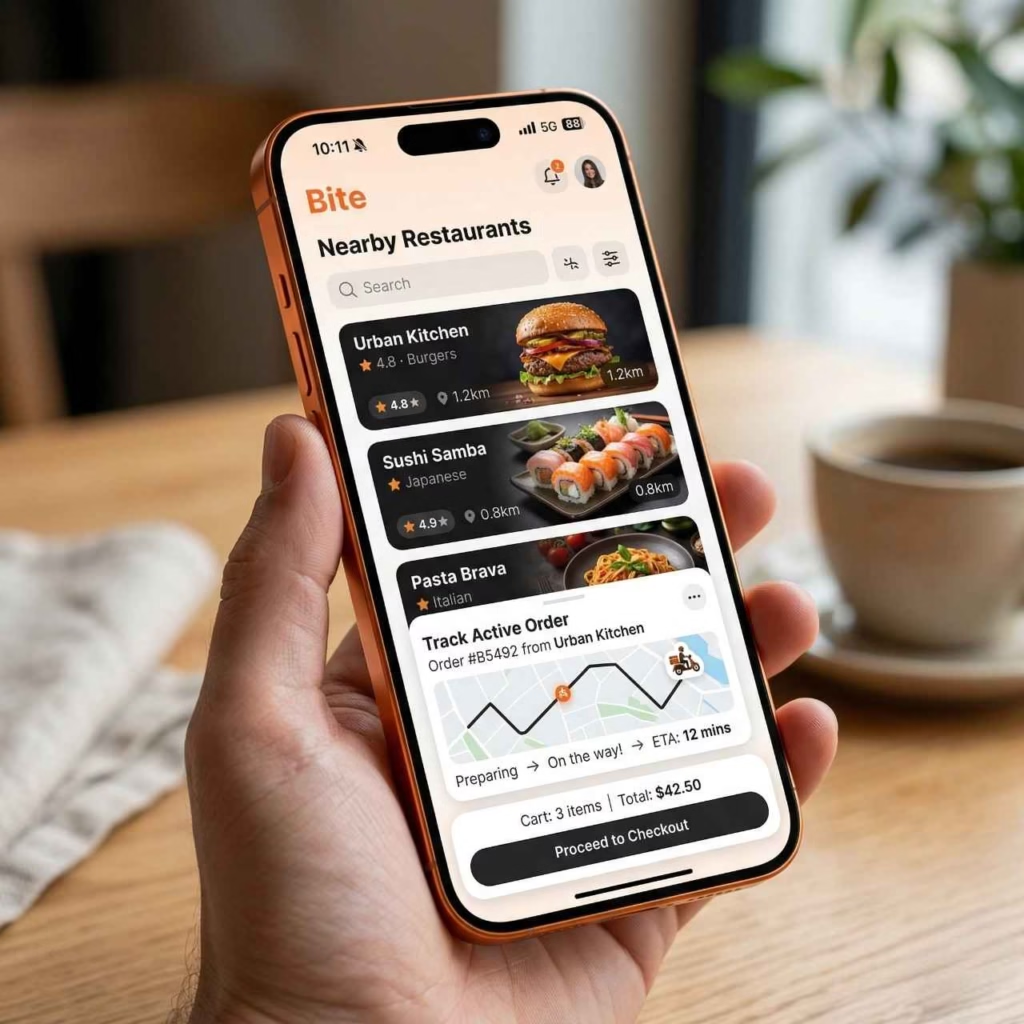
One of the first questions most founders ask is about cost but the better question is: what level of investment is required to build a scalable and sustainable platform?
Key Cost Factors:
1. Application Scope
An MVP requires a lower initial investment, but scaling later may require additional development.
2. Geographic Market
Operational considerations differ across regions such as Nigeria, Kenya, and South Africa.
3. Feature Complexity
Advanced features such as real-time tracking, payment integrations, and AI capabilities increase development effort.
4. Development Approach
Choosing an experienced development partner may involve higher upfront investment, but significantly reduces long-term risks and rework.
From a business perspective, investing in the right architecture early can save substantial costs during scaling.
Development Process for a Food Delivery App
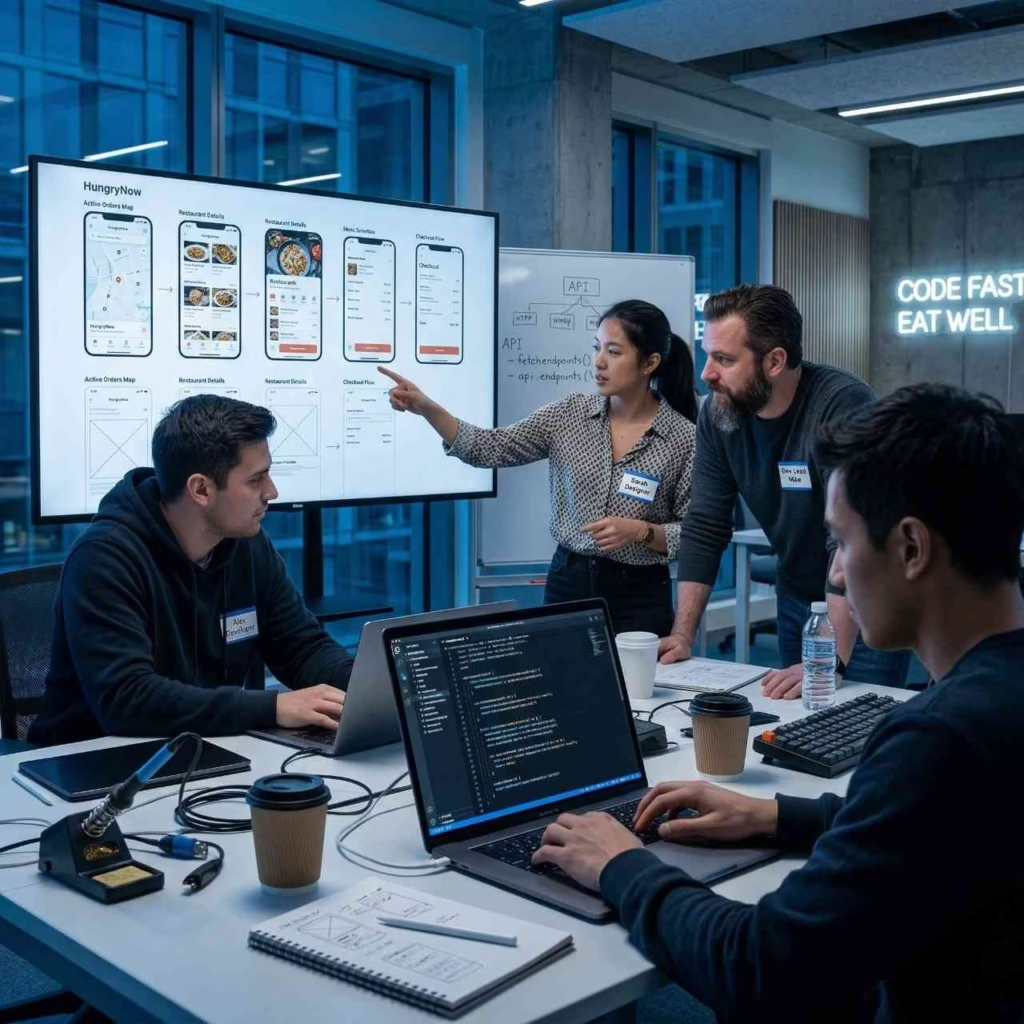
Building a reliable food delivery platform requires a structured and strategic approach.
1. Market Analysis
Understand your users, competitors, and local challenges.
2. Product Strategy and Planning
Define your core features and plan for scalability from the beginning.
3. UI/UX Design
Design an intuitive and user-friendly interface optimized for mobile users.
4. Application Development
Use modern technologies to ensure performance, flexibility, and scalability.
5. Testing and Quality Assurance
Ensure the platform performs well under real-world conditions.
6. Deployment and Launch
Launch the application with a clear go-to-market strategy.
In fast-growing markets, speed matters but launching without the right foundation can lead to long-term issues.
Challenges in the African Market and Strategic Solutions

Every market has its complexities, and Africa presents unique challenges that must be addressed strategically.
1. Connectivity Limitations
Solution: Optimize applications for low bandwidth and offline usability.
2. Payment Infrastructure Variability
Solution: Integrate region-specific mobile payment solutions.
3. Logistics and Delivery Complexity
Solution: Implement smart routing and tracking systems.
4. Customer Trust and Adoption
Solution: Build transparency through ratings, reviews, and secure payment systems.
Understanding these challenges early allows you to design a platform that performs effectively in real-world conditions.
Business Impact of Food Delivery Apps
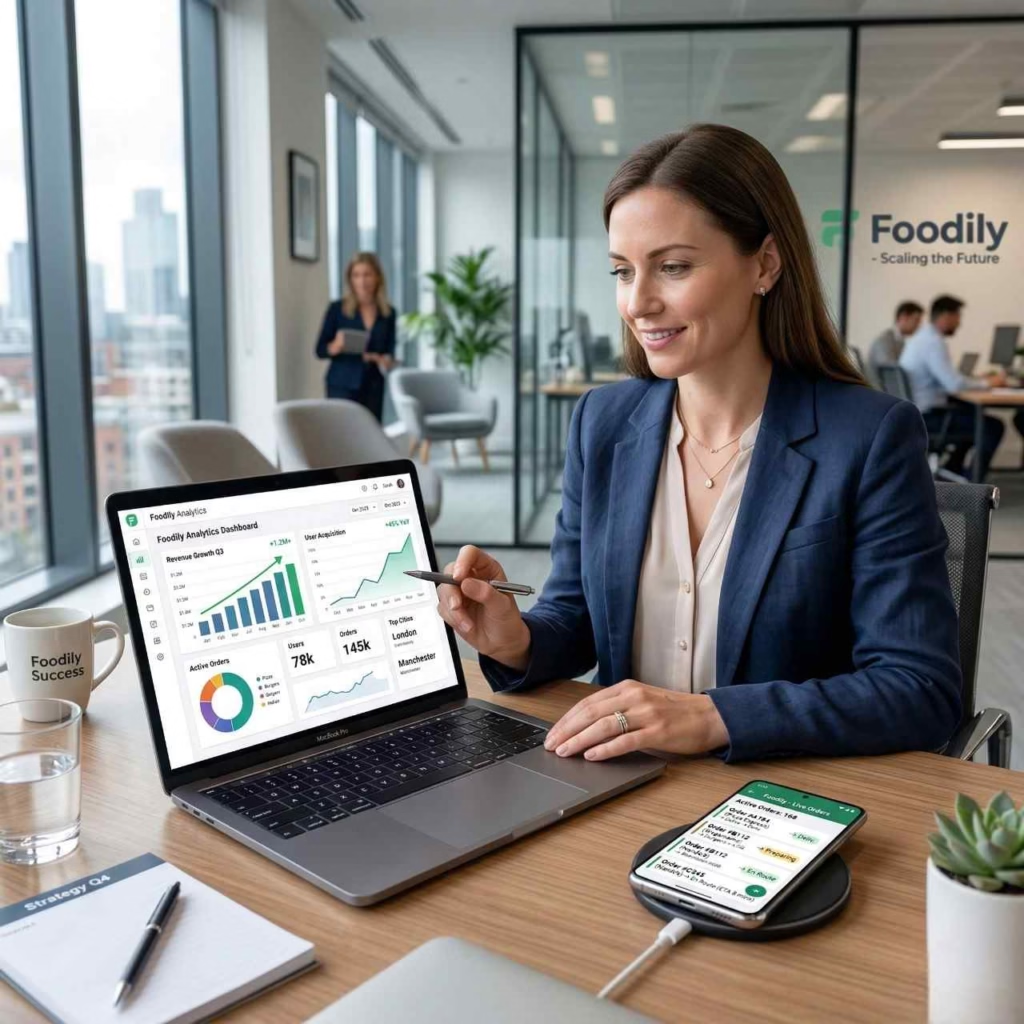
For businesses, a well-executed food delivery platform delivers measurable outcomes:
- Recurring revenue through commissions and delivery fees
- Increased customer retention and engagement
- Operational efficiency through automation
- Ability to expand into new markets
A food delivery app is not just a product it’s a long-term business asset.
Role of AI in Modern Food Delivery Platforms
AI is increasingly being used to improve efficiency and user experience:
- Route optimization for faster deliveries
- Predictive analytics for demand forecasting
- Automated support through chatbots
These capabilities help businesses reduce operational costs while improving service quality.
Why Choose a Professional Food Delivery App Development Company

Building a scalable platform requires more than development it requires strategic thinking, technical expertise, and long-term support.
Sigosoft Pvt Ltd is a globally experienced software development company specializing in mobile and web applications. With over a decade of experience and clients across 30+ countries, the company focuses on delivering scalable, secure, and performance-driven solutions.
As an organization aligned with ISO/IEC 27001:2022 standards, Sigosoft ensures strong data security practices, risk management, and compliance—critical for handling user data and transactions.
Sigosoft’s capabilities include:
- Custom mobile app development aligned with business goals
- User-centric UI/UX design
- AI-driven features for operational efficiency
- End-to-end development, deployment, and support
With experience in building on-demand platforms and working with global markets, including Africa, Sigosoft helps businesses launch scalable and future-ready solutions.
Choosing the right development partner directly impacts your time to market, scalability, and long-term return on investment.
If you are planning to build a food delivery app and want clarity on the right approach, features, and technology stack, you can request a free consultation with the Sigosoft team to discuss your project requirements and roadmap.
Conclusion
The food delivery market in Africa presents a significant opportunity for businesses willing to invest strategically. Success depends not only on technology, but on how well your platform adapts to local market dynamics.
From choosing the right business model to implementing efficient logistics and payment systems, every decision plays a role in long-term success.
If you are planning to build a food delivery app and want clarity on the right approach, discussing your idea with an experienced team can help you avoid common mistakes and accelerate your launch.
FAQs
1. How to build a food delivery app in Africa?
You need market research, feature planning, UI/UX design, development, testing, and deployment.
2. What is the cost of food delivery app development in Africa?
It depends on features, complexity, and development approach. Scalable solutions require higher initial investment but deliver better long-term value.
3. What features are essential?
User app, restaurant panel, delivery tracking, admin dashboard, and payment integration.
4. How long does development take?
Typically between 2 to 6 months.
5. Can mobile money be integrated?
Yes, and it is essential for African markets.
6. Which business model is best?
The multi-vendor aggregator model offers the highest scalability.
7. Is it profitable?
Yes, with proper execution and market understanding.
8. Do I need a development company?
Yes, to ensure scalability, security, and performance.
9. What technologies are used?
Cross-platform frameworks and cloud-based systems are commonly used.
10. How can I launch quickly?
Start with an MVP and scale based on user feedback.