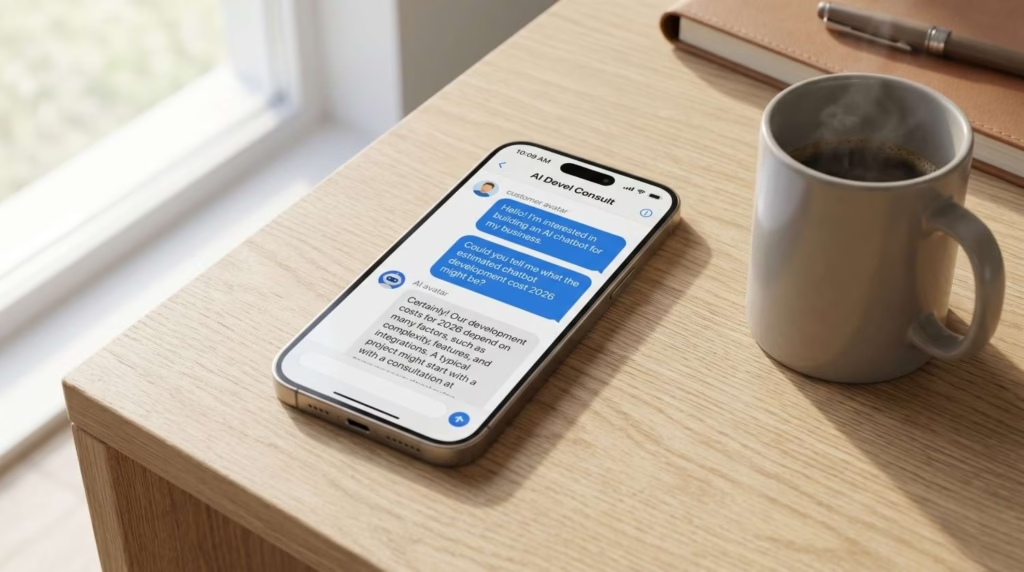
Artificial intelligence is no longer a competitive advantage it’s a business necessity. In 2026, AI chatbots have evolved into intelligent, context-aware systems capable of handling customer interactions, automating workflows, and driving measurable business outcomes.
From startups to enterprises, organizations are rapidly investing in chatbot solutions to reduce operational costs and improve customer experience. However, one critical question remains at the center of every decision:
How much does AI chatbot development cost in 2026?
The answer is not fixed. The cost to build an AI chatbot depends on several factors including complexity, features, integrations, and whether you choose a custom-built solution or a subscription-based platform.
This guide provides a complete breakdown of AI chatbot development cost in 2026, including pricing models, cost drivers, ROI insights, and strategies to optimize your investment.
What is an AI Chatbot?
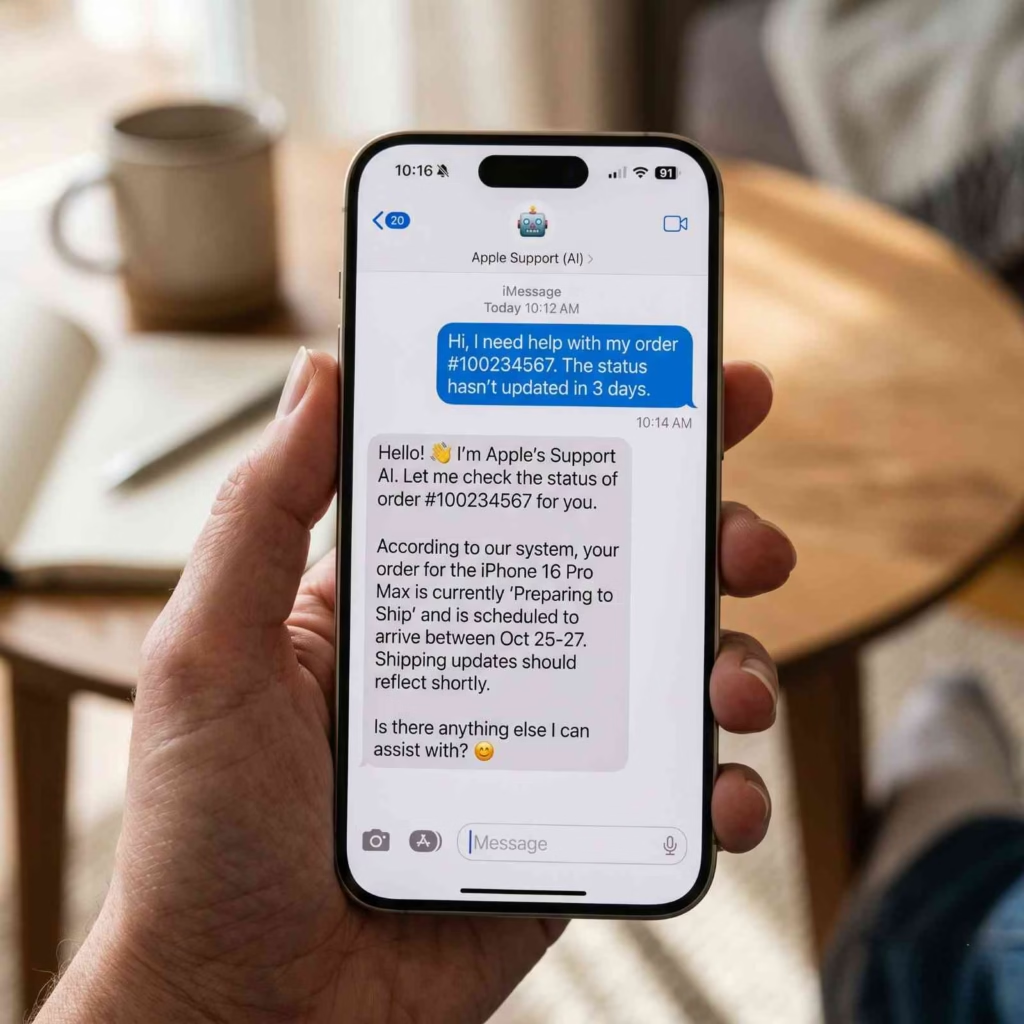
An AI chatbot is a software system that uses artificial intelligence to simulate human-like conversations through text or voice.
Modern AI chatbots are powered by technologies such as:
- Natural Language Processing (NLP)
- Machine Learning (ML)
- Large Language Models (LLMs)
- Retrieval-Augmented Generation (RAG)
Unlike traditional rule-based bots, AI chatbots can:
- Understand intent and context
- Generate dynamic responses
- Learn from interactions
- Handle multi-step conversations
These capabilities make them essential for industries like e-commerce, healthcare, fintech, and SaaS platforms.
Types of AI Chatbots and Their Cost
AI chatbot pricing varies by type, ranging from basic rule-based bots to advanced enterprise AI systems.
Chatbot Types vs Cost
| Chatbot Type | Cost Range | Complexity | Best Use Case |
| Rule-Based | $3,000 – $10,000 | Low | FAQs, simple automation |
| NLP Chatbot | $15,000 – $50,000 | Medium | Customer support |
| Generative AI Chatbot | $40,000 – $100,000+ | High | Advanced automation |
| Enterprise Chatbot | $100,000 – $300,000+ | Very High | Large-scale systems |
Average chatbot development cost in 2026: $5,000 – $150,000+
Detailed AI Chatbot Pricing Breakdown
Key Cost Components
1. Development & AI Training
- Accounts for 40–60% of total cost
- Includes backend logic, model training, and AI setup
2. Feature-Based Cost Breakdown
| Feature | Cost Impact |
| NLP & AI models | $5K – $30K |
| RAG integration | $10K – $25K |
| Voice AI | $10K – $20K |
| Multi-language support | $5K – $15K |
3. Integration Costs
| Integration | Cost |
| CRM (HubSpot, Salesforce) | $3K – $10K |
| Payment systems | $5K – $15K |
| ERP systems | $10K – $20K |
4. UI/UX Design
- Cost: $3,000 – $15,000
- Includes chatbot interface, mobile responsiveness, and user flow
Custom Chatbot vs SaaS Chatbot
Custom chatbots offer full control and scalability, while SaaS chatbots provide faster and cheaper deployment.
Comparison Table
| Feature | SaaS Chatbot | Custom Chatbot |
| Initial Cost | Low ($0–$500) | High ($5K–$100K+) |
| Monthly Cost | Fixed subscription | Usage-based |
| Customization | Limited | Full |
| Ownership | No | Yes |
| Launch Time | Days | Months |
SaaS Chatbot Pricing (Subscription Model)
Pricing Tiers
| Plan | Monthly Cost | Best For |
| Starter | $0 – $50 | Small businesses |
| Growth | $100 – $600 | AI chatbot features |
| Enterprise | $1,000 – $5,000+ | Large-scale operations |
Pricing Models Explained (AI Chatbot Development in 2026)
AI chatbot pricing in 2026 is not one-size-fits-all. Businesses can choose from three primary pricing models, each suited for different stages of growth, technical requirements, and budget strategies.
Quick Answer:
- Custom = High upfront, long-term asset
- SaaS = Low upfront, recurring cost
- Usage-based = Scalable, pay-as-you-grow
1. One-Time Development Cost (Custom Chatbot)
This model involves building a chatbot from scratch tailored to your business needs.
Cost Range:
- $5,000 – $150,000+ (one-time)
- Enterprise systems: $100K – $300K+
What You Pay For:
- Custom AI model integration (LLMs, NLP)
- Backend development & architecture
- UI/UX design
- API integrations (CRM, ERP, payments)
- Deployment and testing
Best For:
- Businesses needing full control and ownership
- Complex workflows and automation
- Long-term scalability
Considerations:
- High initial investment
- Longer development time (2–6 months)
- Requires ongoing maintenance
Insight:
Custom chatbot development is ideal if your chatbot is a core business asset, not just a support tool.
2. Subscription-Based Model (SaaS Chatbots)
This model uses pre-built chatbot platforms with monthly or yearly pricing.
Cost Range:
- $0 – $50/month → Starter
- $100 – $600/month → Growth
- $1,000 – $5,000+/month → Enterprise
What You Get:
- Pre-built chatbot infrastructure
- Hosting and maintenance
- Basic AI capabilities
- Limited integrations
- Dashboard and analytics
Best For:
- Startups and small businesses
- Quick deployment (within hours/days)
- MVP or testing phase
Limitations:
- Limited customization
- Vendor dependency
- Scaling costs increase over time
Insight:
SaaS chatbots are perfect for validating ideas quickly before investing in custom development.
3. Usage-Based Pricing (API / Token Model)
This model charges based on chatbot usage, typically through API consumption.
Cost Structure:
- LLM API usage: ~$2–$10 per 1M tokens
- Monthly cost: $50 – $5,000+ depending on traffic
What You Pay For:
- AI model usage (input/output tokens)
- Cloud infrastructure (AWS, Azure, GCP)
- Data processing and storage
Best For:
- High-traffic applications
- Scalable AI systems
- Custom chatbot deployments
Considerations:
- Costs increase with usage
- Requires monitoring and optimization
- Can become expensive at scale
Example:
A chatbot handling 100,000 conversations/month may cost:
$200 – $1,500/month depending on complexity
Pricing Model Comparison
| Model | Cost Type | Flexibility | Scalability | Best For |
| Custom Development | One-time | High | Very High | Enterprises |
| SaaS Subscription | Monthly | Low | Medium | Startups |
| Usage-Based | Variable | High | High | AI-driven apps |
Which Pricing Model Should You Choose?
Choose Custom Chatbot if:
- You need full control
- You want long-term ROI
- Your chatbot is business-critical
Choose SaaS Model if:
- You need quick deployment
- You have a limited budget
- You are testing a use case
Choose Usage-Based Model if:
- You expect high traffic
- You want scalable AI infrastructure
- You are building advanced AI systems
Hidden Costs of AI Chatbots
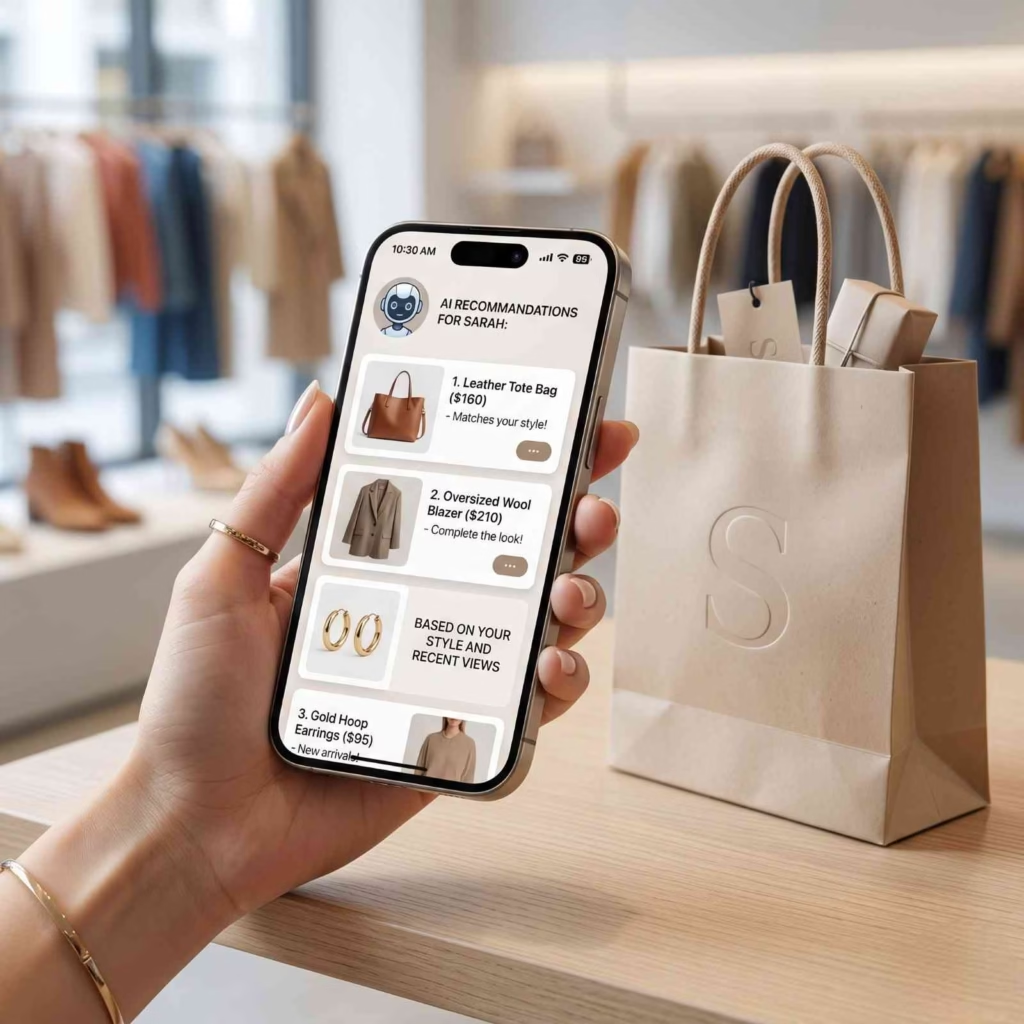
Beyond development, chatbot costs include API usage, maintenance, and infrastructure.
Common Hidden Costs:
- API usage (LLMs): $50 – $5,000+/month
- Cloud hosting: $50 – $500/month
- Maintenance: 15–25% annually
- Data training: $2K – $10K
The pricing ranges mentioned above are based on 2026 industry benchmarks and real project estimates from leading platforms such as Clutch.co and GoodFirms. These platforms aggregate data from verified development agencies worldwide, providing insights into average chatbot development costs across different regions, complexity levels, and service providers. Actual pricing may vary depending on project scope, AI sophistication, and customization requirements.
Cost Breakdown by Region
| Region | Hourly Rate |
| USA | $100 – $250 |
| Europe | $80 – $180 |
| India | $20 – $70 |
Offshore development can reduce costs by up to 60%.
Timeline to Build an AI Chatbot
Development time ranges from 2 weeks to 6 months depending on complexity.
Development Timeline
| Phase | Duration |
| Planning | 1–2 weeks |
| Design | 2–3 weeks |
| Development | 4–12 weeks |
| Testing | 2–4 weeks |
| Deployment | 1–2 weeks |
Industry-Wise AI Chatbot Development Cost in 2026
AI chatbot development costs vary significantly across industries due to differences in data sensitivity, compliance requirements, integration complexity, and user interaction models.
Below is a detailed breakdown of chatbot pricing by industry, including real-world use cases, technical requirements, and cost drivers.
Healthcare Chatbot Development Cost
Estimated Cost: $30,000 – $150,000+
Healthcare chatbots are among the most complex and regulated AI systems due to strict compliance and data privacy requirements.
Key Features:
- Patient symptom checker
- Appointment scheduling
- Electronic Health Record (EHR) integration
- Medication reminders
- AI-powered triage systems
Cost Drivers:
- Compliance (HIPAA, GDPR)
- Secure data handling and encryption
- Integration with hospital systems (EHR/EMR)
- AI training on medical datasets
Example Use Case:
A hospital chatbot that triages patients and schedules appointments can reduce administrative workload by up to 40%.
E-commerce Chatbot Development Cost
Estimated Cost: $10,000 – $50,000
E-commerce chatbots focus on improving customer experience and increasing sales conversions.
Key Features:
- Product recommendations (AI-based)
- Order tracking and updates
- Cart recovery automation
- Personalized shopping experience
- Multilingual support
Cost Drivers:
- Integration with platforms (Shopify, WooCommerce)
- Recommendation engines (AI/ML models)
- Real-time inventory sync
- Payment gateway integration
Example Use Case:
An AI chatbot that recommends products based on user behavior can increase conversion rates by 20–30%.
Fintech Chatbot Development Cost
Estimated Cost: $40,000 – $200,000+
Fintech chatbots require high security, real-time processing, and advanced AI capabilities.
Key Features:
- Fraud detection alerts
- Account management
- Transaction tracking
- Financial insights and advisory
- Secure authentication (OTP, biometrics)
Cost Drivers:
- Security compliance (PCI DSS, KYC regulations)
- Real-time transaction processing
- Integration with banking APIs
- Advanced AI models for risk analysis
Example Use Case:
A banking chatbot that detects suspicious activity in real time can significantly reduce fraud-related losses.
Education Chatbot Development Cost
Estimated Cost: $15,000 – $60,000
Education chatbots are designed to enhance learning experiences and automate student support.
Key Features:
- AI tutoring and learning assistance
- Course recommendations
- Student query resolution
- Automated assessments
- Multilingual learning support
Cost Drivers:
- AI personalization algorithms
- Integration with LMS platforms (Moodle, Blackboard)
- Content database size
- Adaptive learning systems
Example Use Case:
An AI tutor chatbot can provide personalized learning paths, improving student engagement and retention rates.
Industry-Wise Cost Comparison
| Industry | Cost Range | Complexity | Key Focus |
| Healthcare | $30K – $150K+ | Very High | Compliance & data security |
| E-commerce | $10K – $50K | Medium | Conversions & personalization |
| Fintech | $40K – $200K+ | Very High | Security & real-time data |
| Education | $15K – $60K | Medium | Learning & engagement |
ROI of AI Chatbots
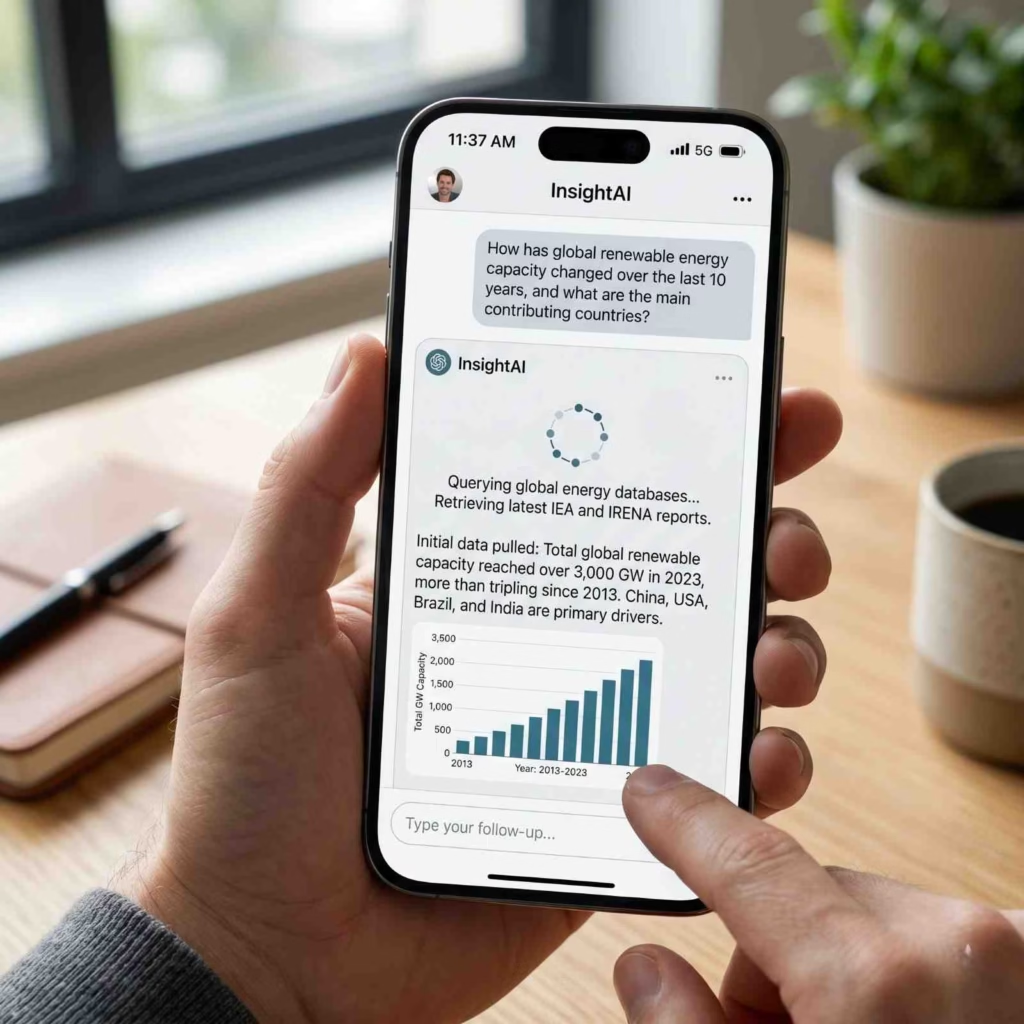
AI chatbots deliver measurable ROI through cost savings and increased efficiency.
ROI Metrics
| Benefit | Impact |
| Customer support cost reduction | 30–50% |
| Conversion rate increase | 20–25% |
| Response time improvement | Instant |
| Scalability | 10x support capacity |
Example:
A chatbot costing $30K can save $100K annually in support costs.
Emerging AI Trends Shaping Chatbot Development in 2026
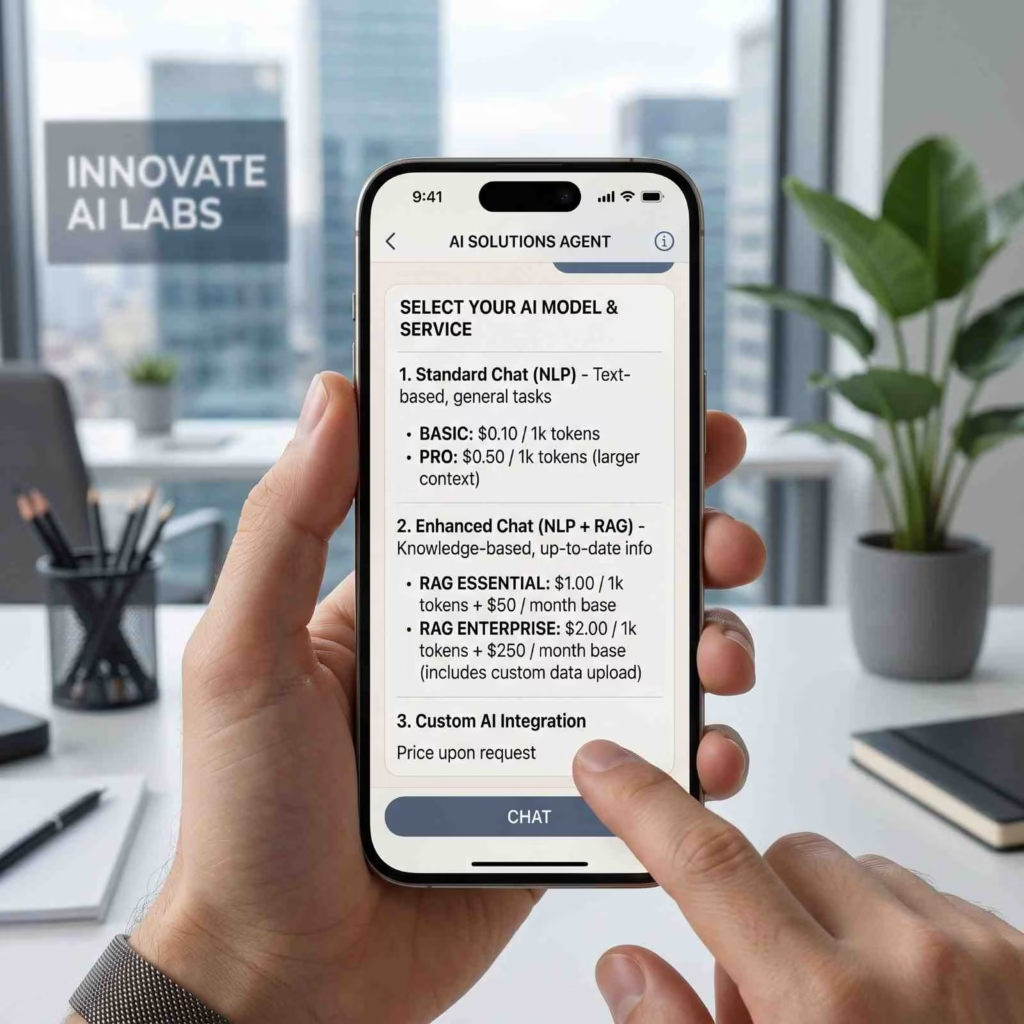
AI chatbot development in 2026 is being driven by rapid advancements in artificial intelligence, particularly in large language models, real-time data processing, and autonomous AI systems.
Modern AI chatbots are no longer static toolsthey are evolving into intelligent, adaptive systems powered by LLMs, RAG architectures, multi-agent workflows, and voice AI, significantly improving performance but also increasing development complexity and cost.
1. Large Language Models (LLMs)
Large Language Models are the foundation of modern AI chatbots. Models like GPT-series and Llama-based architectures enable chatbots to understand context, generate human-like responses, and handle complex queries.
What’s New in 2026:
- Context retention across long conversations
- Domain-specific fine-tuning for industries
- Improved reasoning and decision-making capabilities
Example:
A customer support chatbot powered by an LLM can handle multi-step queries like:
“Track my order and suggest alternatives if delayed”
Cost Impact:
- Model integration: $5K – $25K
- Fine-tuning & training: $10K – $40K
LLMs significantly improve chatbot quality but increase development cost.
2. Retrieval-Augmented Generation (RAG)
RAG is one of the most important advancements in chatbot development. It allows AI systems to fetch real-time data from external sources instead of relying only on pre-trained knowledge.
Key Benefits:
- Real-time, accurate responses
- Reduced hallucinations
- Integration with company data (PDFs, databases, APIs)
Example:
A chatbot integrated with a company’s knowledge base can:
Answer customer queries using live product or policy data
Cost Impact:
- RAG pipeline setup: $10K – $25K
- Data indexing & retrieval systems
RAG increases both accuracy and infrastructure complexity.
3. Multi-Agent AI Systems
AI chatbots are evolving into multi-agent systems, where multiple AI agents collaborate to perform tasks.
How It Works:
- One agent handles user input
- Another processes data
- Another executes actions
Example:
In e-commerce:
One agent handles queries
Another processes payments
Another manages logistics
Cost Impact:
- Architecture complexity increases
- Development cost: +30–50% compared to single-agent systems
Best suited for enterprise-level chatbot solutions.
4. Voice-Enabled AI Chatbots
Voice AI is becoming a major trend in chatbot development, enabling natural conversations through speech.
Features:
- Speech-to-text (STT)
- Text-to-speech (TTS)
- Real-time voice interaction
Example:
Voice assistants in healthcare apps for patient interaction and reminders.
Cost Impact:
- Voice integration: $10K – $20K
- Infrastructure and latency optimization
Voice chatbots significantly enhance UX but require additional investment.
5. AI Agents & Autonomous Workflows
AI chatbots are evolving into AI agents capable of performing tasks independently.
Capabilities:
- Automating workflows
- Making decisions
- Executing multi-step actions
Example:
A chatbot that:
Books appointments
Sends reminders
Updates CRM automatically
Cost Impact:
- Higher development complexity
- Requires advanced orchestration systems
Summary of AI Trends and Cost Impact
| Technology | Impact on Chatbot | Cost Impact |
| LLMs | Human-like responses | Medium–High |
| RAG | Real-time accuracy | Medium |
| Multi-Agent Systems | Advanced automation | High |
| Voice AI | Better UX | Medium |
| AI Agents | Autonomous workflows | High |
How to Reduce AI Chatbot Development Cost

AI chatbot development can be a significant investment, but with the right strategy, businesses can optimize costs without sacrificing performance or scalability.
You can reduce chatbot development cost by starting with an MVP, leveraging SaaS tools, using a hybrid approach, adopting open-source frameworks, and outsourcing strategically.
1. Start with an MVP (Minimum Viable Product)
One of the most effective ways to control costs is to begin with a basic version of your chatbot that focuses only on core functionalities.
What to Include in MVP:
- Basic FAQ automation
- Limited conversation flows
- One or two integrations (e.g., CRM or website)
Cost Advantage:
- Reduces initial investment by 40–60%
- Faster launch (2–4 weeks)
Example:
Instead of building a full-featured AI chatbot, start with a customer support bot that handles top 10 queries and expand later.
2. Use SaaS Platforms for Initial Deployment
Subscription-based chatbot platforms allow businesses to test their use case without heavy upfront investment.
Benefits:
- Quick setup (within hours)
- Built-in hosting and maintenance
- Pre-trained AI models
Cost Advantage:
- Start with as low as $0 – $50/month
- No development cost initially
Strategy:
Use SaaS tools for validation → migrate to custom chatbot once ROI is proven.
3. Adopt a Hybrid Approach (SaaS + Custom)
A hybrid model combines the benefits of SaaS platforms and custom development.
How It Works:
- Use SaaS for frontend/chat interface
- Use custom backend for AI logic and integrations
Cost Advantage:
- Reduces development cost by 20–40%
- Maintains flexibility and scalability
Example:
Use a SaaS chatbot for messaging + custom AI engine for business logic.
4. Leverage Open-Source Frameworks
Open-source AI frameworks can significantly reduce development costs.
Popular Options:
- Rasa (conversational AI)
- Botpress (chatbot platform)
- LangChain (LLM orchestration)
Cost Advantage:
- No licensing fees
- Reduced development time
Consideration:
Requires experienced developers for implementation and maintenance.
5. Outsource to Cost-Effective Regions
Development costs vary significantly by region, making outsourcing a powerful cost optimization strategy.
Cost Comparison:
| Region | Hourly Rate |
| USA | $100 – $250 |
| Europe | $80 – $180 |
| India | $20 – $70 |
Cost Advantage:
- Save up to 50–70% on development costs
Best Practice:
Choose experienced teams with proven AI expertise rather than focusing only on cost.
Cost Reduction Strategy Comparison
| Strategy | Cost Savings | Best For |
| MVP Approach | 40–60% | Startups |
| SaaS Platforms | High | Small businesses |
| Hybrid Model | 20–40% | Growing companies |
| Open-Source Tools | Medium | Tech teams |
| Outsourcing | 50–70% | Budget optimization |
Step-by-Step Process to Build AI Chatbot
- Define business use case
- Choose platform (SaaS or custom)
- Design conversation flow
- Develop and train AI
- Integrate APIs
- Test and optimize
- Deploy and monitor
Conclusion
AI chatbot development cost in 2026 depends on your business goals, technical requirements, and long-term strategy. While SaaS solutions offer a quick and affordable starting point, custom chatbot development provides scalability and competitive advantage.
The key is to align your investment with ROI. Businesses that adopt AI chatbots strategically can significantly improve customer engagement, reduce costs, and drive long-term growth.
If you’re planning to build an AI chatbot, start with a clear use case, choose the right pricing model, and scale based on performance.
FAQs
Q1. What is the average AI chatbot development cost in 2026?
It ranges from $5,000 to $150,000+, depending on complexity and features.
Q2. What is cheaper: SaaS or custom chatbot?
SaaS chatbots are cheaper initially, while custom chatbots offer better long-term value.
Q3. What factors increase chatbot cost the most?
AI complexity, integrations, and advanced features significantly increase cost.
Q4. How long does it take to build an AI chatbot?
Development takes 2 weeks for basic bots and up to 6 months for advanced systems.
Q5. Can small businesses afford AI chatbots?
Yes, SaaS solutions allow small businesses to implement chatbots at low cost.