Healthcare App Development USA: Smart Launch Strategy for 2026
Launching a digital health product in the United States is not simply about building an app it’s about designing a system that aligns with reimbursement models, compliance frameworks, and clinical workflows.
In fact, healthcare app development USA is fundamentally different from other markets. Success depends less on features and more on how well your solution integrates with insurance systems, supports providers, and generates measurable outcomes.
For startups, hospitals, and healthcare innovators, this creates both an opportunity and a challenge.
The opportunity is clear. The US healthcare market is the largest in the world, with billions being spent annually on digital transformation.
The challenge is equally significant. Strict regulations, high costs, and complex workflows mean that a poorly planned app can fail even before reaching real users.
This is why the smartest companies do not start with code they start with strategy.
What It Takes to Succeed in Healthcare App Development USA
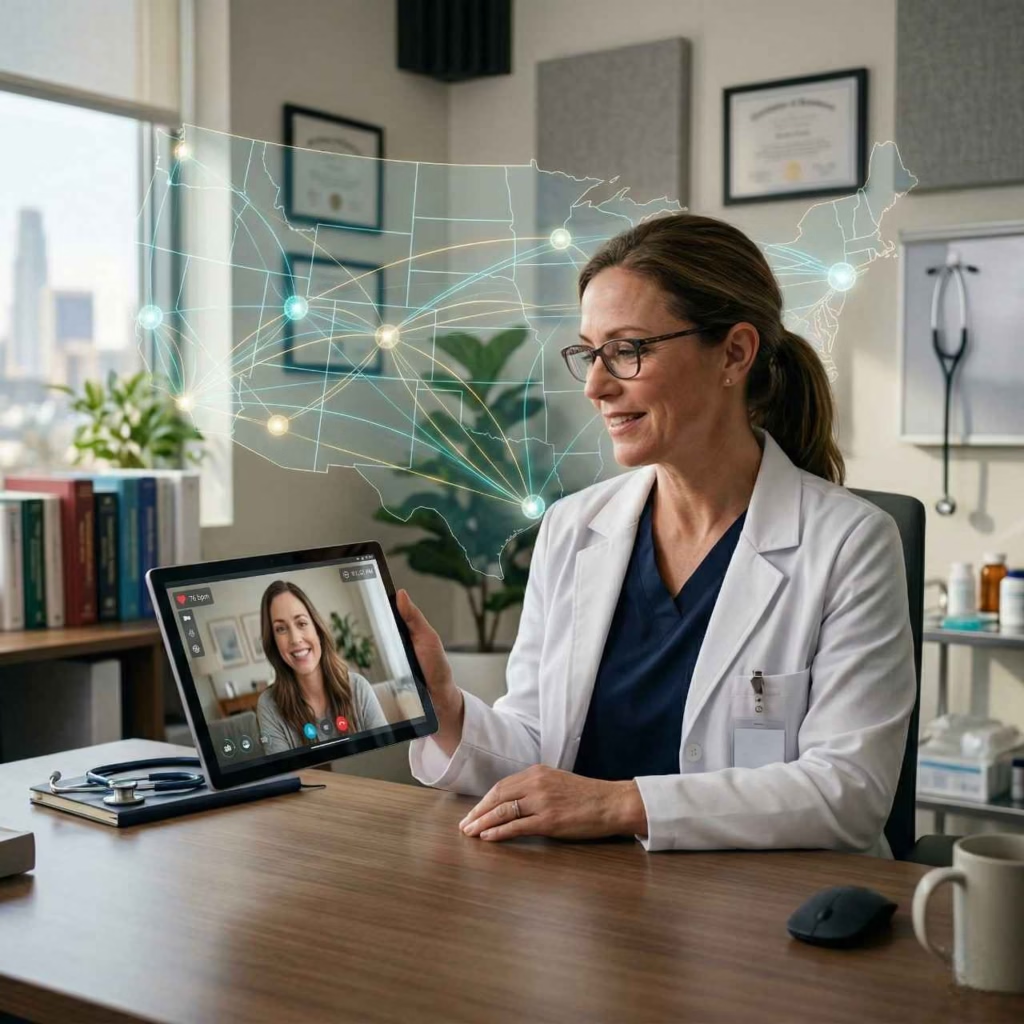
Before diving into execution, it is important to understand the core foundations of successful healthcare applications in the United States:
- HIPAA-compliant infrastructure from day one
- Integration with EHR systems using FHIR standards
- Reimbursement-ready workflows such as RPM and CCM
- Secure patient data handling with audit logging
- Measurable clinical and financial outcomes
More importantly, successful applications focus on revenue generation early rather than just user acquisition.
Build a Revenue Engine, Not Just an App
One of the most common mistakes in healthcare app development USA is focusing too heavily on features instead of revenue.
In the United States, healthcare is driven by reimbursement systems. If your application does not support billable workflows, it becomes difficult to scale sustainably.
Instead of building everything from scratch, successful companies:
- Use pre-built HIPAA-compliant telehealth platforms
- Integrate billing and coding systems early
- Focus on workflows that generate revenue
This approach can reduce development time significantly, from several months to just a few weeks.
If you are working with a healthcare app development company USA, ensure they understand reimbursement systems, not just technical implementation.
Focus on Reimbursable Healthcare Workflows

The fastest path to success in healthcare app development USA is aligning your product with services already supported by insurers.
Some of the most effective entry points include:
Remote Patient Monitoring (RPM), which enables continuous patient tracking and recurring billing
Chronic Care Management (CCM), which supports long-term patient engagement
Telehealth consultations, which are widely accepted across providers
Employer-based healthcare programs, which offer B2B opportunities
Rather than building a complex, feature-heavy product, focus on one workflow and execute it effectively.
Use Global Talent Strategically
The cost of development in the United States is high, which is why many companies adopt a hybrid model combining local strategy with global execution.
India has become a major hub for healthcare software development due to:
- Strong experience with HIPAA-compliant systems
- Faster development cycles
- Cost efficiency
However, outsourcing should be strategic.
When selecting a healthcare app development company USA or a global partner, evaluate:
- Experience with telehealth and RPM
- Understanding of US healthcare workflows
- Compliance knowledge
- Ability to scale
Starting with a small pilot project is often the best approach.
Start with Compliance from Day One

Compliance is not optional in healthcare app development USA. It is a foundational requirement.
Many startups fail because they delay compliance considerations, leading to expensive redevelopment later.
To avoid this:
- Implement HIPAA policies early
- Use secure cloud platforms
- Maintain audit logs and encryption
- Establish Business Associate Agreements (BAAs)
If your product includes clinical claims, regulatory requirements may extend further.
Buy Instead of Build Where Necessary
Healthcare applications involve complex components that can be costly and risky to build from scratch.
Instead, use existing solutions for:
- Video consultation systems
- Secure messaging
- Payment processing
- Device integrations
These components are already optimized and compliant, allowing you to focus on differentiation.
Adopt Cloud-Native Architecture
Scalability is essential in healthcare app development USA.
Modern applications use:
- Serverless computing
- Managed databases
- Cloud storage
- Monitoring tools
This reduces operational costs and simplifies scaling without large infrastructure investments.
Integrate AI with Purpose
Artificial intelligence is transforming healthcare, but it must be applied strategically.
Effective use cases include:
- Automated clinical documentation
- Risk assessment models
- Patient triage systems
- Visit summaries
AI should improve efficiency and outcomes rather than serve as a standalone feature.
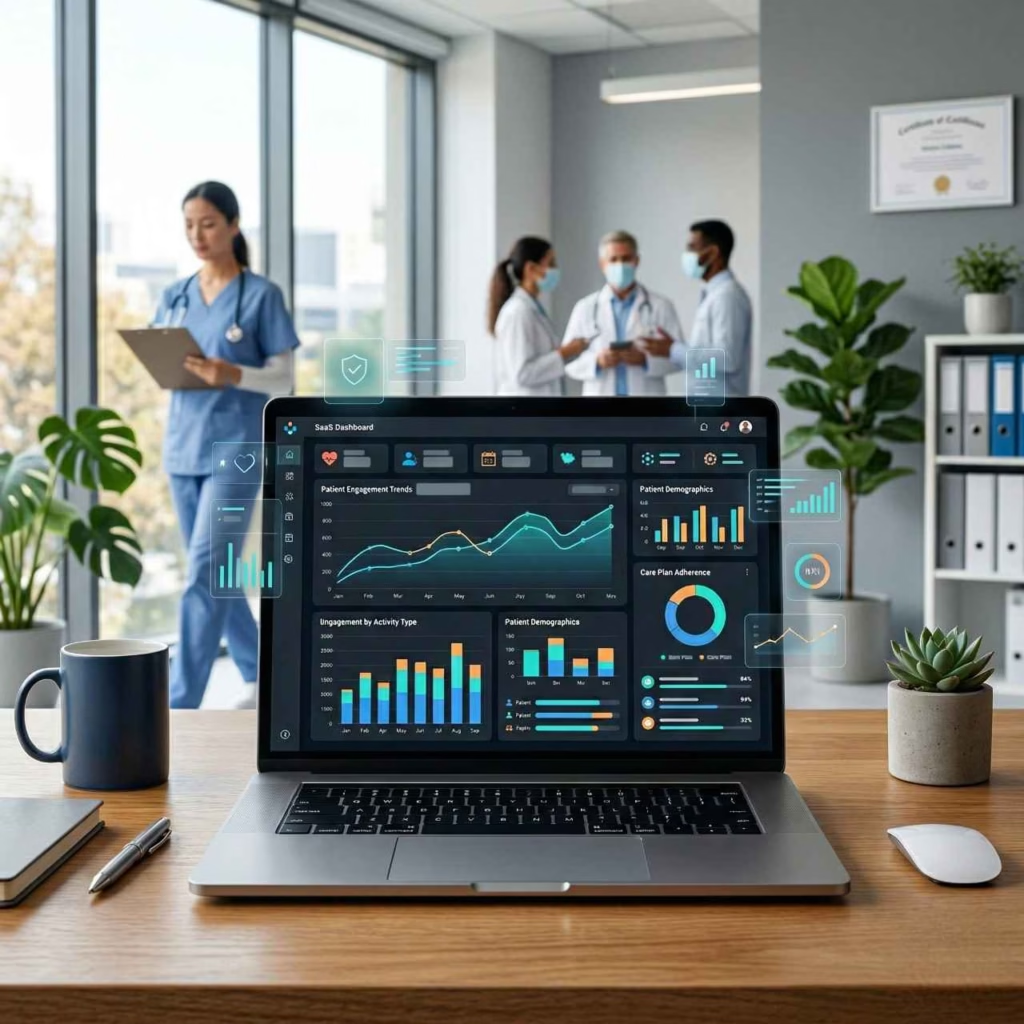
Track Metrics That Matter
Healthcare decisions in the US are data-driven.
Your application must track key performance indicators such as:
- No-show rates
- Revenue per patient
- Patient adherence
- Clinical outcomes
- Engagement levels
These metrics are critical for securing partnerships and demonstrating value.
Define Your Business Model Early
Many startups delay pricing strategy, which can limit growth.
In healthcare app development USA, revenue models should be defined early, including:
- Per patient per month
- Subscription-based pricing
- Pay-per-consult models
- Employer contracts
- Value-based care models
Revenue in healthcare is structured and intentional.
The 90-Day Launch Blueprint
A practical approach to launching includes:
Phase 1: Strategy
Define workflow, validate demand, and establish business model
Phase 2: Development
Use compliant platforms, build core features, and integrate systems
Phase 3: Launch
Pilot with clinics or employers, track metrics, and optimize
The objective is not just to launch an application but to establish a functioning revenue system.
Why the USA is a Leading Market for Healthcare Apps
The United States offers strong opportunities due to:
- High healthcare spending
- Advanced insurance systems
- Growing demand for digital health solutions
However, success requires strategic execution and regulatory awareness.
Working with an experienced healthcare app development company USA can significantly improve outcomes.
Conclusion
Healthcare app development USA is not about building the most advanced product. It is about building the right system that aligns with real-world healthcare operations.
Successful companies focus on:
- Fast and strategic launch
- Early revenue generation
- Compliance from the beginning
- Efficient use of global talent
- Continuous optimization
As digital health adoption continues to grow, organizations that prioritize strategy over features will lead the market.
For businesses looking to build scalable, compliant, and future-ready healthcare applications, partnering with the right development team is essential.
Sigosoft delivers HIPAA-ready platforms, telemedicine solutions, and AI-driven healthcare systems designed specifically for the US market.
Frequently Asked Questions
How much does healthcare app development cost in the USA?
Costs typically range between $30,000 and $150,000 depending on complexity and compliance requirements.
What is HIPAA compliance?
It is a regulatory framework ensuring the secure handling of patient data.
Can healthcare apps be outsourced?
Yes, with proper compliance and experienced partners, outsourcing can be effective.
How long does development take?
With the right approach, a product can launch within 6 to 10 weeks.
What features are essential?
Core features include video consultations, secure messaging, EHR integration, and billing systems.
