
When infrastructure at the scale of Cloudflare fails, the impact is not just technical it is immediate, visible, and often costly.
On November 18, 2025, and again on February 20, 2026, Cloudflare experienced major service disruptions that affected websites, APIs, and digital platforms across multiple regions. For many businesses, these incidents were not just outages; they were interruptions to revenue, operations, and customer trust.
What makes these events important is not just what happened, but what they reveal about modern systems. Today, most applications rely heavily on third-party infrastructure. When that layer fails, everything built on top of it is affected.
In this guide, we will break down what happened, what caused these incidents, how they impacted businesses in real-world scenarios, and how you can design systems that remain resilient even when a Cloudflare outage occurs.
What happened during the Cloudflare outages in 2025 and 2026?

The Cloudflare outage in November 2025 was triggered by an internal configuration issue within its Bot Management system. A generated configuration file grew beyond expected limits and was deployed across the global network. This led to failures in traffic processing systems and caused widespread disruption.
The February 2026 incident was different in nature. Instead of configuration issues, it involved network-level routing problems that affected connectivity for specific users and setups. While not as globally widespread, the impact was still significant for affected businesses.
Both incidents highlight a key point even well-established infrastructure providers can face unexpected failures under certain conditions.
Cloudflare outage timeline (detailed)
Understanding how these incidents unfolded helps reveal how quickly small issues can escalate.
November 18, 2025
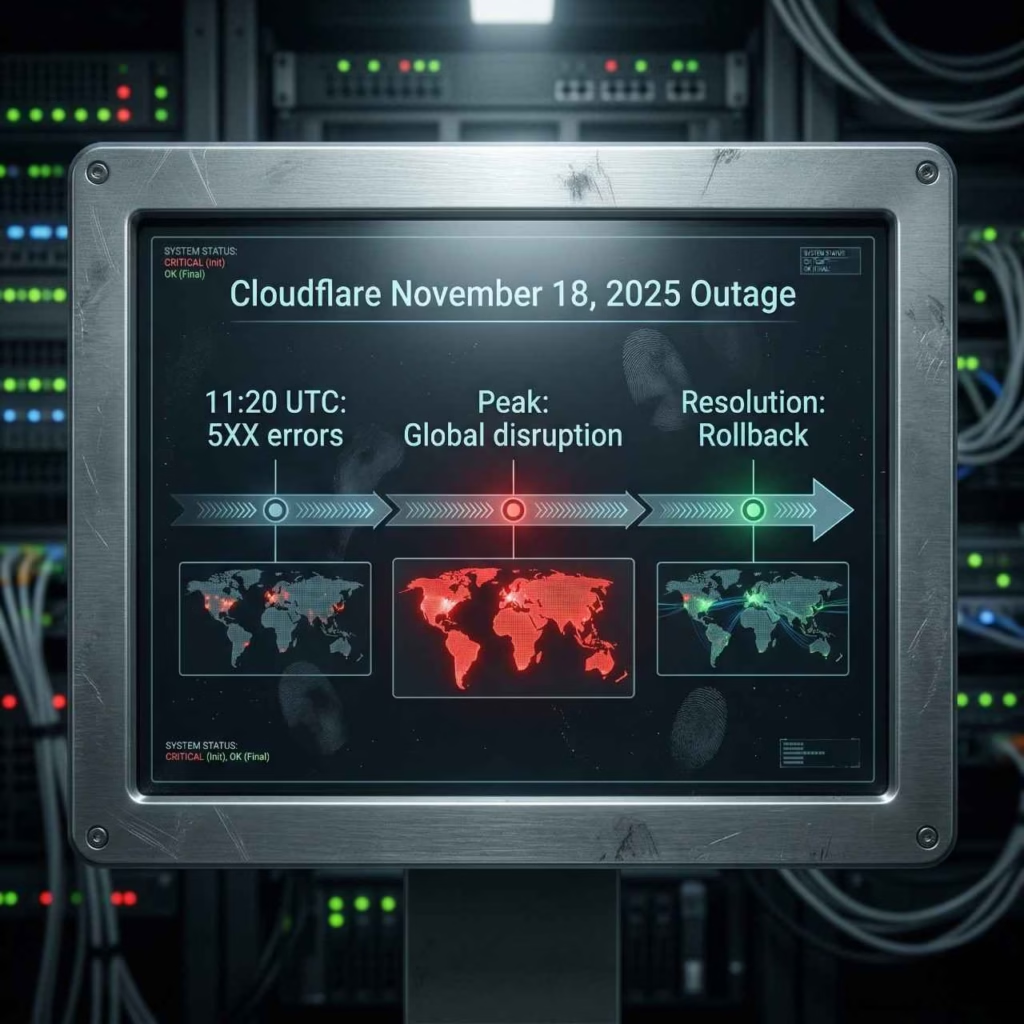
- 11:20 UTC – Systems begin reporting increased 5xx errors
- Mid-phase – The issue spreads across global edge locations
- Peak Impact – Websites, APIs, and services experience failures
- Resolution – Faulty configuration identified and rolled back
What started as a configuration anomaly quickly turned into a global disruption due to automated propagation.
February 20, 2026
- Incident Start – Routing inconsistencies begin affecting traffic
- Mid-phase – Connectivity issues increase for certain users
- Peak Impact – Performance degradation and partial outages observed
- Resolution – Network behavior corrected and services restored
This incident showed how network-level issues can be just as disruptive as software-related failures.
What caused the Cloudflare outage on November 18, 2025?
Cloudflare’s own analysis pointed to multiple contributing factors.
Configuration file expansion
A dynamically generated configuration file exceeded expected limits. This alone would not have been critical, but it triggered unexpected behavior in systems handling network traffic.
Deployment pipeline failure
The faulty configuration was deployed globally without sufficient validation checks. A staged rollout or stricter validation could have contained the issue early.
Error handling limitations
Systems did not gracefully handle the malformed configuration. Instead of degrading safely, they failed, amplifying the impact.
Lack of propagation safeguards
There were no mechanisms to stop the spread once the issue began affecting production systems.
Together, these factors turned a manageable issue into a large-scale disruption.
What caused the Cloudflare incident on February 20, 2026?
The second incident was rooted in network behavior rather than configuration.
- Routing inconsistencies disrupted traffic flow
- Certain IP configurations were affected more than others
- Systems relying on specific routing setups experienced degraded performance
Unlike the 2025 event, this was not about deployment but about how traffic was managed within the network.
Despite the differences, the outcome was similar reduced availability and user impact.
Cloudflare outage comparison: 2025 vs 2026
| Aspect | November 2025 | February 2026 |
| Root Cause | Configuration issue | Network routing issue |
| Scope | Global | Partial but impactful |
| Duration | Short but widespread | Several hours |
| Affected Systems | CDN, APIs, edge network | Network connectivity |
| Key Lesson | Validation failure | Infrastructure resilience |
Impact of Cloudflare outages on businesses
When a Cloudflare outage happens, the consequences are not limited to technical teams.
Revenue loss
E-commerce platforms and SaaS applications can lose transactions within minutes. Even a short disruption can impact daily revenue significantly.
Website and app downtime
Users encounter error pages, slow responses, or complete inaccessibility. This leads to immediate frustration and drop-offs.
Operational disruption
Internal tools, dashboards, and APIs become unavailable, affecting productivity and workflows.
Reputation damage
Users rarely distinguish between the service provider and the infrastructure provider. They simply see that your platform is not working.
Marketing loss
Active campaigns continue to drive traffic to non-functional pages, resulting in wasted ad spend.
Why Cloudflare outages matter for modern systems
Cloudflare is not just a tool it is part of your architecture.
It handles:
- traffic routing
- caching
- security layers
- performance optimization
When this layer fails, your system appears down, even if your backend is functioning correctly.
Why “Cloudflare not working” can break your entire application

Many applications depend entirely on external infrastructure for critical operations.
When that layer fails:
- users cannot reach your application
- APIs stop responding
- login and authentication systems may fail
From a user’s perspective, the entire system is down.
This is why dependency risk is one of the biggest challenges in modern architecture.
How to check Cloudflare outage status
When diagnosing an issue, the first step is verification.
You can:
- check the official status page
- use independent monitoring tools
- verify through third-party uptime services
- analyze logs and error responses
Relying on multiple sources ensures better visibility during incidents.
Is Cloudflare down today?

Cloudflare outages are not frequent, but they do occur.
If your system is not working as expected, checking real-time status updates is essential. This helps determine whether the issue is local or part of a larger disruption.
How to reduce risk from Cloudflare outages
Avoiding dependency is not practical managing it is.
Multi-CDN strategy
Using multiple providers reduces reliance on a single point of failure.
Backup DNS systems
Secondary DNS ensures that traffic can still be routed during disruptions.
Progressive degradation
Systems should continue functioning in limited mode rather than failing completely.
Independent monitoring
Monitoring should remain active even when primary infrastructure fails.
Failover architecture
Design systems that can bypass dependencies when necessary.
Lessons from Cloudflare outages for software teams

These incidents highlight important lessons for teams.
Build for failure
Failures are inevitable. Systems must be designed to handle them.
Reduce dependency risks
Avoid relying entirely on one provider.
Improve observability
Visibility into system performance is critical during outages.
Focus on user experience
Even limited functionality is better than complete downtime.
Plan communication
Clear communication reduces confusion and maintains trust.
Industries most affected by outages
Some sectors are more vulnerable:
- healthcare systems
- logistics and delivery platforms
- fintech applications
- booking systems
In these industries, downtime can have serious consequences.
Future of infrastructure reliability
As systems become more interconnected, outages will continue to occur.
The focus must shift from preventing failures to managing them effectively.
Organizations that invest in resilience will be better prepared for the future.
Conclusion

The Cloudflare outage events of November 18, 2025, and February 20, 2026, serve as a reminder that no infrastructure is completely immune to failure.
These incidents highlight how interconnected modern systems are and how quickly disruptions can spread.
For businesses, the takeaway is clear:
- reduce dependency on a single provider
- design systems for resilience
- prepare for unexpected disruptions
Cloudflare remains a powerful platform, but long-term reliability depends on how well you build around it.
Frequently asked questions
What caused the Cloudflare outage in 2025?
A configuration issue disrupted network operations across the global infrastructure.
What caused the Cloudflare outage in 2026?
Routing and network behavior issues affected connectivity for certain users.
How do outages affect websites?
They can cause downtime, slow performance, and failed transactions.
How can businesses handle downtime?
By implementing redundancy, monitoring, and failover strategies.
Is Cloudflare reliable despite outages?
Yes, but businesses must design systems that can handle disruptions.
