
Food delivery has moved far beyond convenience. In 2026, it has become a core part of how people consume food, especially in urban environments where speed and ease matter more than ever.
What’s interesting is that food delivery apps are no longer just platforms connecting users and restaurants. They now operate as intelligent systems powered by logistics, data, and AI.
With the global market expected to cross $50These screens are okay for solution page ?These screens are okay for solution page $500 billion by 2030, the competition is no longer just about who delivers food it’s about who delivers faster, smarter, and more efficiently.
Whether you’re exploring the best apps available today or thinking about building one, understanding how these platforms work and why they succeed is key.
Leading Food Delivery Apps in 2026
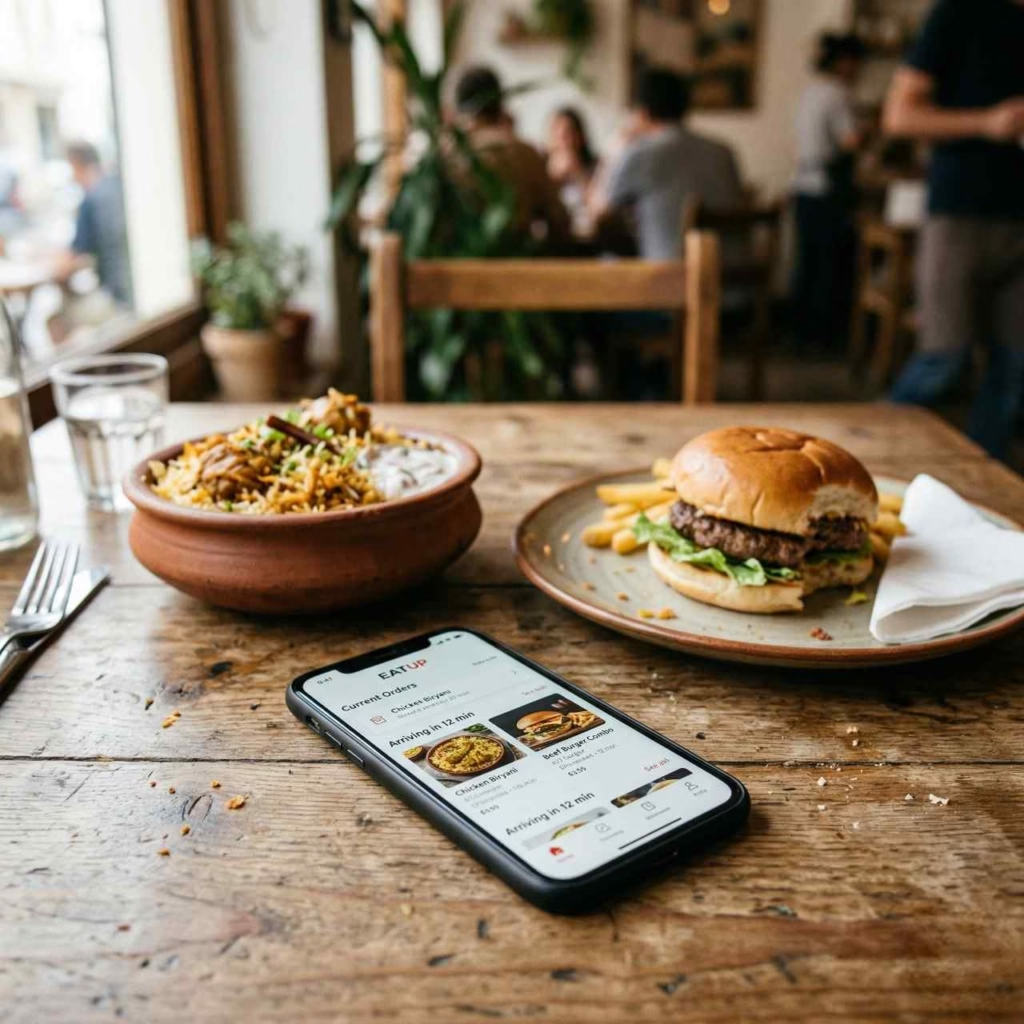
Instead of just listing apps, it’s more useful to understand what makes each one successful because that’s where the real value is.
Zomato
Zomato continues to dominate the Indian market, largely because of its deep integration with restaurants and strong delivery infrastructure. It has built a system that feels reliable, even during peak hours.
What stands out:
- Extensive restaurant network
- Consistent delivery performance
- Strong recommendation system
Swiggy
Swiggy’s growth comes from one key focus: speed. With services like Instamart, it has expanded beyond food into a broader quick commerce ecosystem.
What stands out:
- Fast delivery execution
- Multi-service platform
- Strong logistics backbone
Uber Eats benefits from its global ecosystem. It offers a consistent experience across regions, which makes it particularly useful for users who travel frequently.
What stands out:
- Global presence
- Familiar interface across markets
- Reliable delivery network
DoorDash
DoorDash has built its strength around logistics and subscriptions. Its model focuses on retention through memberships and efficient delivery systems.
What stands out:
- Subscription-driven model
- Strong merchant network
- Scalable logistics
Deliveroo
Deliveroo positions itself slightly differently it focuses on quality over quantity, with curated restaurant options.
What stands out:
- Premium restaurant partnerships
- Better customer experience
- Strong urban positioning
Talabat
Talabat is a dominant force in the Middle East, where local logistics and regional understanding play a huge role.
What stands out:
- Strong regional network
- Multi-category delivery
- High user adoption
Dunzo
Dunzo operates on a hyperlocal level, making it ideal for short-distance and flexible deliveries.
What stands out:
- Hyperlocal delivery model
- Cost-effective options
- Multi-purpose use
Blinkit
Blinkit has changed user expectations by focusing purely on speed, with deliveries often completed within minutes.
What stands out:
- Instant delivery model
- Strong warehouse network
- Quick commerce focus
Careem NOW fits into a larger “super app” ecosystem, offering multiple services within one platform.
What stands out:
- Integrated services
- Strong regional brand
- Seamless user experience
Grubhub
Grubhub remains relevant through strong restaurant relationships and customer loyalty programs.
What stands out:
- Loyal user base
- Subscription benefits
- Stable operations
Quick Comparison (What Actually Matters)
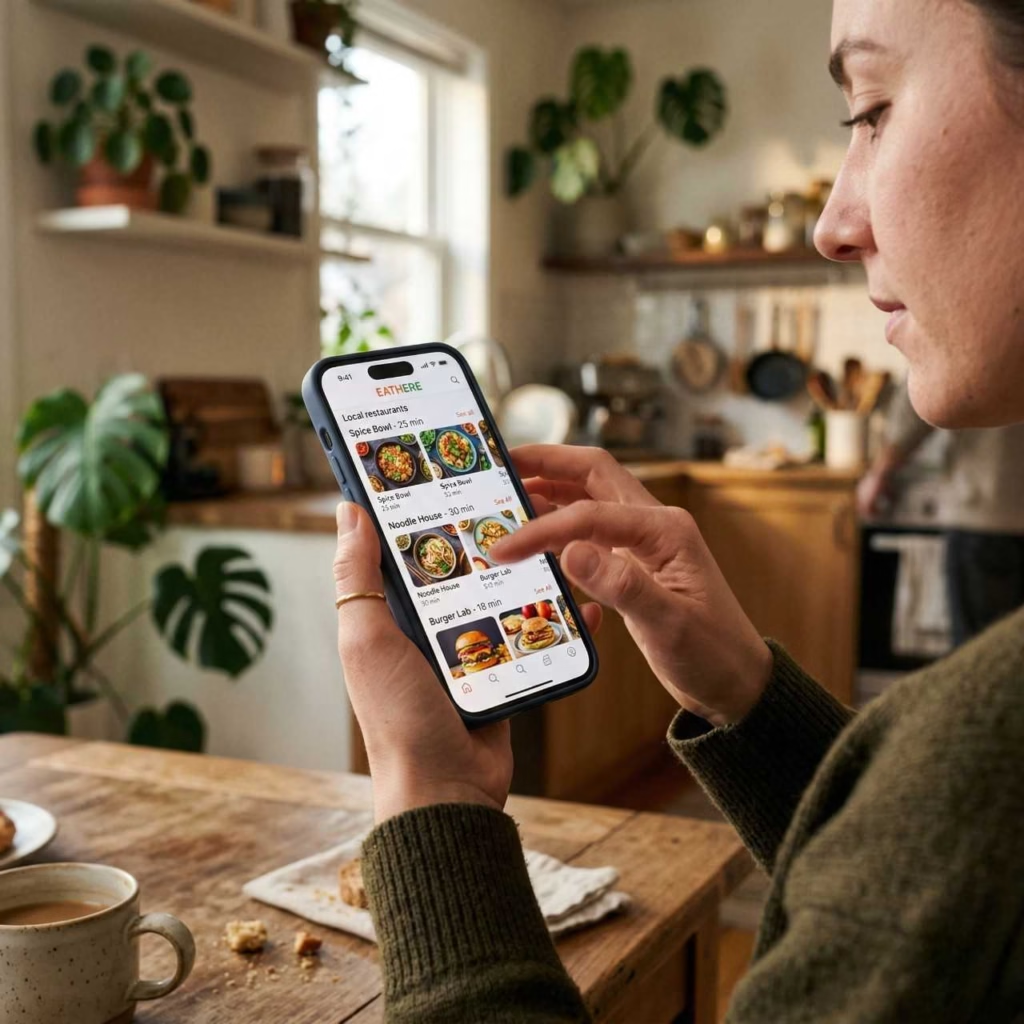
Instead of comparing everything, here’s what really influences user decisions:
| App | Strength | Best Use Case |
| Zomato | Market depth | Daily food ordering |
| Swiggy | Speed | Fast delivery |
| Uber Eats | Global consistency | Travel / global use |
| DoorDash | Logistics | Subscription users |
| Deliveroo | Quality | Premium dining |
| Talabat | Regional dominance | Middle East users |
| Dunzo | Flexibility | Local deliveries |
| Blinkit | Instant speed | Urgent orders |
| Careem NOW | Ecosystem | Multi-service usage |
| Grubhub | Loyalty | Repeat customers |
How to Choose the Right Food Delivery App
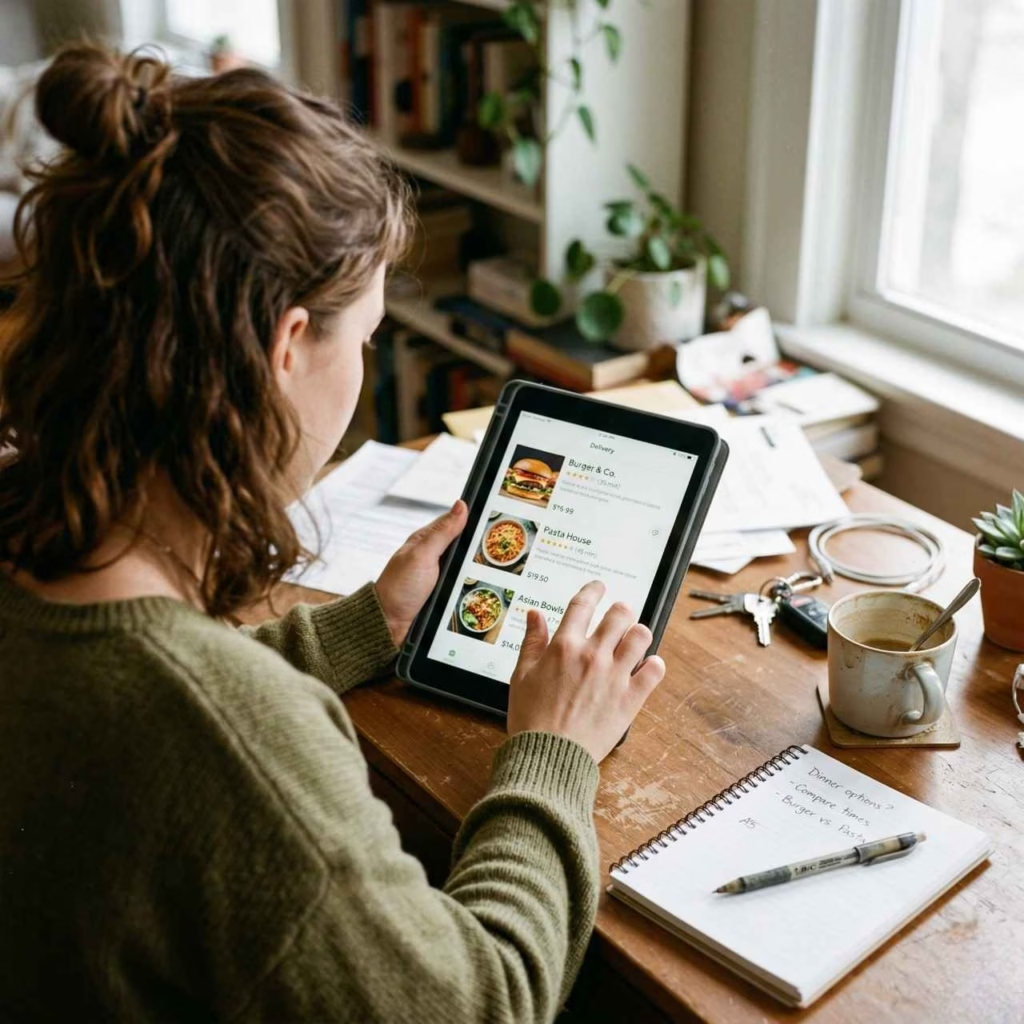
Most people already know these apps the real question is:
When should you use which one?
When speed is your priority
If you care about getting your order as quickly as possible, platforms like Swiggy and Blinkit are built for exactly that. Their infrastructure is optimized for short delivery windows, especially in cities.
When you want to spend less
For smaller or local deliveries, Dunzo often works better because of its flexible pricing and shorter delivery routes.
When quality matters more than speed
Deliveroo focuses on curated restaurants, which makes it a better choice if you’re looking for a better dining experience at home.
When you need consistency across locations
Uber Eats is one of the few platforms that delivers a similar experience globally, which reduces friction when switching cities or countries.
When location decides everything
In regions like the Middle East, Talabat and Careem NOW outperform global apps simply because their local logistics are stronger.
The takeaway is simple:
There is no single “best app” only the best app for your specific need at that moment.
What Makes These Apps Work
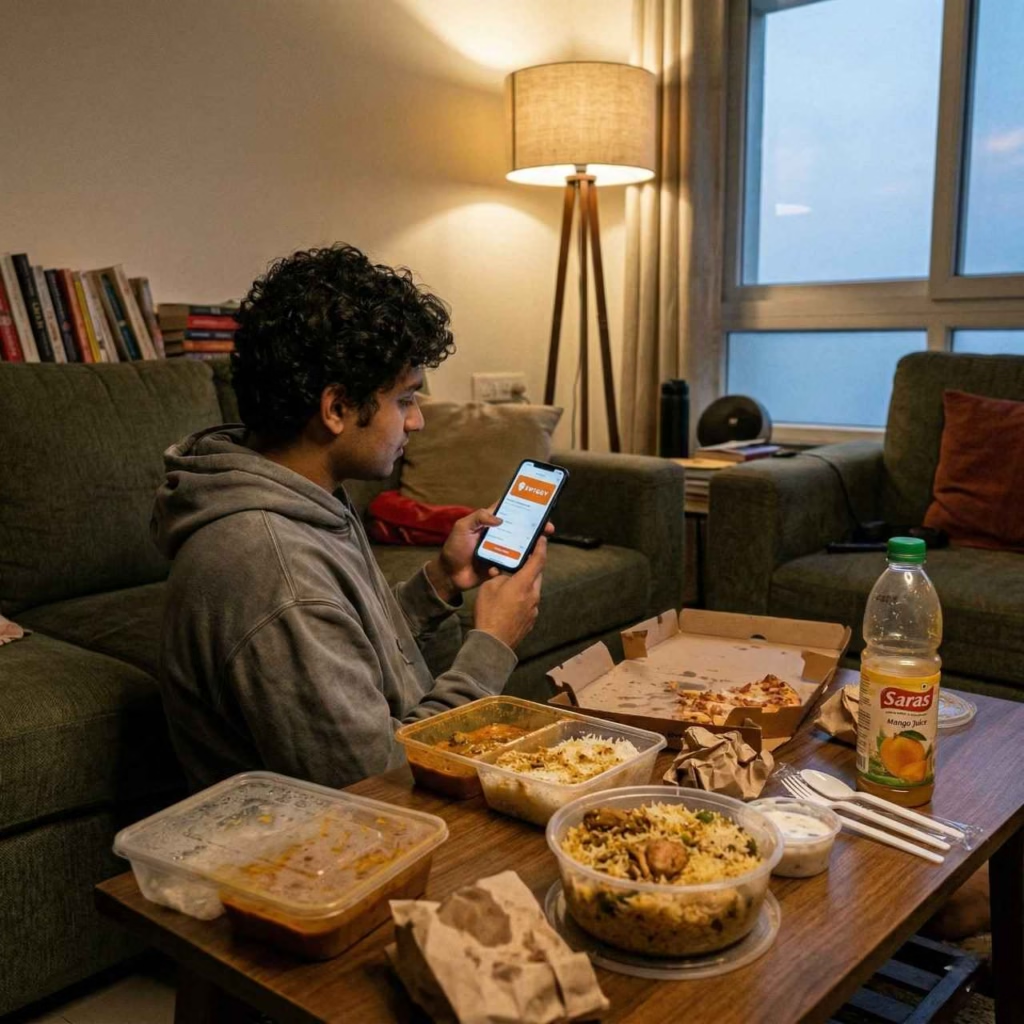
From the outside, most food delivery apps look similar. But internally, the difference comes from how well the system is designed.
User Experience
- Smooth ordering flow
- Real-time tracking
- Easy payments
Delivery Efficiency
- Route optimization
- Delivery partner coordination
- Time prediction accuracy
Business Control
- Order management
- Data insights
- Customer tracking
Success comes from how well these layers work together, not just from adding more features.
Thinking About Building a Food Delivery App?

This is where things shift from user perspective to business opportunity.
Many companies entering this space fail because they try to build everything at once. The smarter approach is to start with a focused and scalable model.
What actually matters:
Choosing the right model
- Aggregator
- Own delivery
- Cloud kitchen
Building the right system
A working platform typically includes:
- Customer app
- Delivery app
- Admin panel
Planning realistically
- MVP: 2–4 months
- Full system: 4–8 months
Using practical technology
- Frontend: Flutter / React Native
- Backend: Node.js / Laravel
The key is not building fast it’s building what actually works in the market.
Where Food Delivery is Heading

The next phase of this industry is already taking shape.
AI-driven decisions
Apps are beginning to predict what users want, which increases repeat orders and improves engagement.
Faster delivery models
Quick commerce is no longer optional it’s becoming the expected standard.
New business formats
Cloud kitchens are making it easier to launch food brands without heavy investment.
Smarter logistics
Data is now used to optimize delivery routes, reduce delays, and improve efficiency.
In simple terms:
The future is about speed, intelligence, and efficiency working together.
Turning This Into a Business Opportunity

If you’re reading this from a business perspective, the opportunity is still wide open but expectations are higher.
Users now expect:
- Fast delivery
- Smooth experience
- Reliable service
At Sigosoft, we help businesses build food delivery platforms that are not just functional, but scalable and market-ready.
Instead of starting with assumptions, we focus on:
- Defining the right approach
- Building a working MVP
- Scaling based on real usage
if you’re planning to build a food delivery app like Zomato or Talabat, or Blinkit, the best first step is clarity not development.
You can start with a simple discussion and get a practical roadmap tailored to your idea.
Final Thought
Food delivery today is not just about moving food it’s about delivering experience, speed, and reliability at scale.
The companies that succeed are not the ones with the most features, but the ones that understand how users actually behave.
And if you’re building in this space, that understanding is your biggest advantage.
FAQs
Which is the best food delivery app in 2026?
It depends on location and need, but Zomato and Swiggy lead in India, while Uber Eats and DoorDash dominate globally.
Which app delivers the fastest?
Blinkit and Swiggy Instamart are among the fastest, often delivering within minutes.
Are food delivery apps still profitable?
Yes, especially when supported by efficient logistics and repeat customers.
How much does it cost to build one?
A basic version can start around $10,000 and scale depending on features.
What is the biggest trend right now?
Speed, AI-driven personalization, and cloud kitchens are shaping the industry.