
Replacing Excel with mobile apps for UAE businesses is becoming a strategic shift as organizations outgrow spreadsheet-based operations. For years, Excel has been the backbone of business workflows across the UAE—used for inventory tracking, staff management, reporting, and approvals.
However, as UAE companies scale and operations become more complex, Excel is no longer sufficient.
Today, businesses are adopting custom business app development in Dubai and enterprise mobile app solutions in the UAE to improve accuracy, speed, real-time visibility, and operational control.
This blog explains why Excel-based workflows are failing, how business automation apps in the UAE solve these challenges, and why organizations across logistics, retail, and enterprise sectors are rapidly moving toward mobile-first internal systems.
Why Excel Still Exists in UAE Businesses
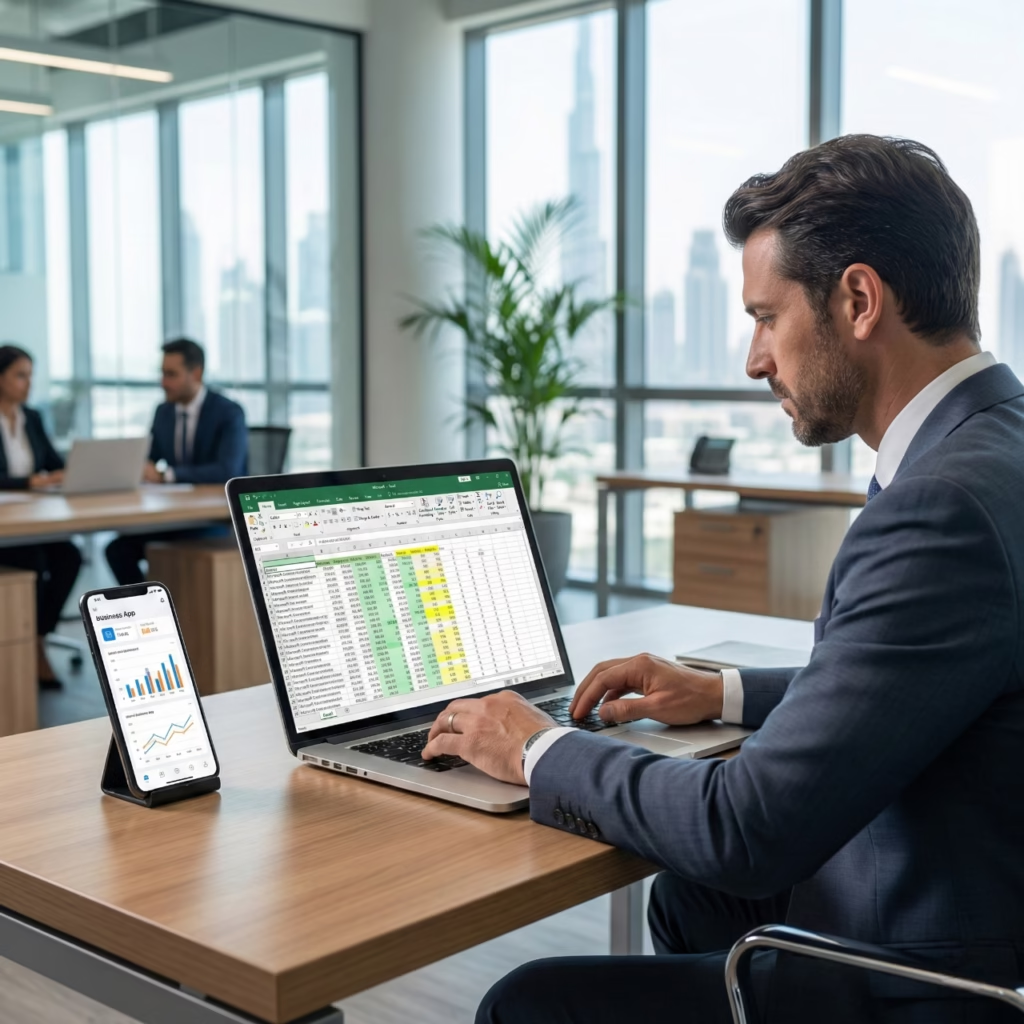
Excel remains popular because it is:
- Familiar and easy to start with
- Low cost at the beginning
- Flexible for small datasets
- Widely used across departments
For small teams and short-term use, Excel works well.
But for growing UAE businesses, especially in logistics, retail, healthcare, and field operations, Excel quickly becomes a bottleneck.
The Real Problems with Excel-Based Operations

As businesses grow, Excel introduces hidden risks and inefficiencies.
1. Manual Errors and Data Inconsistency
- Duplicate entries
- Incorrect formulas
- Version conflicts
- Accidental data deletion
These errors directly affect reporting accuracy and decision-making.
2. No Real-Time Visibility
Excel files are static.
Managers cannot see live updates on:
- Field staff activity
- Inventory movement
- Delivery status
- Task completion
Decisions are made using outdated information.
3. Poor Collaboration
Multiple users editing the same file often leads to:
- Conflicts
- Overwritten data
- Access confusion
This slows teams down and creates accountability issues.
4. Limited Security and Access Control
Excel lacks enterprise-grade:
- Role-based access
- Audit trails
- Secure authentication
For UAE businesses handling sensitive data, this is a serious risk.
Why UAE Businesses Are Moving to Mobile Apps

Replacing Excel with mobile apps is not just a technology upgrade it is an operational transformation.
Mobile Apps Solve What Excel Cannot

A custom business app provides:
- Real-time data sync
- Automated workflows
- Secure role-based access
- Centralized dashboards
- Better accountability
This shift aligns well with the UAE’s push toward digital transformation and smart operations.
Key Benefits of Replacing Excel with Mobile Apps

1. Real-Time Operations Management
Mobile apps allow teams to:
- Update data instantly
- Track operations live
- Respond faster to issues
Managers no longer wait for end-of-day reports.
2. Automation of Repetitive Tasks
Apps automate:
- Data entry
- Approvals
- Notifications
- Reporting
This reduces manual work and human error.
3. Improved Field Staff Productivity
Field teams can:
- Submit updates from mobile devices
- Upload photos or documents
- Receive task notifications instantly
This is especially valuable for logistics and service-based businesses in the UAE.
4. Centralized and Accurate Reporting
Mobile apps provide:
- Live dashboards
- Automated analytics
- Consistent data sources
Decision-makers gain clarity without manual consolidation.
5. Enterprise-Grade Security
Unlike Excel, mobile apps support:
- Secure authentication
- Role-based permissions
- Data encryption
- Activity logs
This helps businesses meet compliance and security expectations.
Common Use Cases Where Excel Is Being Replaced

UAE businesses commonly replace Excel in areas such as:
- Inventory and warehouse management
- Fleet and vehicle tracking
- Field staff attendance and task tracking
- Internal approvals and workflows
- Sales and performance reporting
- Asset and equipment management
These use cases benefit significantly from mobile-first solutions.
Excel vs Mobile Apps: A Practical Comparison
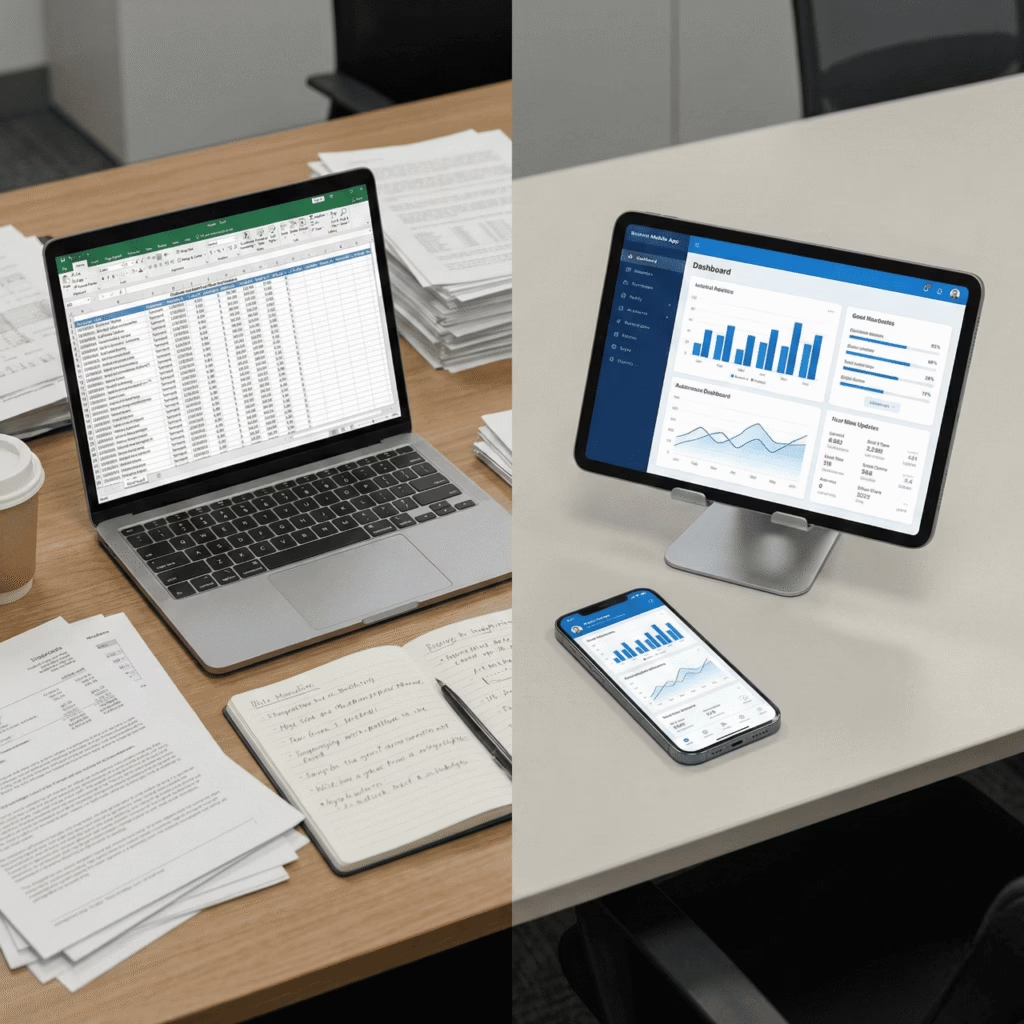
| Area | Excel | Mobile App |
|---|---|---|
| Real-time updates | No | Yes |
| Automation | Manual | Automated |
| Data accuracy | Error-prone | Controlled |
| Collaboration | Limited | Seamless |
| Security | Basic | Enterprise-grade |
| Scalability | Low | High |
Is Replacing Excel Expensive?

Many UAE businesses assume mobile apps are costly.
In reality:
- Excel costs grow through inefficiency, errors, and delays
- Mobile apps reduce long-term operational expenses
- Apps can be built in phases (MVP first, scale later)
For most businesses, the ROI comes from:
- Reduced manpower dependency
- Faster operations
- Better decision-making
When Should a Business Replace Excel?

You should consider replacing Excel if:
- Multiple teams rely on the same spreadsheets
- Data accuracy impacts revenue or compliance
- Field staff are involved
- Reporting is slow or inconsistent
- Business growth is limited by manual processes
At this stage, Excel is no longer a tool — it’s a risk.
How Sigosoft Helps UAE Businesses Move Beyond Excel

At Sigosoft, we help UAE businesses replace Excel-based workflows with secure, scalable, and easy-to-use mobile apps.
Our approach focuses on:
- Understanding existing Excel workflows
- Converting them into structured digital processes
- Building custom internal apps tailored to business needs
- Ensuring security, scalability, and long-term support
We don’t just build apps — we help businesses modernize operations.
Final Thoughts

Excel helped businesses start.
Mobile apps help businesses scale.
For UAE companies focused on efficiency, accuracy, and long-term growth, replacing Excel with mobile apps is no longer optional — it’s essential.
If your operations depend heavily on spreadsheets, it’s time to evaluate a smarter, more reliable solution.
💬 Free consultation available
Talk to Sigosoft to assess your current Excel workflows and plan a secure, scalable mobile app tailored for your business.