Software development is no longer just about writing code faster. Modern businesses demand speed, scalability, accuracy, and automation and traditional IDEs are struggling to keep up with these expectations.
This is where Google Antigravity IDE enters the picture.
Rather than acting as a simple code editor with AI suggestions, Google Antigravity introduces a new agent-first development model, where AI systems can plan, execute, test, and verify development tasks autonomously.
In this blog, we break down what Google Antigravity IDE is, how it works, its key features, real-world use cases, and why it matters for the future of software development.
What Is Google Antigravity IDE?

Google Antigravity IDE is an AI-powered, agent-centric integrated development environment designed to automate complex software workflows.
Instead of developers manually handling every step—coding, debugging, testing, and validation—Antigravity allows AI agents to take ownership of defined tasks while developers maintain strategic control.
In simple terms, it shifts development from tool-driven coding to outcome-driven execution.
How Google Antigravity IDE Works
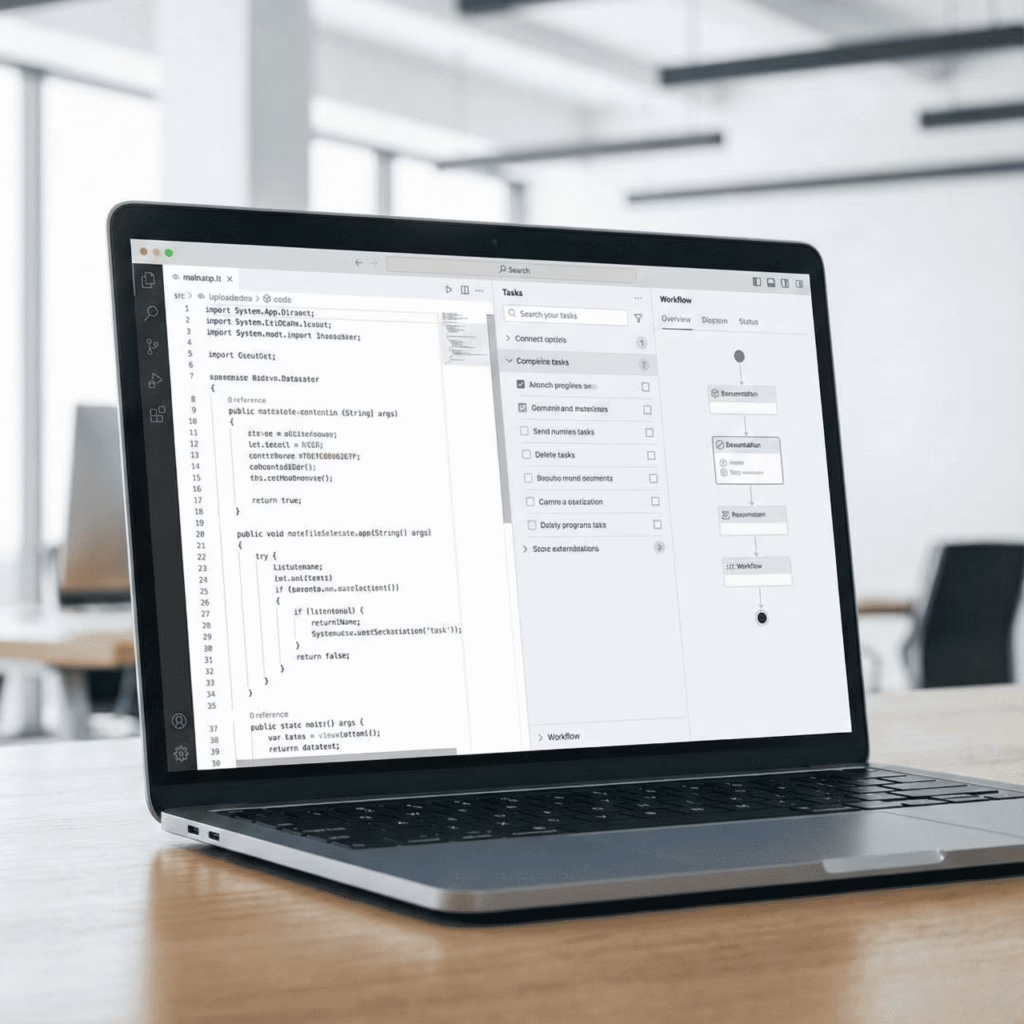
Google Antigravity follows an agentic workflow:
1. Define the Objective
Developers describe the goal (feature, fix, refactor, or enhancement).
2. AI Agent Planning
The system breaks the goal into executable steps such as:
- Code generation
- Dependency handling
- Test creation
- Error resolution
3. Autonomous Execution
Agents write code, run tests, debug issues, and validate outputs.
4. Human Review & Control
Developers review changes, approve outputs, and refine instructions.
This model reduces repetitive work while improving speed and consistency.
Key Features of Google Antigravity IDE

1. Agent-First Development
The IDE is built around autonomous AI agents rather than passive suggestions.
2. Multi-Agent Orchestration
Multiple agents can work in parallel on different tasks, improving efficiency.
3. Integrated Development Environment
Editor, terminal, browser, and testing tools are unified into one workflow.
4. Built-In Verification
AI agents automatically run tests and validate results before presenting outputs.
5. AI-Native Experience
Designed from the ground up for AI interaction—not retrofitted into a traditional IDE.
Why Google Antigravity IDE Matters

Faster Development Cycles
Automation significantly reduces time spent on repetitive coding tasks.
Improved Code Reliability
Built-in testing and verification lower the risk of errors.
Better Use of Developer Time
Teams can focus on architecture, performance, and business logic.
Scalable for Growing Teams
Agent-based workflows scale well for startups and enterprises alike.
Google Antigravity IDE vs Traditional IDEs
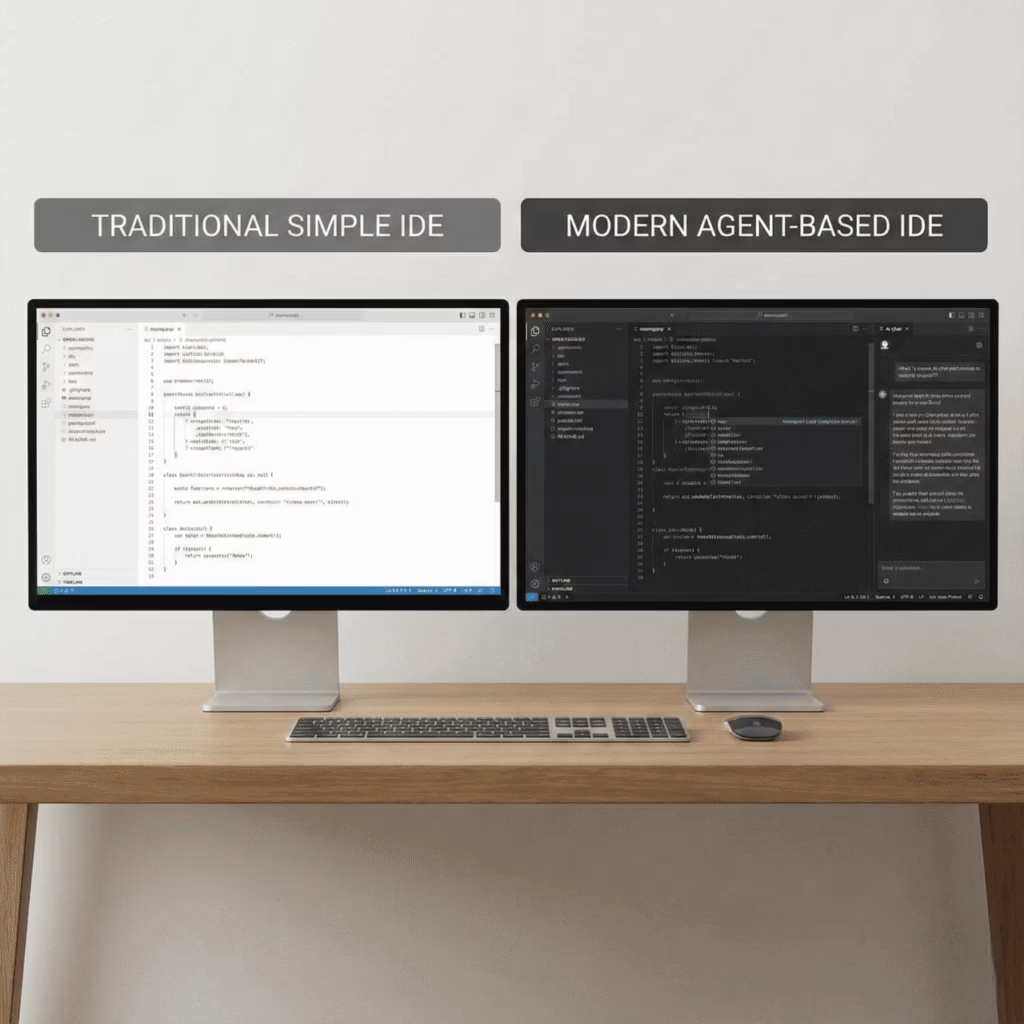
| Aspect | Traditional IDE | Google Antigravity IDE |
|---|---|---|
| Workflow | Manual | Agent-driven |
| Automation | Limited | High |
| Task Execution | Developer-led | AI-orchestrated |
| Testing | Manual / Partial | Automated |
| Focus | Writing code | Delivering outcomes |
Common Use Cases
- Rapid MVP development
- Feature iteration
- Codebase refactoring
- Automated testing & QA
- Productivity optimization
- Scalable product development
Is Google Antigravity IDE the Future of Development?
Agent-centric development represents a major shift in how software is built. As systems grow more complex, manual-first workflows become bottlenecks.
Google Antigravity IDE highlights a future where developers:
- Define goals
- Supervise outcomes
- Let AI handle execution
This doesn’t replace developers it amplifies their impact.
FAQs: Google Antigravity IDE

What is Google Antigravity IDE?
Google Antigravity IDE is an AI-powered development platform that uses autonomous agents to execute, test, and verify software tasks.
How is Google Antigravity different from other AI coding tools?
Unlike code suggestion tools, Antigravity follows an agent-first model where AI plans and executes entire workflows.
Who should use Google Antigravity IDE?
Developers, startups, enterprises, and product teams seeking faster, scalable, AI-driven development.
Does Google Antigravity IDE replace developers?
No. It enhances productivity while developers remain in control of decisions and architecture.
Is Google Antigravity suitable for large projects?
Yes. Its agent-based architecture is designed for scalable, multi-module systems.
Conclusion

Google Antigravity IDE represents a shift toward AI-native software development. By combining autonomous agents, built-in verification, and integrated tooling, it redefines how modern software is built.
For businesses and development teams focused on speed, scalability, and long-term efficiency, understanding agent-first platforms like Google Antigravity is becoming essential.
Related Reading from Sigosoft

To explore more insights related to AI-driven development and scalable digital products, check out these articles:
- AI-Driven Digital Solutions: How Businesses Scale Faster in 2026
Learn how AI-native systems improve efficiency, automation, and business outcomes. - Scalable Digital Products: AI Automation in Hospitals
Discover why scalability and performance are no longer optional for modern products. - Cost to Develop a Survey Reward Apps in 2026
A deeper look at how agentic AI models are reshaping engineering practices.