
Modern organizations operate in increasingly complex digital environments where multiple systems manage sales, operations, finance, customer support, and internal workflows. While these systems help businesses function, many companies still rely heavily on manual processes, spreadsheet tracking, and disconnected tools that slow down operations and introduce inefficiencies.
Business Process Automation (BPA) addresses this challenge by enabling organizations to automate repetitive tasks, streamline workflows, and integrate systems into a unified digital ecosystem.
In this guide, we explain what business process automation is, how it works, its benefits, and the technologies businesses use to implement automation successfully.
Organizations looking to modernize their workflows often adopt business process automation services to improve efficiency, reduce operational costs, and support scalable growth.
What Is Business Process Automation?

Business Process Automation (BPA) refers to the use of technology to automate repetitive, rule-based tasks and workflows across business operations.
Instead of relying on manual approvals, email coordination, or spreadsheet tracking, automated systems manage processes such as:
- task assignments
- approval workflows
- customer data management
- invoice processing
- reporting and analytics
- customer support responses
By automating these workflows, organizations can significantly reduce manual workload, improve operational accuracy, and ensure consistent process execution.
A well-designed automation system integrates with existing business tools such as CRM platforms, ERP systems, accounting software, and customer support platforms to create a connected and intelligent operational environment.
For example, when a new customer inquiry is received, an automated workflow can:
- capture the lead in the CRM system
- assign the lead to the correct sales representative
- trigger an automated follow-up email
- update reporting dashboards
All of this happens automatically without manual coordination.
Why Business Process Automation Is Important
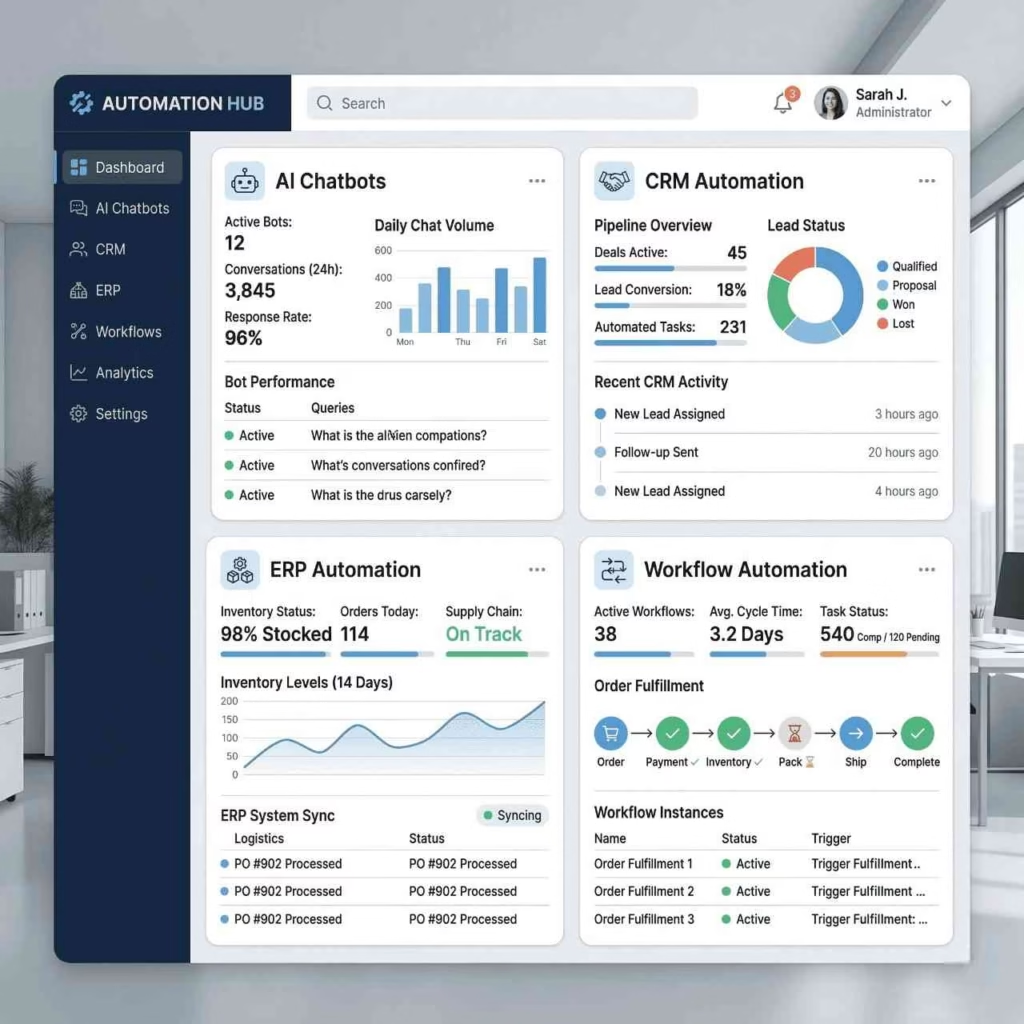
Many companies struggle with inefficient processes caused by fragmented systems and manual operations.
Common challenges include:
- manual data entry
- slow approval workflows
- disconnected software systems
- limited operational visibility
- repetitive administrative tasks
Business process automation solves these problems by creating structured workflows and enabling real-time data flow across departments.
Organizations that implement automation often experience:
- improved operational efficiency
- reduced operational costs
- faster decision-making
- increased productivity
- improved accuracy in data processing
Automation enables teams to focus on strategic tasks rather than routine administrative work.
Types of Business Process Automation Solutions

Modern organizations use multiple types of automation technologies depending on their operational needs. Business process automation is not limited to simple workflow automation; it can include intelligent AI-driven automation systems that improve business decision-making.
Below are several major categories of automation solutions used by modern organizations.
AI Chatbot Solutions
AI chatbot solutions automate customer communication, internal service requests, and helpdesk interactions. These systems use natural language processing and AI-driven conversation models to respond to user queries, provide support, and route requests to the correct departments.
Common chatbot automation use cases include:
- customer support automation
- lead qualification and capture
- appointment scheduling
- helpdesk ticket creation
AI chatbots can significantly reduce customer service workloads while improving response time and customer satisfaction.
AI CRM Automation Solutions
CRM automation focuses on improving sales processes, customer relationship management, and lead management.
Automated CRM systems can handle tasks such as:
- lead assignment automation
- automated email follow-ups
- sales pipeline updates
- customer engagement tracking
By automating CRM workflows, organizations can improve sales productivity and maintain consistent customer engagement.
AI ERP & Operations Automation Solutions
Enterprise Resource Planning (ERP) systems often manage finance, procurement, inventory management, and operational workflows. Automating ERP processes improves operational efficiency and reduces manual coordination between departments.
ERP automation examples include:
- automated invoice processing
- procurement approval workflows
- inventory management automation
- financial reporting automation
ERP automation improves operational visibility and ensures accurate business data management.
AI Workflow Automation Solutions
Workflow automation connects multiple business systems and processes to eliminate manual coordination between teams.
Workflow automation solutions can automate processes such as:
- employee onboarding workflows
- document approval processes
- cross-department task routing
- compliance verification workflows
These automation systems ensure that processes move smoothly through defined workflows without delays.
How Business Process Automation Works
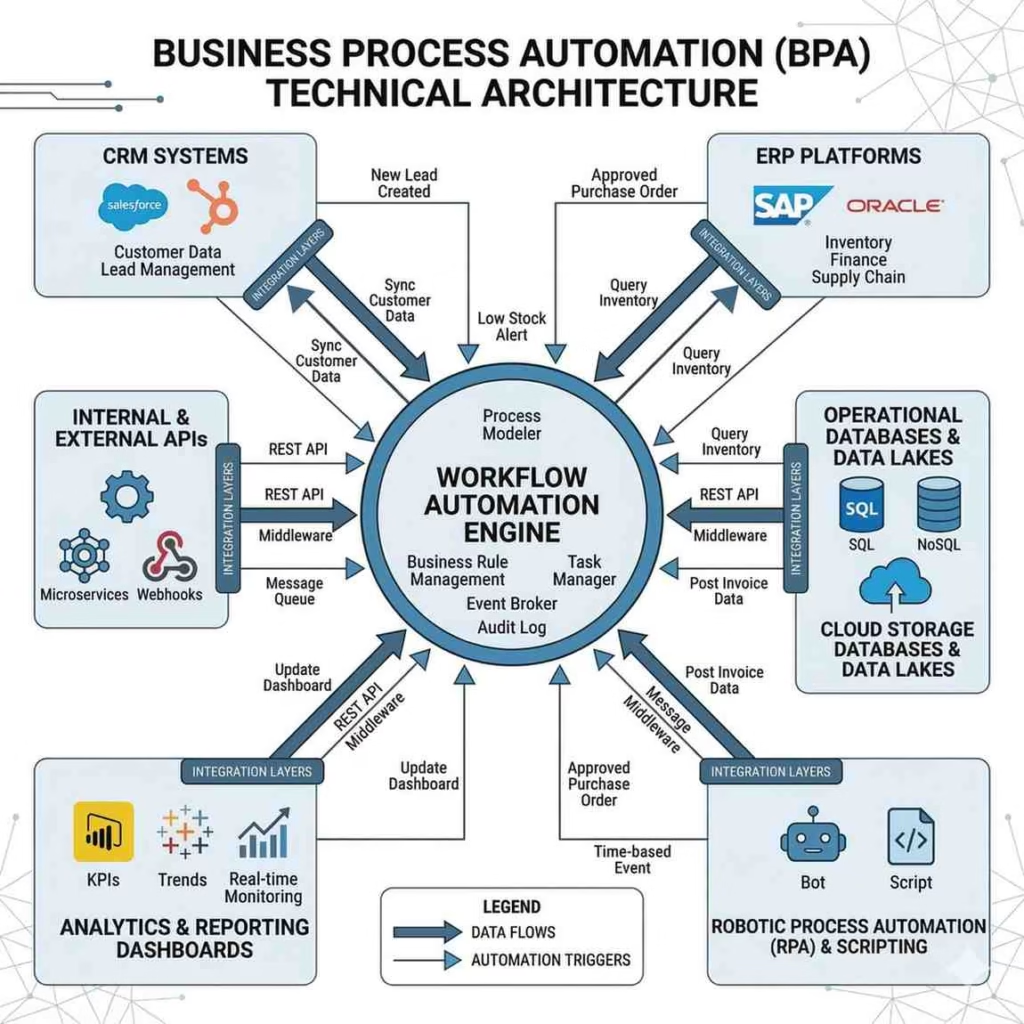
A typical automation platform includes several core components that work together to automate workflows and integrate business systems.
Key components include:
Workflow Engine
The workflow engine manages automated processes and defines how tasks move between different departments or systems.
Integration Layer
Automation platforms integrate with existing systems such as CRM platforms, ERP systems, accounting tools, and external APIs.
Data Processing Layer
Automation systems process data in real time, ensuring that workflows operate based on accurate and up-to-date information.
Monitoring and Analytics
Operational dashboards provide insights into workflow performance, process completion rates, and system performance.
Real-World Examples of Business Process Automation
Business process automation is widely used across industries to improve operational efficiency.
Examples include:
Finance Automation
Automating invoice processing, payment approvals, and financial reporting.
HR Automation
Automating employee onboarding, payroll processing, and performance tracking.
Customer Support Automation
Using AI chatbots and ticket routing systems to manage support requests.
Sales Automation
Automating lead capture, follow-ups, and CRM updates.
Automation ensures that repetitive tasks are executed consistently while reducing human error.
Benefits of Business Process Automation
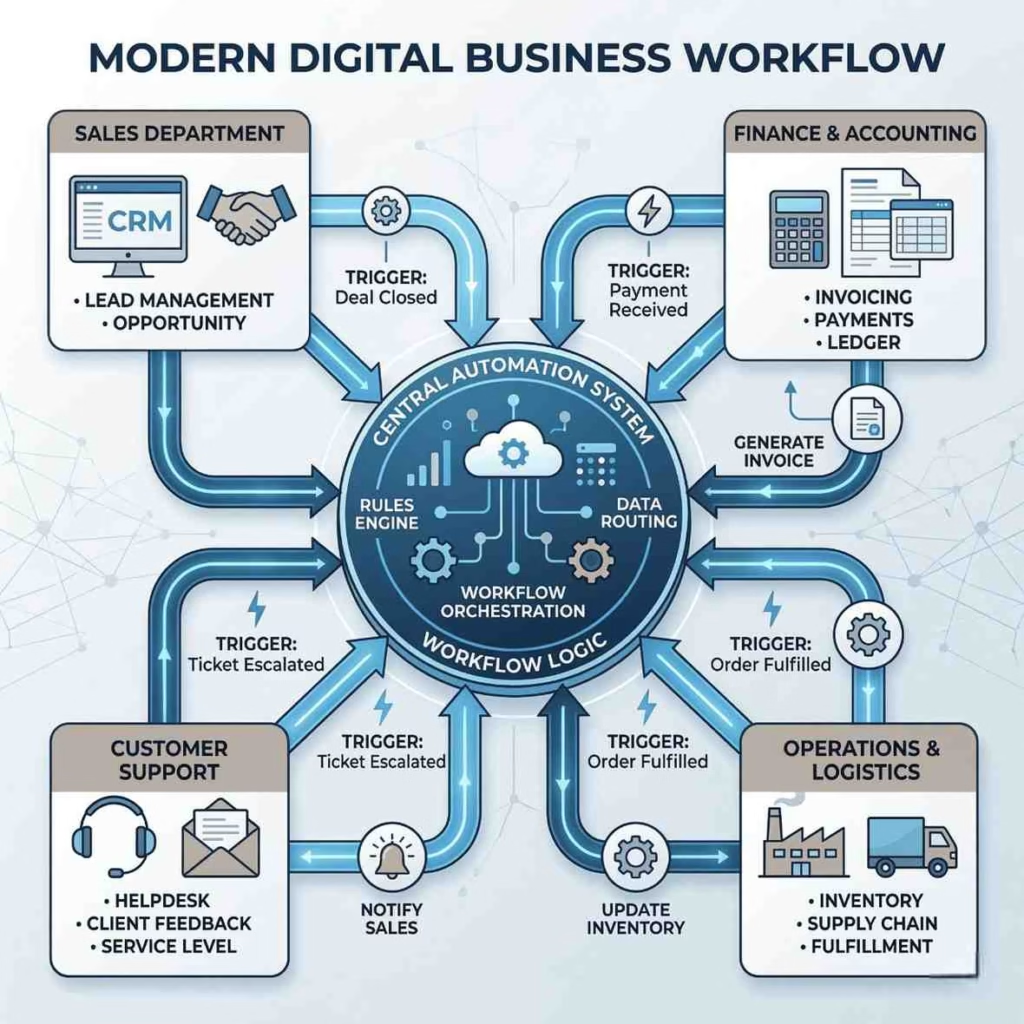
Organizations adopting automation systems experience several key benefits.
Increased Operational Efficiency
Automated workflows eliminate repetitive manual tasks, allowing teams to focus on higher-value work.
Reduced Operational Costs
Automation reduces administrative workloads and minimizes process delays.
Improved Accuracy
Automated systems reduce the risk of human errors in data entry and reporting.
Faster Decision-Making
Real-time data insights enable leadership teams to make faster and more informed decisions.
Improved Customer Experience
Automation improves response times and service quality for customers.
Business Process Automation vs Workflow Automation
Many organizations confuse business process automation with workflow automation. While the two concepts are related, they serve slightly different purposes.
| Capability | Business Process Automation | Workflow Automation |
|---|---|---|
| Scope | Entire business processes | Individual workflows |
| Integration | Multiple systems and tools | Often single system |
| Complexity | High-level process automation | Task-level automation |
| Example | CRM + ERP + finance integration | Approval workflow |
Business process automation typically includes workflow automation as one component within a broader operational automation strategy.
The Role of AI in Business Process Automation
Artificial intelligence is transforming traditional automation by enabling intelligent decision-making within automated workflows.
AI-powered automation capabilities include:
- intelligent document recognition
- predictive analytics for business operations
- automated data validation
- anomaly detection in workflows
These capabilities allow businesses to move beyond simple rule-based automation and implement intelligent automation systems.
For example, AI automation can automatically detect anomalies in financial data or route customer inquiries based on sentiment analysis.
When Businesses Should Implement Automation
Businesses should consider automation when they experience challenges such as:
- high manual workload
- slow operational workflows
- inefficient approval processes
- inconsistent reporting across departments
- difficulty scaling operations
Automation allows organizations to create structured workflows that support operational growth and long-term scalability.
Conclusion

Business process automation is becoming a critical component of modern digital operations. By automating workflows, integrating systems, and enabling real-time data visibility, organizations can significantly improve operational efficiency and productivity.
Automation not only reduces manual workloads but also enables businesses to scale operations while maintaining consistency and accuracy across departments.
Organizations looking to modernize their operations often adopt business process automation services to design and implement scalable automation strategies tailored to their operational needs.
If your organization is exploring automation opportunities, implementing a structured automation strategy can transform operational efficiency and unlock long-term business growth.
FAQs
What is business process automation?
Business process automation uses technology to automate repetitive tasks and workflows across business operations.
How does business process automation improve productivity?
Automation reduces manual tasks, speeds up workflows, and ensures consistent process execution.
What types of processes can be automated?
Common automation examples include customer support workflows, invoice processing, CRM updates, employee onboarding, and approval processes.
Can business process automation integrate with existing systems?
Yes. Modern automation platforms integrate with CRM systems, ERP platforms, accounting software, and other business tools through APIs.
Is business process automation suitable for small businesses?
Yes. Automation solutions can be designed for businesses of all sizes depending on operational requirements.
How long does it take to implement automation?
Implementation timelines depend on the complexity of the workflows and systems involved.
Can AI be used in business process automation?
Yes. AI can enable predictive analytics, intelligent routing, and automated decision-making within workflows.