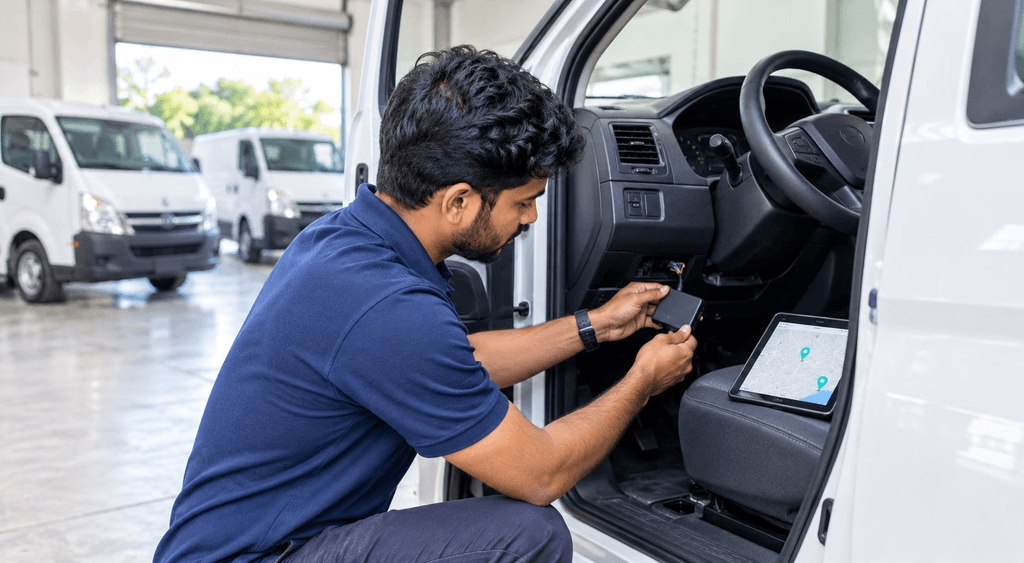
Most GPS tracking businesses do not start with software. They start with a customer: a transport company that keeps losing track of its trucks, a school that wants parents to see the bus, a car rental firm worried about vehicles leaving the city. Someone sells them a tracker, installs it and gives them a login. Do that for enough customers and you have a telematics business with monthly recurring revenue.
The hard part is the login. A tracking platform has to receive data from thousands of devices, show live positions, store years of history, send alerts, produce reports and run mobile apps for every customer. Building all of that from scratch before you have a single paying customer is slow and risky. A white-label GPS tracking platform lets you launch under your own brand, with your own logo, domain and apps, on software that already works. You put your energy into sales, installation and support, and decide later whether to own more of the technology.
This guide explains how that works in practice: the business model, the features customers expect, how to launch step by step, why multi-tenant architecture and device compatibility matter, and how to compare renting a white-label platform with building your own.
Why GPS tracking is a good business to be in
Fleet tracking has moved from a nice-to-have to a standard operating tool. Berg Insight estimates there were about 21.3 million active fleet management systems in North America at the end of 2025, and expects 36.2 million by 2030 (MarketScale). In the Middle East, its report covering the GCC countries and Turkey forecasts growth from about 6.4 million units to 12.5 million over the same period (Gulf Industry).
The appeal for a new business is the shape of the revenue. A customer usually pays once for the device and installation, then pays every month for as long as the vehicle is tracked. Each vehicle you add raises the monthly total, and fleets rarely remove tracking once they rely on it. Large global providers serve big fleets, but many local businesses still prefer a provider who speaks their language, installs on site and answers the phone. That is the space a white-label telematics business usually fills.
What is a white-label GPS tracking platform?
A white-label GPS tracking platform is tracking software built by one company and sold under another company’s brand. Your customers log in to a web portal on your domain, see your logo and colours, receive alerts from your email address and download a mobile app with your name on it. The company that built the software stays in the background.
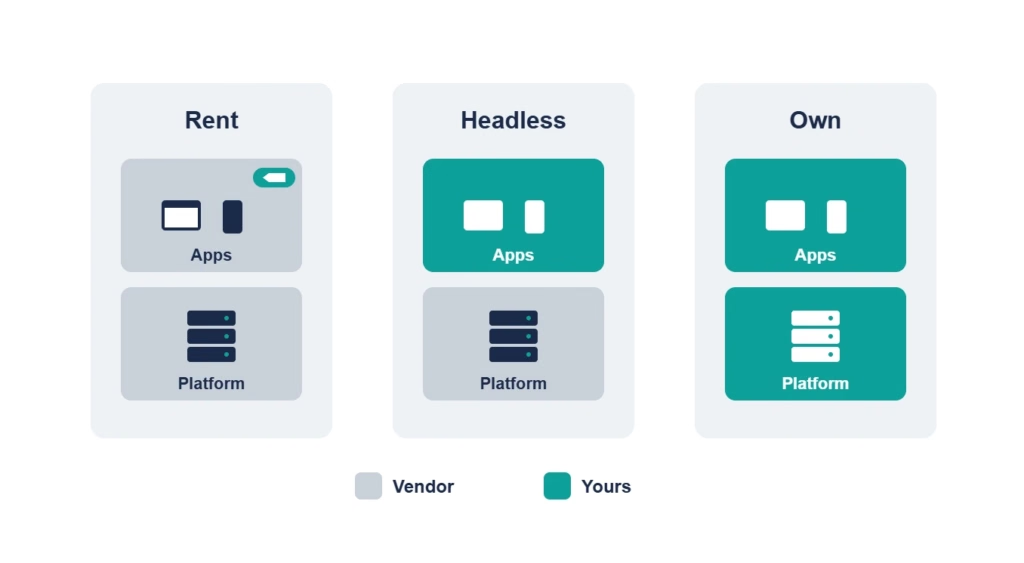
How far the branding goes depends on the solution:
- Rented white-label platform.
A vendor runs the software on its servers and lets you apply your logo, colours and domain. Mobile apps vary: some vendors put your logo and colours inside their own app, while others can publish an app under your name. Navixy, for example, notes that it applies your branding inside its X-GPS app rather than publishing store apps under your own developer account (Navixy). - Vendor backend with your own apps.
Some vendors expose their platform through APIs, so you can build your own web and mobile apps on top of their tracking engine. Navixy calls this “headless” telematics (Navixy). - Your own branded platform.
A development partner builds or customises a platform that you own or license exclusively, hosted on your cloud account. You can then white-label it again for your own dealers.
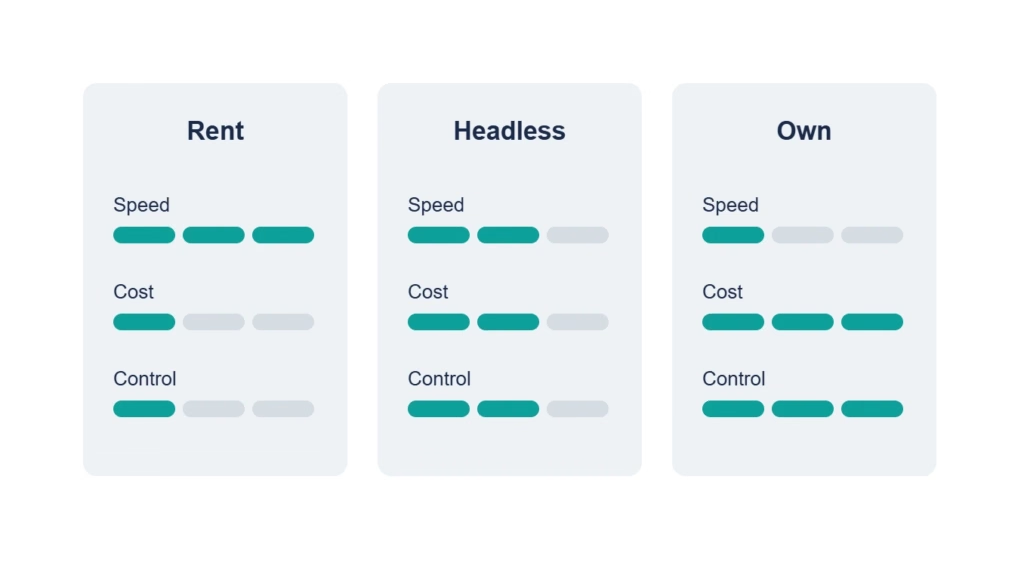
All three let you sell under your brand. They differ in cost, control and how much you depend on someone else’s roadmap.
How a telematics business makes money
A GPS tracking business usually earns from several sources at once:
- Monthly tracking subscriptions.
A fee per vehicle or asset per month for platform access, mobile apps and data. This is the core recurring revenue. - Device sales or rental.
Selling trackers outright, or renting them as part of the subscription to lower the customer’s upfront cost. - Installation and maintenance.
Fitting devices, moving them between vehicles and replacing faulty units. - Fleet management packages.
Higher tiers that add fuel reports, maintenance reminders, driver scoring or dispatch. - Premium features and add-ons.
Video telematics, temperature sensors for cold chain, immobilisation, extra history retention, API access. - Dealer and reseller fees.
Once you have a platform, you can sign up smaller dealers who sell under their own sub-brand and pay you per device.
The cost side is just as important. You pay the platform fee per vehicle, the SIM data plan for each device, the device itself, installation labour and support staff. Your margin is what remains after those per-vehicle costs, which is why pricing and SIM choice matter as much as features.
Essential features of a GPS tracking platform
Customers compare you with every other tracking provider in your market, so the basics must work well. These are the features most fleet customers expect from a fleet management platform.
Tracking and history
Ufuatiliaji wa gari kwa wakati halisi shows each vehicle’s current position, speed, direction and status on a map, updated every few seconds while it moves. A live fleet dashboard summarises the whole fleet at a glance: how many vehicles are moving, idle, stopped or offline, and which need attention. Location history and route playback let a manager replay any trip on the map, which is often the first thing customers use when there is a dispute about where a vehicle was.
Rules, alerts and reports
Kusimamia lets users draw zones such as depots, customer sites or restricted areas, and get notified when vehicles enter or leave. Taadhari na arifa cover events like over-speeding, ignition on outside working hours, long idling, low device battery or a tracker being disconnected, sent by app notification, email or SMS. Trip and distance reports turn raw location data into the numbers managers use: distance per vehicle, working hours, stops and fuel estimates. Broader analytics and reports add trends over weeks and months, and scheduled reports that arrive in the inbox.
Drivers and vehicles
Driver behaviour monitoring scores harsh braking, harsh acceleration, sharp cornering and speeding, using data from the device’s accelerometer and GPS. Vehicle and driver management keeps records of each vehicle, its documents and service schedule, and which driver used which vehicle, often through driver ID cards or a mobile app login.
Customers, apps and devices
Multi-customer management is what makes the platform a business tool rather than a single fleet’s software: you create customer accounts, set their plans and control what each user can see. Programu za simu for Android and iOS give fleet owners tracking and alerts on the move. GPS device integration connects the platform to the trackers you sell, which we cover in more detail below.

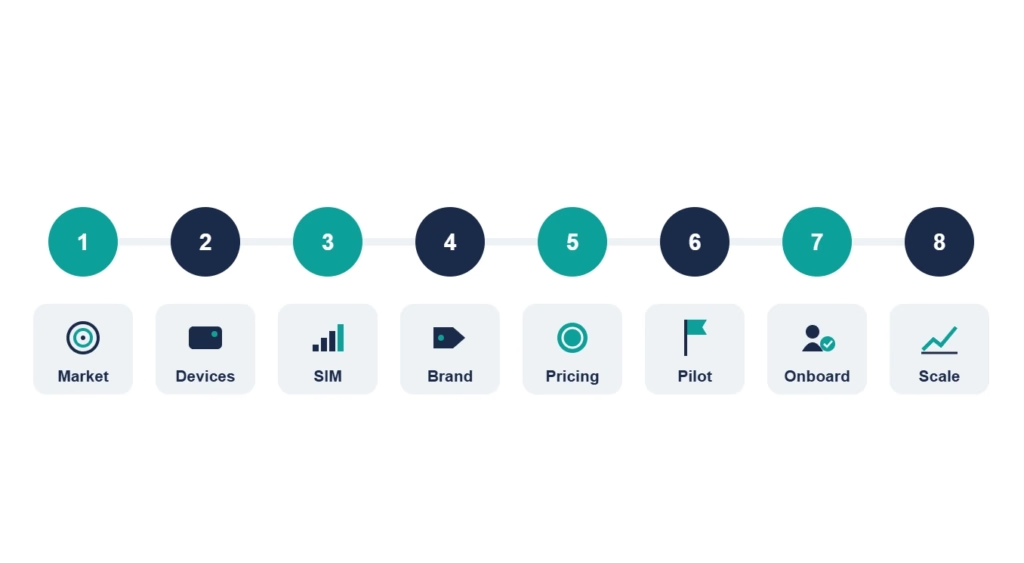
How to launch a GPS tracking business with a white-label solution
The technology is only one part of the launch. These are the steps we would walk a new telematics business through.
- Choose a target market.
Pick one or two segments you can reach and serve well, such as delivery fleets, school transport, car rental, construction equipment or cold chain. Each segment needs different features and reports, and a clear focus makes sales and support easier. - Select GPS hardware.
Choose devices that match the segment: wired vehicle trackers for fleets, OBD plug-in units for light vehicles, battery-powered trackers for trailers and equipment, and sensors or cameras where needed. Confirm the platform supports each model before you buy stock. - Arrange SIM connectivity.
Every tracker needs a data SIM. Choose between local operator SIMs and multi-network IoT SIMs, check coverage where your customers’ vehicles actually travel, and confirm which mobile networks (2G, 4G LTE, LTE-M) will still be running for the life of the device. - Set up your brand.
Prepare your company name, logo, colours, domain, notification email address and, if the solution allows it, your own app store listings. - Define packages and pricing.
Decide what each tier includes, how long history is kept, whether devices are sold or rented, and what installation costs. Work out your cost per vehicle first so every package has a margin. - Pilot with a few customers.
Install devices in a small number of vehicles, check data quality, reports and alerts, and fix your onboarding process before you scale. - Onboard customers properly.
Create accounts, add vehicles and drivers, set up geofences and alerts with the customer, and train the people who will use the system. Good onboarding reduces support calls later. - Scale through dealers and integrations.
Once the core offer works, add dealers who sell under your platform, connect customers’ ERP or payroll systems through APIs, and add premium features for larger fleets.
Multi-tenant architecture: running many customers on one platform
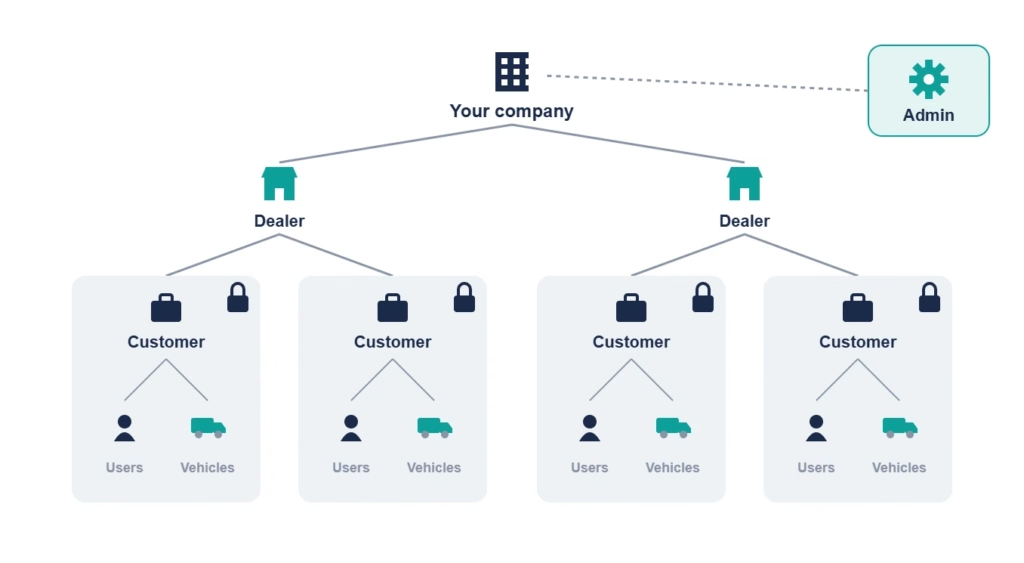
A tracking business runs dozens or hundreds of customer accounts on the same system. Multi-tenant architecture is what makes that safe and manageable. Each customer is a separate tenant: its vehicles, users, geofences, reports and history are isolated from every other customer, even though they all run on one central platform.
In practice, a well-designed multi-tenant platform gives you:
- A clear hierarchy.
Your company at the top, then dealers if you have them, then customer accounts, then users, vehicles and devices inside each account. - Ruhusa zinazotegemea majukumu.
A fleet owner sees all vehicles, a branch manager sees only their branch, and a driver sees only their own trips. - Data isolation.
One customer can never see another’s vehicles or history, and you can export or delete a customer’s data when they leave. - Central control.
You manage devices, plans, billing and platform updates from one admin panel instead of maintaining separate systems.
This is also where many tracking platforms show their limits. If dealer levels, custom roles or per-customer feature sets are missing, you end up running your business in spreadsheets around the platform. Check the account hierarchy carefully before you commit.
GPS hardware compatibility, protocols and data
A tracking platform is only as useful as the devices it can talk to.
Device protocols.
Each tracker manufacturer sends data in its own format, called a protocol. The platform needs a decoder for each one, and for each feature you plan to sell, such as fuel sensors, driver ID or immobilisation commands. Ask for the exact models and firmware versions supported, not just a count of devices.
SIM connectivity.
Devices send data over mobile networks. Data usage depends on how often the device reports, so frequent updates cost more. Older 2G and 3G networks are being switched off in many countries, so check that the devices you buy will keep working where your customers operate.
Location-data processing.
Behind the map, the platform receives a constant stream of positions, filters out bad GPS points, detects trips and stops, checks geofences and triggers alerts. It has to do this for every vehicle, all day, and keep the history searchable for months or years. This is the part that is hardest to build well, and the reason many businesses start on a white-label platform.
APIs and third-party integrations.
Larger customers will ask to send tracking data into their own ERP, dispatch, payroll or insurance systems. A documented API, webhooks and data export let you win those customers without custom work for each one.
Building from scratch versus using a white-label solution
There is no single right answer. The table below compares the three routes on the points that matter most to a new telematics business.
| Rented white-label platform | Vendor backend with your own apps | Your own branded platform | |
|---|---|---|---|
| Wakati wa kuzindua | Haraka | Kati | Polepole |
| Gharama ya mbele | Chini | Kati | Juu |
| Gharama inayoendelea | Per-vehicle platform fee | Platform fee plus app maintenance | Hosting, maintenance and development team |
| Udhibiti wa chapa | Logo, colours, domain; apps vary by vendor | Your own web and mobile apps | Kamili |
| Feature control | Vendor’s roadmap | Your interface, vendor’s core features | Kamili |
| Usaidizi wa kifaa | Vendor’s supported list | Vendor’s supported list | What you build or integrate |
| Dependence on others | High | Kati | Low, but you carry the technical risk |
A rented white-label platform is usually the sensible start when you are testing a market, have fewer customers and want revenue quickly. Owning more of the platform starts to make sense when per-vehicle fees eat into margins at scale, when customers need features the vendor will not build, or when the platform itself becomes part of what you sell. We cover that later stage in our guide to uundaji wa programu maalum ya ufuatiliaji wa GPS.
Building from scratch is not automatically better. It means hiring or contracting a team that understands device protocols, high-volume data and mobile apps, and keeping that team in place for years. A hybrid route is common: launch on a rented platform, build your own branded apps and customer portal, and move the backend later if the numbers justify it.
Recurring revenue: a simple illustrative example
The example below is hypothetical. The numbers are made up to show how the model works and are not a forecast or a typical result. Your prices and costs will depend on your market, devices, SIM plans and platform.
Imagine a new tracking business that reaches 400 tracked vehicles by the end of its first year, with every vehicle on a standard plan. Amounts are in generic currency units:
| Item (illustrative, per vehicle per month) | kiasi |
|---|---|
| Subscription price charged to the customer | 12 |
| Platform fee paid to the white-label provider | 3 |
| SIM data plan | 2 |
| Contribution per vehicle | 7 |
| Monthly contribution at 400 vehicles | 2,800 |
That contribution still has to cover sales, installation staff, customer support, office costs and any device subsidies, so it is not profit. The useful lesson is how the model scales: each vehicle you keep adds to monthly revenue, and losing customers (churn) hurts more than in a one-off sales business. Track your cost per vehicle and churn from the first month.
How to choose a white-label GPS tracking development partner
Whether you rent a platform, build apps on a vendor backend or commission your own platform, the partner you choose shapes what you can sell. Check these points before you sign:
- Branding flexibility.
Domain, logo, colours, notification sender, and whether mobile apps can be published under your own name. - Utangamano wa kifaa.
The exact device models and features supported today, and how quickly new models are added. - Uwezeshaji.
How the platform performs as you grow from hundreds to tens of thousands of devices, and how history is stored. - Ubinafsishaji.
Whether you can add reports, workflows or industry features, and who owns that code. - Ushirikiano.
A documented API, webhooks and data export for your customers’ systems. - Usalama.
Tenant data isolation, role-based access, encryption, backups, and where the data is hosted. - Matumizi ya rununu.
Quality of the Android and iOS apps, offline behaviour and push notifications. - Msaada wa kiufundi.
Response times, who handles device issues, and support hours that match your time zone. - Exit options.
Whether you can export all customer, device and history data if you change platforms later.
How Sigosoft can help you build a branded telematics platform
At Sigosoft, we work with businesses that want to own more of their tracking product than a rented platform allows. Depending on where you are, that might mean branded web and mobile apps on top of an existing tracking backend, or a complete platform built for your business and hosted on your own cloud account.
Our approach starts with your business model, not the code: which customers you serve, which devices you will sell, how you will price and whether you plan to work with dealers. From there we design the multi-tenant structure, device integration, billing and apps around how you sell. Our Uundaji wa bidhaa za SaaS team handles tenants, subscription plans and billing, and our Mfumo wa Usimamizi wa Meli na Usafirishaji work covers dispatch, driver apps and delivery modules for customers who need more than tracking.
We have built tracking software before. Uwanja wa Ndege is a vehicle tracking platform we developed for the Indian market, running on web, Android and iOS, with live vehicle status, location, speed and last update time for fleet users.
Planning your own GPS tracking or telematics brand?
If you are planning to launch a GPS tracking business, or you already sell tracking and want your own branded platform, start with the basics: your target market, the devices you plan to use and how you want to price. Those three answers decide which route makes sense.
Talk to our team about your white-label GPS tracking platform. We will look at your plans, the devices you sell and your growth targets, and recommend a practical way to launch under your own brand.
Maswali yanayoulizwa mara kwa mara
What is a white-label GPS tracking platform?
It is GPS tracking software built by one company and sold by another under its own brand. Your customers use a web portal and mobile app with your name, logo and domain, while the software provider stays in the background.
How do I start a GPS tracking business?
Choose a target market, select compatible GPS devices and SIM plans, set up a white-label or branded platform, define your packages and pricing, pilot with a few customers, then scale through sales, dealers and integrations.
How does a GPS tracking business make money?
Mainly through monthly subscriptions per tracked vehicle, plus device sales or rental, installation, higher-tier fleet management packages and premium add-ons such as video telematics or sensors. Margins depend on your platform fees, SIM costs and how many customers you keep.
Should I use a white-label platform or build my own GPS tracking software?
A rented white-label platform is usually faster and cheaper to start with. Building your own branded platform, or your own apps on a vendor backend, makes more sense when per-vehicle fees grow large, you need features the vendor will not build, or you want full control of your product and data.
Can a white-label GPS tracking platform work with any GPS device?
No. Each platform supports a specific list of device models and protocols. Check the exact models, firmware versions and features you plan to sell, such as fuel sensors, driver ID or immobilisation, before you buy hardware.
Asante kwa maoni!

Jishnu kuttiyadan Timu ya Sigosoft
Sehemu ya timu ya Sigosoft inayojenga otomatiki AI, programu maalum na programu kwa biashara duniani kote.
Anza majadiliano
Maswali au uzoefu wa kushiriki? Timu yetu inasoma na kujibu.